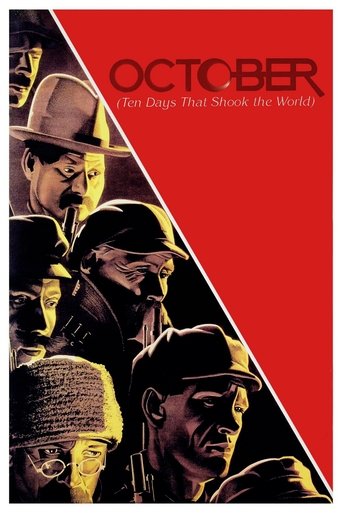
Sergei M. Eisenstein's docu-drama about the 1917 October Revolution in Russia. Made ten years after the events and edited in Eisenstein's 'Soviet Montage' style, it re-enacts in celebratory terms several key scenes from the revolution.
This is a story of a great love facing the greatest drama of the history of Russia. Admiral Kolchak is a true war hero and beloved husband and father. One day he meets Anna, the love of his life and the wife of his best friend. The revolution in his heart faces the revolution in his own country His destiny is to become the Supreme Ruler of Russia.
The film is dedicated to the first steps of mankind on the path of space exploration and direct the fate of the first cosmonaut Yuri Gagarin. The main motif - the fight for the right to be first: the competition in the first cosmonaut, competition in missile technology, the confrontation of superpowers - the USSR and the USA. In the first group of astronauts were selected from three thousand fighter pilots across the country. In twenty of the legendary got the best of the best. Which of them will fly first, no one knew. In this way, had to contend not only with the pull of the earth ...
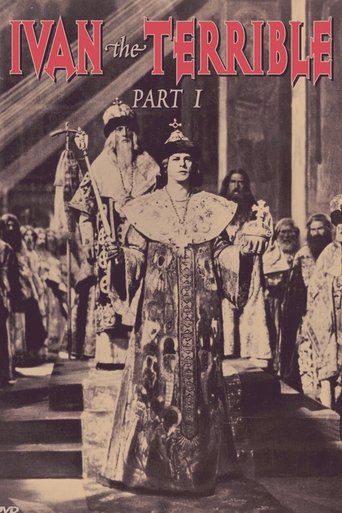
Set during the early part of his reign, Ivan faces betrayal from the aristocracy and even his closest friends as he seeks to unite the Russian people. Sergei Eisenstein's final film, this is the first part of a three-part biopic of Tsar Ivan IV of Russia, which was never completed due to the producer's dissatisfaction with Eisenstein's attempts to use forbidden experimental filming techniques and excessive cost overruns. The second part was completed but not released for a decade after Eisenstein's death and a change of heart in the USSR government toward his work; the third part was only in its earliest stage of filming when shooting was stopped altogether.
At the tense 1938 Munich Conference, former friends who now work for opposing governments become reluctant spies racing to expose a Nazi secret.
Fr. Hugh O'Flaherty is a Vatican official in 1943-45 who has been hiding downed pilots, escaped prisoners of war, and Italian resistance families. His activities become so large that the Nazis decide to assassinate him the next time he leaves the Vatican.
The King of Kings is the Greatest Story Ever Told as only Cecil B. DeMille could tell it. In 1927, working with one of the biggest budgets in Hollywood history, DeMille spun the life and Passion of Christ into a silent-era blockbuster. Featuring text drawn directly from the Bible, a cast of thousands, and the great showman’s singular cinematic bag of tricks, The King of Kings is at once spectacular and deeply reverent—part Gospel, part Technicolor epic.
A retelling of the story of France’s iconic but ill-fated queen, Marie Antoinette - from her betrothal and marriage to Louis XVI at fifteen to her reign as queen at nineteen and ultimately the fall of Versailles.
This is the second part of a projected three-part epic biopic of Russian Czar Ivan Grozny, undertaken by Soviet film-maker Sergei Eisenstein at the behest of Josef Stalin. Production of the epic was stopped before the third part could be filmed, due to producer dissatisfaction with Eisenstein's introducing forbidden experimental filming techniques into the material, more evident in this part than the first part. As it was, this second part was banned from showings until after the deaths of both Eisenstein and Stalin, and a change of attitude by the subsequent heads of the Soviet government. In this part, as Ivan the Terrible attempts to consolidate his power by establishing a personal army, his political rivals, the Russian boyars, plot to assassinate him.
Lyndon B. Johnson's amazing 11-month journey from taking office after JFK's assassination, through the fight to pass the 1964 Civil Rights Act and his own presidential campaign, culminating on the night LBJ is actually elected to the office – no longer the 'accidental President.'
Stephen Glass is a staff writer for the respected current events and policy magazine The New Republic and a freelance feature writer for publications such as Rolling Stone, Harper's and George. By the mid-90s, Glass' articles had turned him into one of the most sought-after young journalists in Washington, but a bizarre chain of events - chronicled in Buzz Bissinger's September 1998 Vanity Fair article - suddenly stopped his career in its tracks.
It was the sister ship of the infamous Titanic... and its final destiny was the same. Experience the true untold story of Britannic, a tumultuous, epic voyage of human passion, courage and betrayal aboard an ill-fated ocean liner bound for a shattering demise. With the world at war, an undercover British agent (Amanda Ryan), embarks the Britannic in search of a German spy believed to be on board to sabotage the ship. Posing as a governess, the undercover agent finds herself falling in love with the ship's chaplain (Edward Atterton). In a stunning discovery, the lovers suddenly find themselves enemies of war. And when a massive explosion deals a deathblow to the ship, their battle becomes one for their own survival. With a dynamic, international cast and a story line that hosts a chilling tale of espionage, politics and romance, Britannic brings one of history's most devastating events to riveting, new life.
The story of a poor young woman, separated by prejudice from her husband and baby, is interwoven with tales of intolerance from throughout history.
Queen Victoria strikes up an unlikely friendship with a young Indian clerk named Abdul Karim.
An African-American woman becomes an unwitting pioneer for medical breakthroughs when her cells are used to create the first immortal human cell line in the early 1950s.
Thomas Montgomery, a married father of two young daughters, gets seduced by the world of online gambling and chat rooms where a virtual romance and sexual obsession ultimately leads to the murder of an innocent man.
While investigating the global phenomenon of caste and its dark influence on society, a journalist faces unfathomable personal loss and uncovers the beauty of human resilience.
A dramatic history of Pu Yi, the last of the Emperors of China, from his lofty birth and brief reign in the Forbidden City, the object of worship by half a billion people; through his abdication, his decline and dissolute lifestyle; his exploitation by the invading Japanese, and finally to his obscure existence as just another peasant worker in the People's Republic.
It is late spring of 1942, and the Great Patriotic War is in full swing. A long way off from the front-line, at some God-forgotten junction, the Germans make an air landing operation in an attempt to get through to the Kirov railway and the White Sea - the Baltic Sea Canal. These aren't just ordinary paratroopers. This is a team of seasoned and highly trained infiltrators, the elite of the Waffen-SS, superhumans. The only thing in their way is an anti-aircraft artillery unit of corporal Vaskov and five young women in training. It may seem like a fight of local significance, but the countrys main strategic transportation artery is at stake. Can the corporal and his 'petite newbies' prevent Nazi sabotage and at what cost? Television version: An extended version made out of four 45 minute episodes was released on Channel One Russia, on 9 May 2016. Available on PrimeVideo.
Activate your FREE Account!
You must create an account to continue watching