The documentary film "Ȋuventa" relates the events of a crucial year in the lives of a group of young Europeans all involved in different ways in the Jugend Rettet humanitarian project, starting from the first voyage of the "Ȋuventa" ship in the Mediterranean Sea to the heavy accusations that led to the seizure of the vessel more than a year later.
In less than ten months, the music band Mamonas Assassinas went from being completely unknown to becoming one of the biggest phenomena in Brazilian music. Irreverent, intelligent, sarcastic and creative, the band took over Brazil and sold two million albums in just six months. Never-before-seen footage and interviews from family, friends, producers, and musicians tell the band’s story, their challenges, their rise to fame, and the tragic aeroplane accident that killed all its members in 1996.
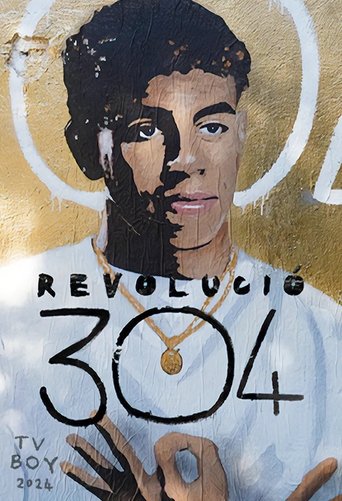
Revolució 304, a TV3 documentary, uses Lamine Yamal as a starting point to explore racism, identity, and representation in Catalonia. Featuring voices from Rocafonda, it calls for structural change and a more inclusive future.
As an actor, director and producer, Ray Harryhausen has been a vibrant figure in Hollywood, working on everything from family films to mind-bending sci-fi. But his true genius lay in the creation of special effects for movies such as Mighty Joe Young and It Came from Outer Space. Narrated by Leonard Nimoy and featuring appearances by George Lucas and Ray Bradbury, this film documents Harryhausen's remarkable life's work.
Winfrey speaks with Markle about everything from stepping into life as a Royal, marriage, motherhood, her philanthropic work and how she is handling life under intense public pressure. Later, the two are joined by Prince Harry as they speak about their move to the United States and their future hopes and dreams for their expanding family.
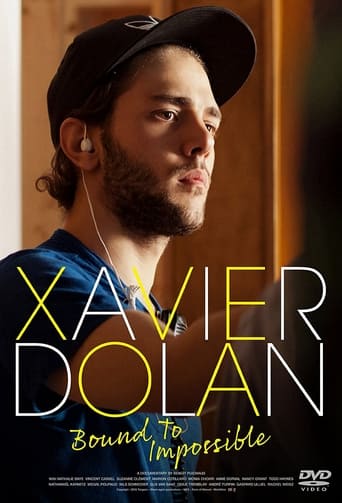
Actors Anne Dorval, Suzanne Clément, Monia Chokri, Gaspard Ulliel, Vincent Cassel, Niels Schneider and Melvil Poupaud discuss working with the young Canadian director Xavier Dolan, who has conquered the hearts of both cinema lovers and prestigious festival juries with his films. To French actress Nathalie Baye, he seems very experienced despite his young age, while Cannes Director Thierry Frémaux says he may be insolent, but everyone agrees he is passionate, creative, a perfectionist and... in a hurry.
Phil Hartman hosts this retrospective look back at the legacy and making of the classic 1966 holiday special 'How the Grinch Stole Christmas!'
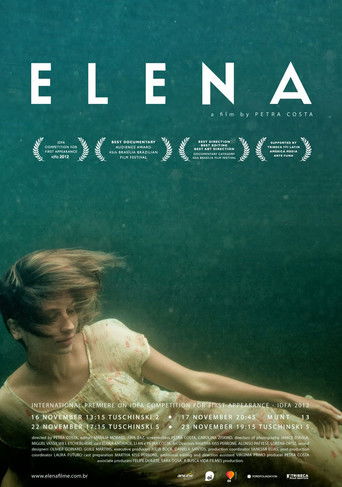
Petra heads to New York in search of her older sister after a long time of being separated. They are both movie actresses and heirs of the wounds of the Brazilian dictatorship. But Petra has only a few clues: home movies, newspaper clippings, a diary...
A brief history of the DC Comics character Batman, created by Bob Kane in 1939.
Various directors and film critics discuss Jean-Pierre Melville’s importance and influence in the world of cinema.
The captivating story of the Venezuelan Youth Orchestra System - an incredible network of hundreds of orchestras formed within most of Venezuela’s towns and villages. Once a modest program designed to expose rural children to the wonders of music, the system has become one of the most important and beautiful music phenomena in modern history. To Play and To Fight presents interviews and performances by many of the world’s most renowned musicians including the great tenor Placido Domingo, Claudio Abbado, Sir Simon Rattle, Guiseppe Sinopoli, and Eduardo Mata, as they reflect on the impact of such a far-reaching social project. The documentary also presents the inspirational stories of world class musicians who have been trained by the Venezuelan system, including The Berlin Philharmonic’s youngest player Edicson Ruiz and world class conductor Gustavo Dudamel.
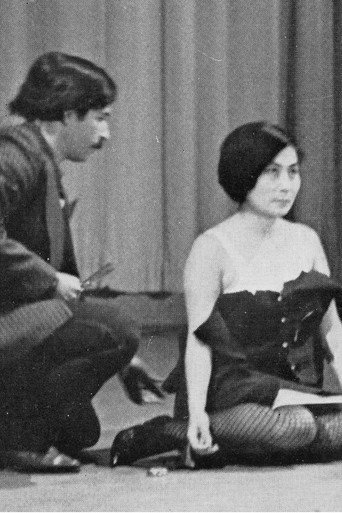
Filmed at New York’s Carnegie Hall, Cut Piece documents one of Yoko Ono’s most powerful conceptual pieces. Performed by the artist herself, Ono sits motionless on the stage after inviting the audience to come up and cut away her clothing in a denouement of the reciprocity between victim and assailant.
Landscapes of Resistance traces a journey through the memories of antifascist fighter Sonja (97), the first Partisan woman in Serbia, who was also one of the leaders of the Resistance movement at Auschwitz. We make her story travel through time towards the bodies of the new generation of antifascists, bespeaking that it is always possible to think and practice resistance.
A towboat drifts down the Mississippi River, due for the port of New Orleans. The water, the banks, the bright lights of a port ahead; the lure of a coming paycheck and a home-cooked meal. This is the world of BARGE. A green deckhand following his father into the family business. A former convict working his way upward job by job, in the hopes of being First Mate. A thirty-eight year veteran engineer in no hurry to retire. An ancient waterway pulling a double shift as the backbone of a national economy; a tangle of thick steel cables, tied together just right. As long as the boat’s moving, they’re making money. An intimate portrait of the machinery of American ambitions.
Documentary that delves into the film's production in good fashion
Ahmed Malek’s name might have been forgotten by his fellow Algerians but his timeless tunes certainly haven’t. Called the Ennio Morricone of Algiers, he composed music for more than 200 movies, amongst which the most famous films of the Algerian New Wave in the 70s and the 80s can be found. Paloma Colombe, a DJ, digger and documentary director, went to Algiers to meet his daughter, friends and former coworkers. Images of the city by night offer a perfect background to Ahmed Malek’s music. Globetrotter, pioneer of electronic music and of the concept of the home studio, he created a unique sound that truly goes beyond genres and countries.
A lyrical Indian documentary tracing the life and teachings of Gautama Buddha. Directed by Rajbans Khanna and produced by Bimal Roy, the film blends narration with evocative imagery of India’s landscapes, art, and archaeological sites to reflect the Buddha’s search for wisdom and peace. Premiering in Paris, it went on to earn a Special Mention at the 1957 Cannes Film Festival, where its spiritual depth and visual poetry were widely praised.
Tehran, October 2022; a theater ensemble is rehearsing the ancient greek Lysistrata by Aristophanes. In the middle of a scene in which old men storm and attack the Acropolis, which the women of Athens have taken, the ensemble learns that they are surrounded because anti-riot forces are marching around the building and putting down a large demonstration. The street noise is deafening, and the room is filled with fear and anger. Some want to hide, others, led by the leading actress, want to go out into the streets and fight alongside the people. Despite disagreements, one thing is clear, the team does not want to continue the play in the time of the revolution.
A warm, attentive chronicle of everyday life in a small Algerian town, with the backdrop of the inhabitants' development and beautification of one of the neighborhoods. We meet an amateur mechanic, a retired man from France, a doctor, old women and young men. Everyone plays... in front of the camera of one of the youngsters. Even when the riots in Kabylia disrupt the course of daily life in the Cité des Martyrs.
Activate Your Account!
You must create an account to continue watching