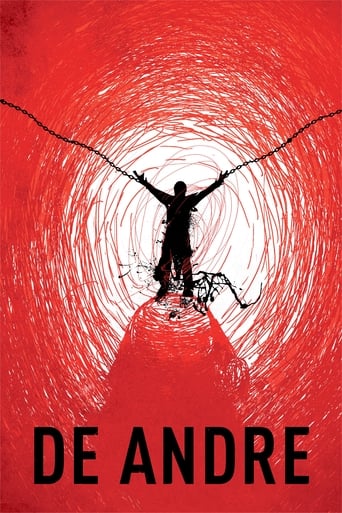
A documentary from within the Swedish Migration Board's locked repository where people are in custody awaiting forced deportation. Prisoner and guard are in close proximity around the clock. Converses during sleepless nights and playing football during hot summer days. We follow Sophie, 29, who loves her job at the repository, Sami, 20, the young rebel who is locked up but free inside, and Aina, 47, who were separated from her children and kept locked up while the police are stepping up efforts to enforce their expulsion order.
Filmmaker Mark Cousins goes to Albania for five days, and films what he sees. He discovers that the movie prints in the country's film archive are decaying. In investigating this, Cousins begins to encounter bigger questions about the history and memory of a place. Perhaps a country whose 20th Century, dominated by its authoritarian ruler Enver Hoxha, was so traumatic, should allow its film heritage to fade away? Perhaps a national forgetting should be welcomed? Influenced by the films of Chris Marker, Cousins' film broadens to consider the architecture of dictators and the great icon paintings of Onufri. In the past, when cartographers knew little about a country, they wrote on it Here be Dragons. Albania was, for decades, one of the least well know countries in the world. Cousins' road movie meditation takes the advice of Goethe: "If you would understand the poet, you must go to the poet's land."
Released in 1965, "Why Vietnam?" was produced by the U.S. Department of Defense to aid public acceptance of the Vietnam War and to indoctrinate Vietnam-bound draftees. Structured in the rhetorical tradition of the "Why We Fight" films, it draws historical parallels to World War II, depicts U.S. military activity in Vietnam, and presents official interpretations of the conflict’s origins. Later criticism by historians highlighted the film’s selective use of evidence and its distortion of key historical facts, revelations that were further underscored by disclosures in the Pentagon Papers.
The definitive photographic record of the 1984 Los Angeles Olympics, told "from the inside" through the lives of the participants, the words of David Perry, and the singing voice of Placido Domingo. From the opening to closing ceremonies, this unique style of storytelling shows a side of the Olympic Games not seen by television audiences.
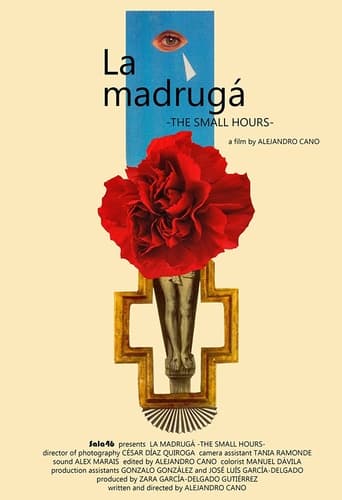
The life stories of Juan Francisco's grandparents and parents, who arrived in Mexico in 1939 as refugees at the end of the Spanish Civil War (1936-1939). A family saga, from the beginning of the twentieth century to the present day.
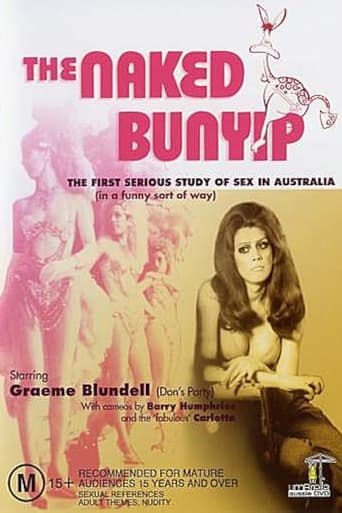
A shy young man is hired by an ad agency to conduct a survey on sex in Australia. The somewhat clueless young man investigates homosexuality, transvestites, prostitution, and strip clubs along with every other variant on the "norm". While doing his interviews he meets celebrities, self proclaimed sex experts, prostitutes, female impersonators, pop stars, actors, and legislators as well as self appointed morals guardians.
This is as slick a piece of campaign film as ever came out of Hollywood -- barring, of course, the anti-Upton Sinclair stuff turned out as newsreels in the 1930s during his campaign for governor of California. President Coolidge is presented as a simple man of the people who helps his cousin with the haying when he is in the neighborhood, works in the building he was born in and lives in the same house his father was born in: just another fellow like you and me. He runs the nation just about as well as we could.
The Walking Dead Girls is a behind-the-scenes look into zombie culture in the United States and the obsession into ""Sexy Female Zombies"". What is it about Zombie Bimbos or ""Zimbies"" that are starting to gain the worlds interest? Why are zombies now in mainstream culture and seen in advertising from JCPenny and Sears? With interviews with zombie master maker George Romero and cult movie star Bruce Campbell from ZomBcon 2010 and so much more. ""The Walking Dead Girls"" is a sexy look into the zombie phenomenon created by George Romero that is 40 years in the making
Emerging from rural Ireland, Edna O’Brien broke multiple taboos with her sexually provocative literature and equally adventurous love life. Here, she opens up about her past with additional perspectives offered by Gabriel Byrne, Walter Mosely, and others.
A film about life on the small island of Likiep in the Marshall Islands in Micronesia.
The world of bugs normally passes beneath our notice, yet shrink yourself to their size, see them in 3D and you’ll enter a world you’d never believe existed. Big Bugs in 3D uses specially developed 3D technology to take the viewer on a global journey, from Mexico and the rainforests of Asia to our own backyards.
In Jerez de la Frontera, Spain, tradition, memory and folklore, walk the streets on the shoulders of a people who proudly displays a legacy rooted in their culture for centuries.
A behind-the-scenes documentary hosted by Joanna Cassidy on the making of Who Framed Roger Rabbit.
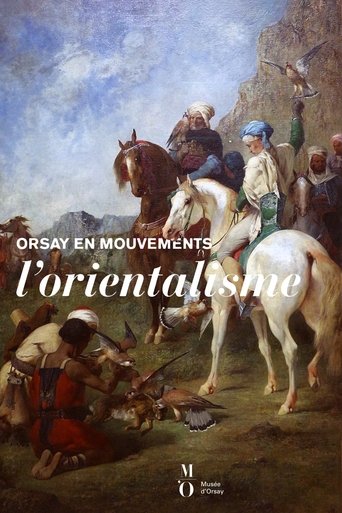
Orientalism is a literary and artistic movement born in Western Europe in the 18th century. Through its scale and popularity, throughout the 19th century, it marked the interest and curiosity of artists and writers for the countries of the West (the Maghreb) or the Levant (the Middle East). Orientalism was born from the fascination of the Ottoman Empire and followed its slow disintegration and the progression of European colonizations. This exotic trend is associated with all the artistic movements of the 19th century, academic, romantic, realistic or even impressionist. It is present in architecture, music, painting, literature, poetry... Picturesque aesthetics, confusing styles, civilizations and eras, orientalism has created numerous clichés and clichés that we still find today in literature or cinema.
A documentary illustrating how a screenwriter suffering from Lou Gehrig's disease communicates with the world.
In 2009 the Norwegian government introduced several measures to restrict immigration. One of the measures was to provide unaccompanied asylum seeking children temporary residence permits. They should be returned to their country of origin when they turn 18. In Norway child welfare custody of their children without close caregivers. This does not apply to unaccompanied asylum-seeking children between 15 and 18 years.
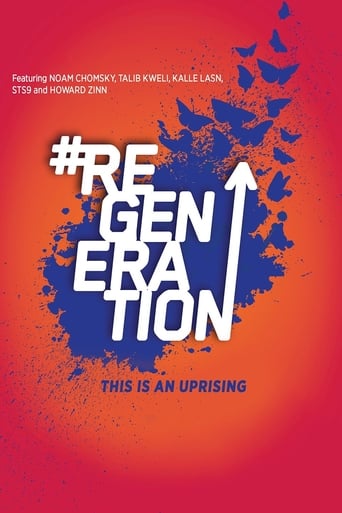
ReGeneration is a 2010 U.S. documentary film written and directed by Phillip Montgomery that looks at the issues facing today's youth and young adults, and the influences that contribute to the U.S.'s current culture of apathy toward political and social causes.
In Costa Rica, the family of Melba (65) and Víctor (70) has sheltered over 130 children in the last 40 years. Today, some of them seek paths to adulthood while a new child is integrated into this great family with the adventures and difficulties of a home that continues to multiply despite the parents’ advanced age.
Activate Your Account!
You must create an account to continue watching