A tale of one North Korean's struggle to leave behind the homeland, this stylised documentary unveils the depths of loss and longing, and the desire for legacy amongst a community of North Korean defectors who have escaped their homeland to live in the leafy London suburb of New Malden.
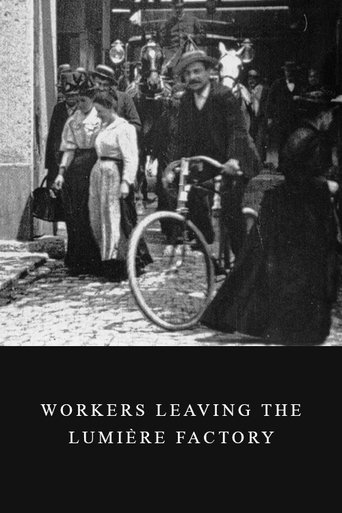
Working men and women leave through the main gate of the Lumière factory in Lyon, France. Filmed on 22 March 1895, it is often referred to as the first real motion picture ever made, although Louis Le Prince's 1888 Roundhay Garden Scene pre-dated it by seven years. Three separate versions of this film exist, which differ from one another in numerous ways. The first version features a carriage drawn by one horse, while in the second version the carriage is drawn by two horses, and there is no carriage at all in the third version. The clothing style is also different between the three versions, demonstrating the different seasons in which each was filmed. This film was made in the 35 mm format with an aspect ratio of 1.33:1, and at a speed of 16 frames per second. At that rate, the 17 meters of film length provided a duration of 46 seconds, holding a total of 800 frames.
An unscripted compilation of events on 3 different days of a group of friends.
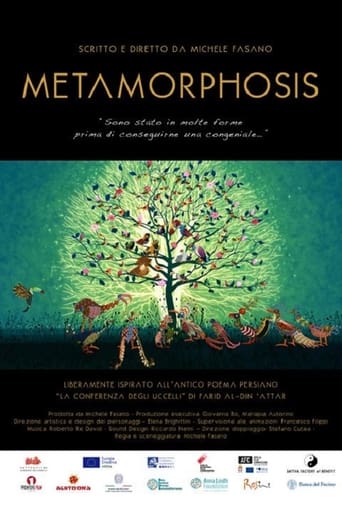
Inspired by «The Conference of the Birds» by Farid al-Din 'Attar, an 18th century Persian poem, the film tells of a flock of birds that travel following a hoopoe, towards the Mountain of Kafh, home of King Simourgh, from whom they expect to receive the answers to all their questions. Between dream and reality, the birds will cross the 7 valleys.
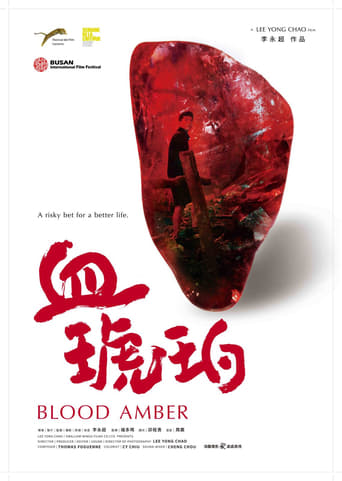
Somewhere in Myanmar is a forest rich in amber and controlled by the Kachin Independence Army (KIA). Most of its inhabitants work in a mine, digging the earth night and days in the hope of finding the precious ore that will get them out of poverty. But on top of the excruciating hardship of the work, they also have to fear an attack from the army.
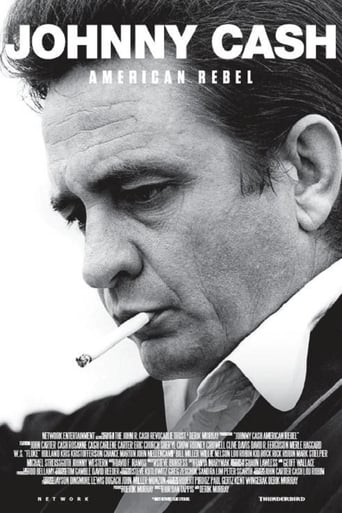
Johnny Cash: American Rebel is built around 12 essential Johnny Cash tracks spanning four decades that each deliver the passion, musicality and messages against war, injustice, racism and prejudice, including “Folsom Prison Blues,” “Jackson,” “San Quentin,” “Man in Black,” “Sunday Morning Coming Down,” “Ring of Fire” and “Hurt.” Each song illustrates a chapter in his life, as well the story of an ever-changing America from the 1950s to modern day, as told through interviews, archival concert footage, photographs and personal artifacts from the Cash family.
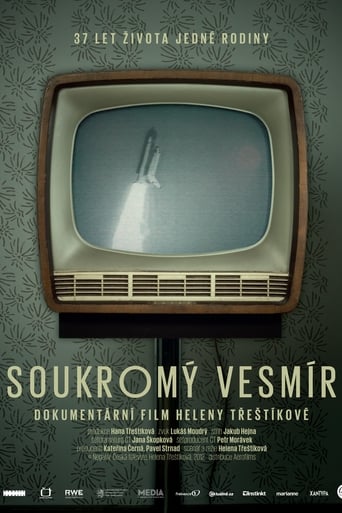
Honza was born in 1974 into the cheerless era of socialism in Czechoslovakia. At that time, his parents Jana and Petr lived in one room in the apartment of Jana's divorced mother and her widowed grandmother. A few years later, the family moved from Prague to Liberec where Petr found a job and a little house for the family. When Honza was born, his father began writing a family chronicle and he has continued to do so for 37 years. "Private Universe" show not only the life of one ordinary family, but also how the Czech society has changed in last four decades. Who are we, where do we come from and where do we go?
In June of 2007, the re-united Smashing Pumpkins eschewed a traditional US tour and opted for an experimental art installation in the form of two residencies in Asheville, NC and San Francisco, CA. The documentary "If All Goes Wrong" traces the band over this period from the opening note to the final chord.
Documentary about the final five, turbulent years in the life of civil rights activist Martin Luther King. The story begins at the Lincoln Memorial in August 1963, when a 34-year-old preacher galvanized millions with his dream for an America free of racism and comes to a bloody end five years later on a motel balcony in Memphis. King has since become a mythic figure, an activist whose works and image are more hotly contested, negotiated and sold than almost anyone else's in American history. (Storyville)
Prison Ball is about prison basketball as practiced by prisoners within prison walls. The documentary interviews various inmates and prison officials and specialists on the matter and tackles "prison basketball leagues" operating within prison systems as well. It focuses on four Louisiana state prison teams, it was shot mainly in New Orleans, Louisiana, United States.
On February 5, 2015, Lance Bass and Michael Turchin made television history when their wedding, which took place Dec. 20, 2014, premiered on E!. LANCE LOVES MICHAEL — a 90-minute special — follows the couple from the early stages of planning right up to their vows on the altar.
Live footage from concentration camps after the liberation, and the complex transport and lodging of masses of prisoners of war and other deported people back to their home countries, at the end of World War II. A 45min 35mm print also exists (shown at Cinémathèque française in 2023).
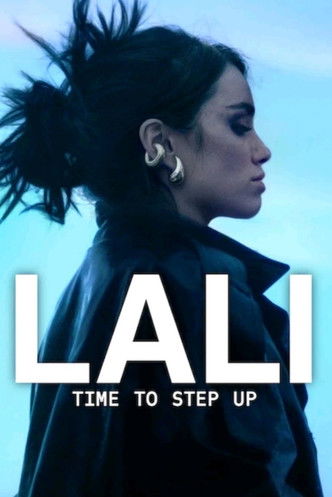
This documentary follows Lali in her return after four years away from the stage, showcasing the personal journey that led her to become the artist we know today.
May 2017. As the new President of the United States takes his ease in the White House, the city of Breaux Bridge, Louisiana, is the theatre of the mythic Crawfish Festival. It's just another day, in America.
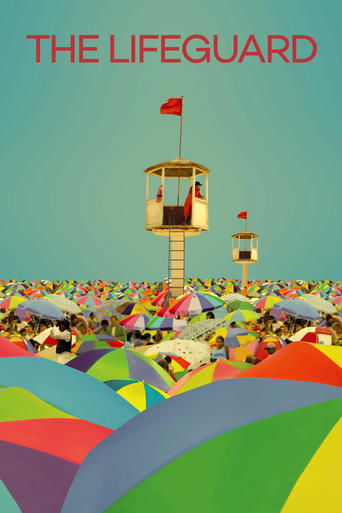
Mauricio, a lifeguard on a Chilean beach, considers himself to be a model of efficiency and professionalism. His colleagues, however, think otherwise, and speculate on why he never goes into the water. Maite Alberdi's visually gorgeous feature documentary debut has the intensity of a short story; beginning as a quirky character study of lifeguards and beachgoers, it becomes something altogether darker and more shocking when events take a dramatic turn.
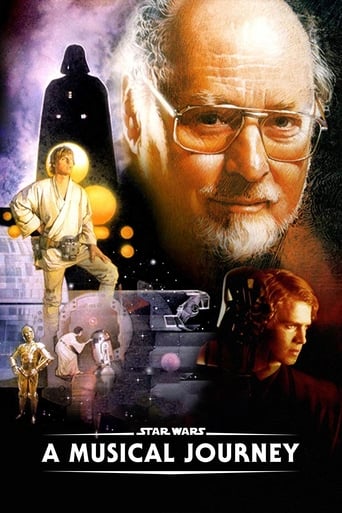
Star Wars: In Concert, originally called Star Wars: A Musical Journey, was a worldwide series of concerts featuring specially edited footage from all six of the Star Wars films (on the world's largest LED screen) set to live performances of John Williams' Star Wars score. The first performance took place in the O2 Arena in London, England. It was attended by 20,000 fans. The North American concerts started in Anaheim, California on October 1, 2009. The concerts were narrated by Anthony Daniels and conducted by Dirk Brosse. The concert took the audience through the Star Wars story line starting with Star Wars: Episode I The Phantom Menace and ending with Star Wars: Episode VI Return of the Jedi. The concert toured throughout the world extensively in 2009 and 2010, with an announced two-date engagement (June 3 and 4, 2011) at the Hollywood Bowl in 2011.
Celebrities show you ways to help save energy and to be more Green for planet earth in 1990
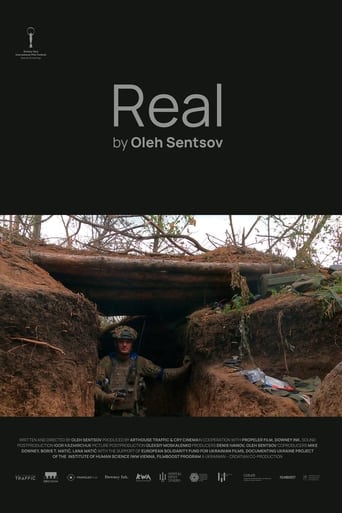
Documentary footage shot in the summer of 2023 by Oleh Sentsov, when his APC was hit by the enemy. Sentsov found himself in a nearby trench and, using radio communication, organized the evacuation of his unit, which was under fire, with ammunition running out. This operation was nicknamed "Real".
A reconstruction and the biography of the composer, utilizing archival footage, interviews with individuals who knew him and artists who performed his compositions.
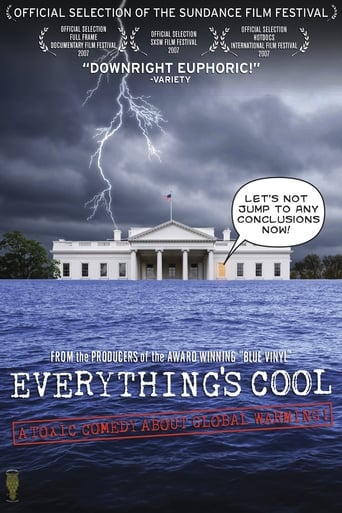
In this documentary, filmmakers Daniel B. Gold and Judith Helfand (Blue Vinyl) follow a troupe of self-proclaimed global warming "warriors" on a mission to get the world to care about rising temperatures and melting polar ice caps. Taking a topic that's inherently serious and applying their signature blend of humor and emotional heft, Gold and Helfand advance the environmental dialogue in a surprisingly entertaining way.
Activate Your Account!
You must create an account to continue watching