Documentary about the Italian men that visit Hungary to meet girls and the Hungarian women that fall in love with them.
Was there really a Robin Hood? Did he steal from the rich and give to the poor? This History Channel program revisits the popular legend of the valiant folk hero, revealing Robin's true origins as a composite of multiple figures from the distant past, reviewing their amazing exploits, and seeking insights from historians as well as cast members of the 2010 adventure film "Robin Hood" and its director, Ridley Scott.
A mix of show clips, archival materials, and interviews with Greenwalt, McNamara, Pasdar, executive producer Stephen J. Cannell, and actors Lisa Blount and Lisa Zane. This documentary covers the development of the McNamara/Greenwalt partnership as well as the origins of Profit, its path to the screen, shooting the “Pilot” and attached controversies, casting, character issues and the approaches taken by the actors, the use of voiceovers, inspirations and related concepts, storylines, stretching boundaries and censorship, reactions to the show and its legacy.
A love story, portraying the dilemmas and inevitable consequences of ambition. It is a film about a woman's fight for independence, a woman trying to succeed with her own art in the extremely competitive world of dance.
In the Southern Andes, a living being survives since 200 million years: the "Araucaria Araucana" with its incredible history, little known and forever linked to an Amerindian people of Chile: Pehuenches. This isolated community survived during centuries thanks to the Araucarias. A perfect harmony between man and nature, forever upset by the invasion of the Spanish colonists, the conflicts of territories and the increase of logging. Protected today, this sacred forests are the refuge of a unique and wild nature; but fires threaten this balance. What remain of these people and the link with this tree? What can they teach us about our environmental problems?
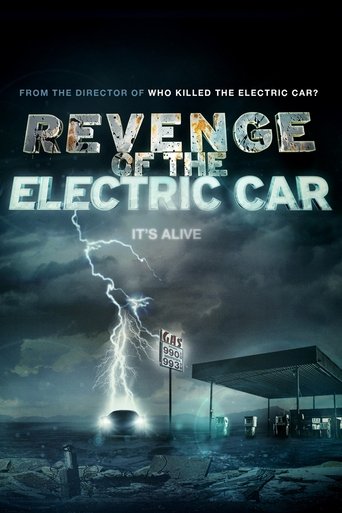
A sequel to 2006's Who Killed the Electric Car?, director Chris Paine once again looks at electric vehicles. Where in the last film electric cars were dismissed as uneconomical and unreliable, and were under multiple attacks from government, the auto industry, and from energy companies who didn't want them to succeed, this film chronicles, in the light of new changes in technology, the world economy, and the auto industry itself, the race - from both major car companies like Ford and Nissan, and from new rising upstarts like Tesla - to bring a practical consumer EV to market.
Elaine asks college students to describe God to someone who has never been introduced to the concept, as well as explain the significance of the Christian cross as a symbol. At home, Elaine haphazardly plays with a consumer product she bought.
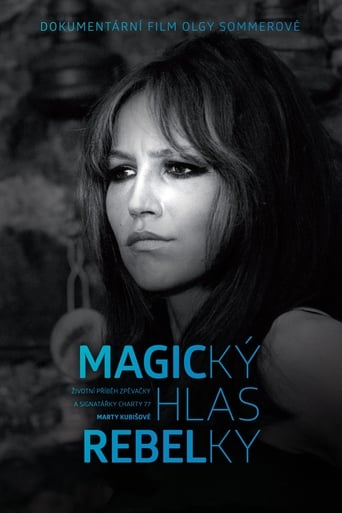
'The Magic Voice of a Rebel' portrays the story of the Czech singer Marta Kubisová, who without never intending it, became a symbol of freedom for all generations in the newly free Czhecoslovakia in 1989. It is Marta herself who tells us her life story and how the Soviet invasion in Czechoslvakia in 1968 changed her life. Because of her deep involvement in the Prague Spring movement, she went from being the most popular singer in the country to being banned and suffering a sudden removal from the public scene by the new authorities imposed from Moscow. She refused to escape to exile and together with other banned intelectuals and artists became a disident instead. Blacklisted and persecuted by the secret police, she also suffered the betrayal of beloved people who were collaborating with the regime.
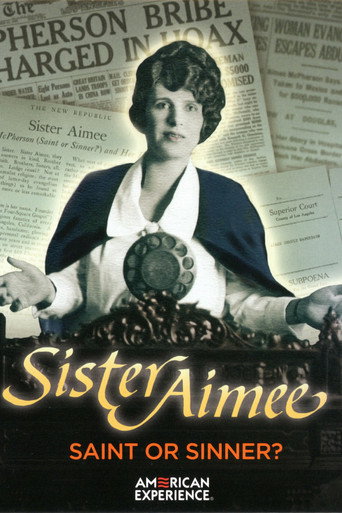
At the peak of her immense popularity in the 1920s, evangelist Aimee Semple McPherson was drawing larger crowds to her revivals than those of P.T. Barnum or Harry Houdini. This chapter of "American Experience" paints a vivid portrait of the controversial and charismatic religious figure. Credited with mainstreaming religion in American culture, Sister Aimee created one of the country's first Christian radio stations, among other accomplishments.
This compassionate doc follows concerned citizens living at the frontiers of extreme oil and gas extraction; as they denounce the rise of extreme energy, they also envision the new world that is taking shape in its stead, at the end of the fossil fuel era.
Along with his legendary cartoons, Walt Disney produced a marvelous array of live-action classics that came about through the use of his singular style, hard work and an unwavering belief in this vision.
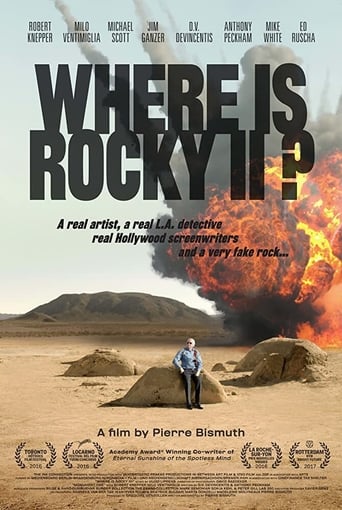
Pierre Bismuth hires a private detective and a duo of screenwriters to investigate on an enigmatic artwork.
Echo of the Mountain takes a look at the life and work of Santos de la Torre, a great Huichol artist who, like his people, lives in oblivion. Despite having made a great mural for the metro station Palais Royal – Musée du Louvre, Santos lives isolated and ignored in his country. This documentary follows his pilgrimage to Wirikuta, where he asks gods for permission to make a new mural; his journey across 385 miles of the Peyote Route, and Santos's creative process during the making of a new mural which aims to illustrate the history, mythology and religious traditions of the Huichol people.
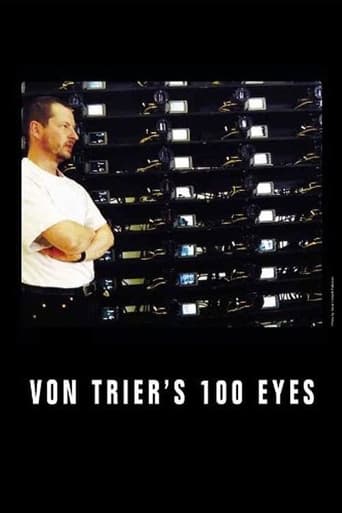
Although at first sight this might look like a simple ‘making of DANCER IN THE DARK’, the later developments in the film reveal the whole drama of Lars von Trier’s inner life during the shooting process. All his doubts and insecurities in collaborating with the crew and actors - especially actresses - are exposed. The biggest drama started when Björk walked off the set. Nobody knew whether she would be back or not. Admitting that he feels threatened by women, who can ‘make him feel embarrassed’, the director gives this documentary the nature of a personal diary. When he discusses the importance, purpose and beauty of the use of a hundred cameras in a certain sequence or the meaning of the Dogma 95 rules, the audience is witnessing the process of the artist’s search. Is the pain that the director went through during the shooting really visible in the final result, as Lars von Trier claims in this film? (from: http://www.idfa.nl/)
An all-star cast tells the inside story of the Broadway theater, and how it came back from the brink thanks to innovative work, a new attention to inclusion and a sometimes uneasy balance between art and commerce. Legends of the stage and screen—including Helen Mirren, Christine Baranski, August Wilson, James Corden, Alec Baldwin, John Lithgow, Viola Davis, Hugh Jackman and Ian McKellen—take us behind the scenes of Broadway's most groundbreaking and beloved shows, from A Chorus Line to Hamilton. Iconic performances by Lin Manuel Miranda, Patti LuPone, Bernadette Peters, James Earl Jones and Mandy Patinkin lead the way on a hurly burly ride through Times Square, once again the main street of American show business in this documentary directed by Academy-Award nominee Oren Jacoby.
In 2013, the world's first senior residence for HBTQ people opened in Stockholm. Agneta, Ingbritt and Thomas move in. They have all had dreams and desires in a time of oppression and constraint. When they begin their lives in the senior residence, new perspectives are gained in their worldview and within themselves.
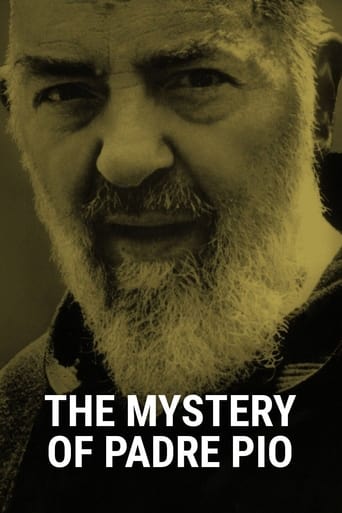
The documentary offers testimonies and documents never disclosed about the plot against its protagonist, who had the stigmata of Jesus Christ in his hands, feet and side for 50 consecutive years.
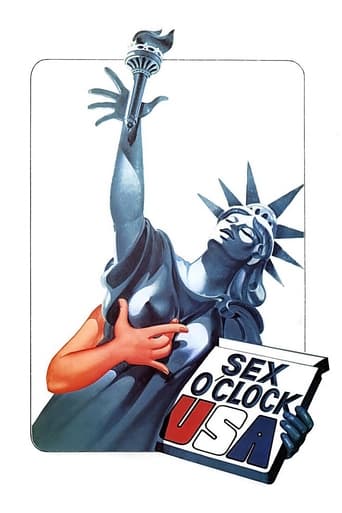
The American sexual revolution in motion through Reichenbach's sharp eye: peep shows, gay theatre, X-rated film shoots...
From the Academy Award-winning director of When We Were Kings comes this enthralling tribute to the timeless power and magic of basketball.
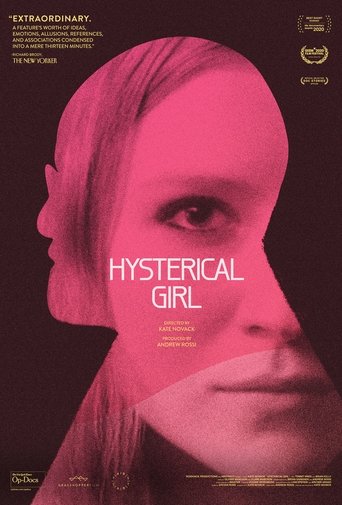
In 1900, Sigmund Freud began treating a 17-year old girl he called "Dora." Her parents brought her to therapy after she accused a family friend of sexual assault. Freud's account of his sessions with Dora was the only major case history he published of a female patient. Intercutting his published text with a scripted version told from Dora's point of view, Hysterical Girl revisits this landmark case. Woven throughout are several decades of cinema, Congressional hearings, and media coverage. What emerges is a portrait of the grip that Freud’s theory of hysteria has had on popular culture over the past century and into the present day.
Activate Your Account!
You must create an account to continue watching