It was called the Black Death, a disease that started in the 14th century, and swept across Europe wiping out half the population, one of the most lethal killers in human history. But the cause of the Black Death has eluded scientists. Now, Evolutionary biologist Hendrik Poinar embarks on an epic journey to solve the 600-year old mystery and change the way we fight infectious diseases today.
A film about twin bothers Jacob & Esau
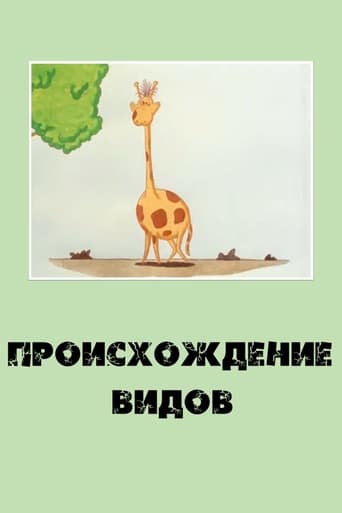
A parody version of the famous book by Charles Darwin. For adults.
The story of the complete Ramayana, from the birth of Lord Rama to his Pattabhisheka after completing his exile.
Since 2000, a woman among women upset the world and its inhabitants. This is probably the most popular woman on the planet. It is the origin of the largest global gatherings, performs miracles by thousands, calls for centuries undisputed scientific, multiplies his appearances lately, save secrets to illiterate children cry icons and transmits apocalyptic messages who wants to hear them. His name Mary. Filiation: the three religions of the book. A Jewish woman asked by Muslims. A goddess for Hindus, the Mother of God for Christians, a final appeal to the unbelievers.
Set in 15th-century Italy, The Cardinal stars Matheson Lang as one Cardinal de Medici. Bound by the rules of the confessional, the cardinal is unable to disclose the multitude of sins revealed to him by one of his most influential parishioners. De Medici's dilemma is compounded by the fact that the confessor has committed a murder for which the Cardinal's brother has been arrested. The basic plot gimmick was good for another go-round in the 1953 Hitchcock flick I Confess. This 7-reel British film was based on a play by Louis N. Parker.
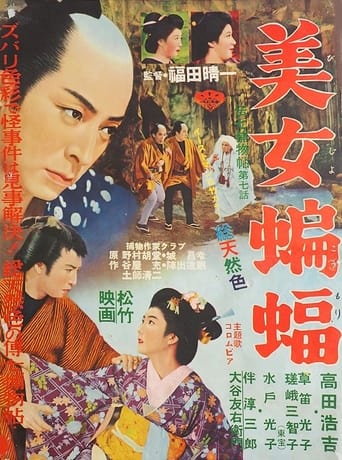
The head of Oshu, Harumichi Honma, was ordered by the boat bugyo (Commissioner of the board) Tajima Kuze to extract five gold coins to the Shogun family in Edo, and put it into Ryujin Maru. However, Tajima, who was the chief retainer of the shogunate, said that he was a member of the board, tetsugoro Funabashi, kumiyumi no Kami ichibei, and his son, masakichi, and others, and in the middle of the night, he killed all the members with poison in the night of the storm, threw Masayoshi, who was a fellow of the city, and masakichi, who escaped from the death of poison, into the sea and sank the boat to eliminate evidence.
Kalapi is a 1966 Indian Gujarati biographical film directed by Manhar Raskapur, starring Sanjeev Kumar, Padmarani, Aruna Irani, Nutan, Pranlal Kharsani.
Churchill, a name typically associated with braveness and altruism. Recently found evidence from Soviet and British sources however brings up questions about Churchill's doings in the conferences of Tehran, Yalta and Potsdam. Why did he agree to give Stalin large parts of Poland? The story of two world leaders in times of war - it is also the story of Poland.
A forbidden love story played out in a decade that would soon spawn the sexual revolution. Part historical documentary and part experimental narrative the film reconstructs a mesmerizing and erotic narrative from 60 hours of reel-to-reel audiotape discovered in a suitcase. Recorded in the 1960's by a Mid-western woman and her lover they chronicle the details of their adulterous love affair. Reliant on recording devises to document and memorialize their affair the tape recorder evolves as a confidant, witness and participant, always omnipresent creating a welcomed threesome. Mirroring the compulsion to confess ones indiscretions in today's Internet world these captivating recordings speak to an audience that can remember Bert Parks as well as one who has never set finger to a rotary phone.
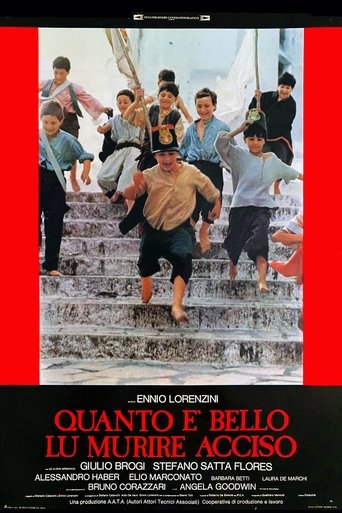
How Sweet it is to Die Murdered (Quanto è bello lu murire acciso) is an Italian historical film written and directed by Ennio Lorenzini and released in 1975. The original title of the film is that of a popular song reworked by Roberto De Simone, who is considered the precursor of the Neapolitan folk revival of the 1970s. The film depicts the failed expedition organized by Carlo Pisacane in 1857 to provoke an uprising in the Kingdom of the Two Sicilies.
A Documentary that uncovers the ghostly secrets and tragic past of an Antebellum Mansion in Florida with a Team of Historians, former residents and Ghost Hunters.
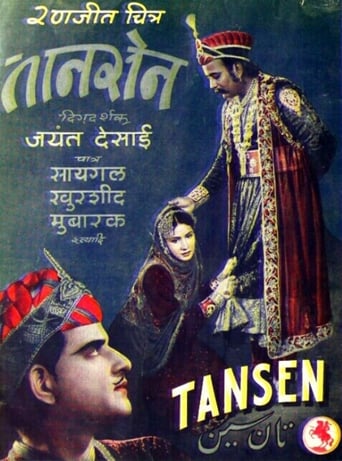
Renowned, talent singer Tansen is settled in a small village. He has a lover whom he loves madly namely Tani. His singing talent pampers everyone in his village namely the animals, the Maharaja's and other living organisms.
Indian biographical film based on the life of social activist, Kisan Baburao "Anna" Hazare.
Activate Your Account!
You must create an account to continue watching