Anders Østergaard’s film is an investigative look at the year the Berlin Wall fell, documenting the events that took place in Hungary as a prelude to the dramatic changes in November 1989. The director recreates the events and leads the audiences deep into the politicians’ secret meeting rooms by using a mix of interviews, archive material and reconstructed scenes and dialogues.
Set against the backdrop of the Boxer Rebellion and the takeover of the Forbidden City by foreign powers, the empress-dowager Cixi and her notorious chief eunuch fight a losing battle to preserve their corrupt and autocratic regime.
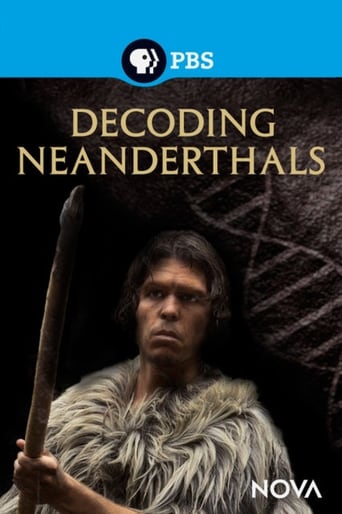
Over 60,000 years ago, the first modern humans left their African homeland and entered Europe, then a bleak and inhospitable continent in the grip of the Ice Age. But when they arrived, they were not alone: the stocky, powerfully built Neanderthals had already been living there for hundreds of thousands of years. So what happened when the first modern humans encountered the Neanderthals? Did they make love or war?
An experimental sitcom, shot in the style of silent films of the early twentieth century. A parody of military-patriotic films. The plot of the film is the battle of the Russian army with Napoleon in 1812.
On the centenary of Sarah Bernhardt's death, we take a look back at the whimsical life of the whimsical and eventful life of "la Divine", who defied theatrical traditions.
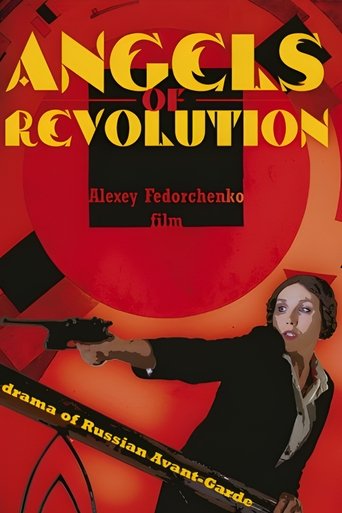
Five friends – a poet, an actor, a painter, an architect and a primitivist film director – are five red avant-garde artists who try to find the embodiment of their hopes and dreams in the young Soviet state. The Revolution is boiling up like a bottle with apple cider: winged service dogs and heart-shaped potatoes, dead Semashko, the People’s Commissar for Health, and cheerful angels, love for the Tsar and love for the young secretary Annushka, executions and pregnancies – everything is interlaced and inseparable!
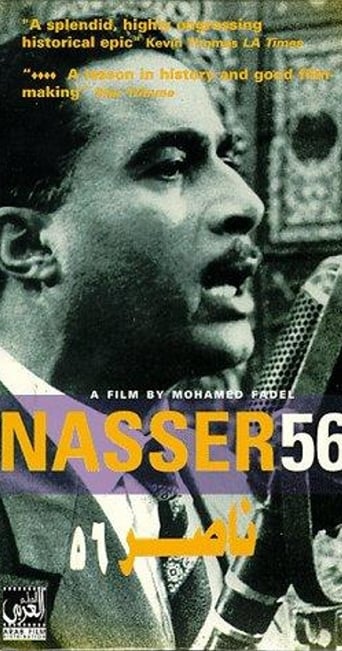
Nasser 56 is a 1996 Egyptian historical film directed by Mohamed Fadel, starring Ahmed Zaki. The film focuses on the nationalization of the Suez Canal by Egypt's second President, Gamal Abdel Nasser, and the subsequent invasion of Egypt by Israel, the United Kingdom, and France.
The historical documentary Hitler Youth explores Adolf Hitler's maniacal construction of the titular organization - one comprised of young Aryan men who would rule the world by fear, intimidation and violence. Via a compendium of terrifying archival footage, the program documents the establishment of the Hitler Youth, its escalation from a membership of 13,000 to 10,000,000 within fifteen years, and the death of the organization following Hitler's suicide in 1945.
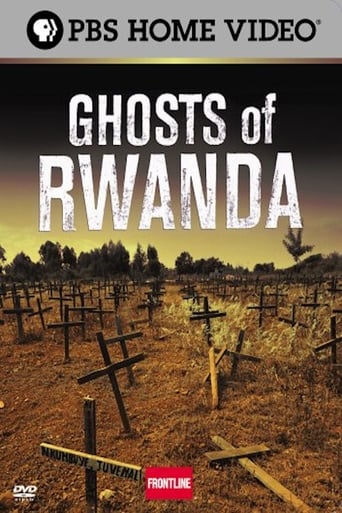
Ghosts of Rwanda marks the 10th anniversary of the Rwandan genocide with a documentary chronicling one of the worst atrocities of the 20th century. In addition to interviews with key government officials and diplomats, this documentary offers eyewitness accounts of the genocide from those who experienced it firsthand. FRONTLINE illustrates the failures that enabled the slaughter of 800,000 people to occur unchallenged by the global community.
After the defeat of the Japanese, the leadership of the Communist forces are invited by Chiang Kai-shek to "discuss the state of affairs" in Chongqing, with the goal of avoiding civil war.
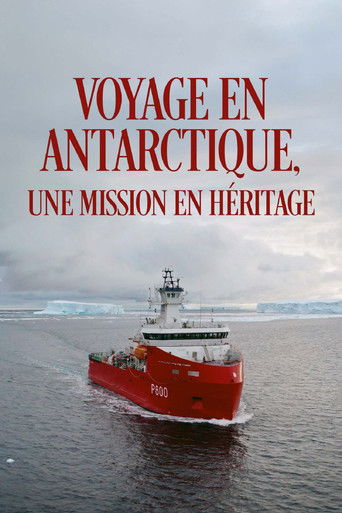
While emptying her grandparents' house, director Jeanne Lefevre discovers the journal kept by her grandfather during a scientific mission to Adélie Land, French Antarctic Territory, in 1960. Atomic engineer Bruno Parlier had never spoken of this trip to his family. With her archives in hand, Jeanne decides to follow in his footsteps, to Antarctica.
At the offices of Consolidated Producers Corporation, producer Tony Paton is determined to make a film about the great African American chemist, George Washington Carver. His backer, Murphy, is skeptical about the marketability of such a project, but Paton convinces him that it is time to depict the truth about races, creeds, and religions.
The heart of this dramatic story based on the novel by Leopold Lahola is the search for the principle of humanism. The story plays in a single day towards the end of World War II in a rough, snow-covered landscape where a German soldier escorts his prisoner with orders to shoot him. The background of the story is formed by the flashbacks of the partisan soldier being interrogated by a Russian commissar who wants to know all about him being taken prisoner. The German soldier Helmut Kampen escorts the captive partisan who is condemned to death but finally manages to flee. The commissar wants to know why the Germans did not kill him and accuses the partisan soldier of collaboration
Roque Dalton was the Bertolt Brecht of Central America. His political struggle against the Salvadorian dictatorships brought him into jail various times. He became throughout Latin America a symbol for the fight against social injustice and helped establish one of his country's first guerrilla organizations.
The film is about the sailors who fought on torpedo boats in the Great Patriotic war.
Story is Based on Maharashtra's beloved king Chatrapati Shivaji Maharaj.
Activate Your Account!
You must create an account to continue watching