During the Nazi occupation of Amsterdam, Otto Frank decides to hide his family, who are Jewish, after his daughter Margot is called to appear for transport to a Nazi labour camp. Miep Gies, Otto Frank's office assistant hides them in the attic above the office. The film tells the true story of Gies' struggle to keep the family hidden and safe, as the Nazis turn Amsterdam upside-down. Based upon Gies' memoirs and Anne Frank's famous diary.
The film explores key moments in the history of the Expos as well as the relentless efforts to bring major league baseball to Montreal. Continuation of the work released in 2003.
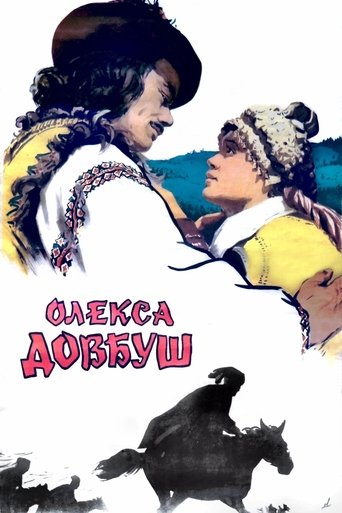
The story of the "Hutsul Robin Hood" Oleksa Dovbush, an 18th century Carpathian Mountains outlaw who's a popular figure of Ukrainian legend.
After she becomes the headmisterss of the first deathmute school in Zagreb, Slava Raškaj meets the famous Croatian painter Bela Čikoš Sesija. What starts out as a professional relationship between two people who recognize each other's talent and place in their respective generations, soon blossoms into a tragic romance.
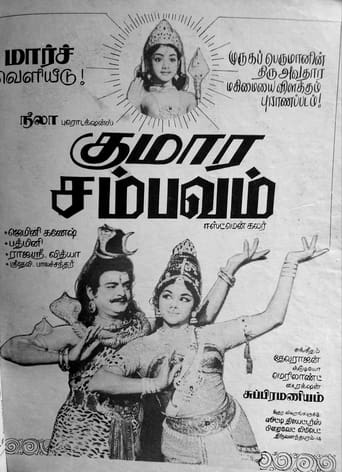
Kumara Sambhavam is based on the epic poem of the poet Kalidasa of the same name.
Adventures of a two little girls kidnapped from their families.
An adaptation not of Zola’s novel but of the play William Busnach and Octave Gastineau derived from it.
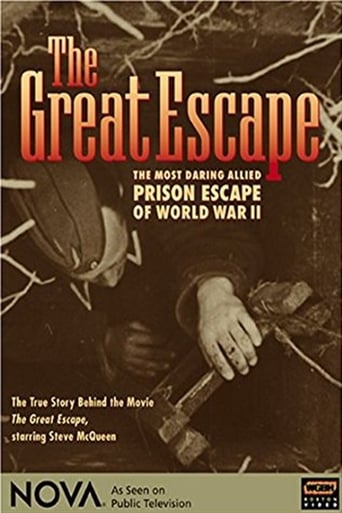
The real Great Escape didn't feature Steve McQueen racing through the Third Reich on a motorcycle like in the 1963 movie, but the big breakout was still thrilling in every way. This program sheds new light on the audacious escape of 76 Allied airmen from a Nazi POW camp during World War II.
Documentary, also known as "Mission to Murder Hitler", chronicling Valkyrie, the true story of a German Resistance group attempting to murder Adolf Hitler.
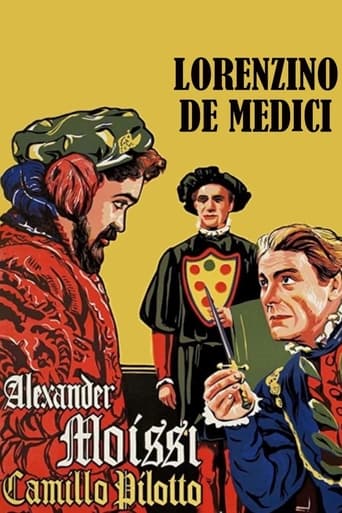
Lorenzino de 'Medici manipulates Alessandro ruler of Florence to save his beloved Bianca.
The 18th-century Indian painter Nainsukh of Guler receives a poetic, visually stunning tribute from a young Indian filmmaker employing an arresting pictorial language. Shot in the region where Nainsukh produced his most celebrated work, this is a meditative and meticulous recreation of the world of an artistic genius.
1828 in the German port city of Bremen: Two very different women collide in an age that has no place for either of them. One strives for a career in law, at a time when women aren't even admitted to universities. The other has lived life outside the law and may now have to pay the tab. One of them needs to get her head together – while the other would do anything not to lose hers. -- Based on a true story.
Set in the 1800s when Napoleon’s French ruled Europe, the film follows young Austrian carpenter Franz and his Bavarian wife, Katharina as an unforeseen event forces them to flee from Augsburg, Bavaria for Franz’s family home in Tyrol, Austria. Tyrolian sentiment is rising strongly against Napoleon and trouble is stirring. In no time it sweeps up Franz and his brothers along with the whole town.
In 2002, the greatest prison in Latin America, Complex Carandiru, was demolished. A couple of months before its implosion, director Paulo Sacramento trained some inmates and together with his crew, they produced many hours of footage, showing daily life in prison.
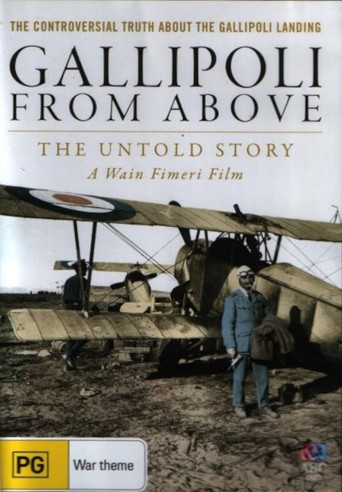
Gallipoli from Above: The Untold Story is the true story of how a team of Australian officers used aerial intelligence, emerging technology and innovative tactics to plan the landing at Anzac Cove. It is now nearly 100 years since the landing and hundreds of books, movies and documentaries have failed to grasp the significance of the ANZAC achievement. Instead, the mythology has clouded the real story of how these two influential Australian officers took control of the landing using every innovation they could muster to safely land their men on Z beach.
The story of Farewell to My Concubine is itself very dramatic. Lillian Lee is rumoured to have written the original screenplay in the late 1970s, which was made into a two-part television series on RTHK by Alex Law under the name King Chau and Lady Yu. Lee then adapted the story into a novel in 1985, which later inspired a feature film, scripted again by Lee and directed by Fifth Generation mainstay Chen Kaige, going on to become an international sensation that won the Palme d'Or at the Cannes Film Festival and Best Foreign Film at the Golden Globe Awards among other accolades. What's more, the Peking opera of the same title featured prominently in the novel, the TV programme and the film was itself adapted from a Kun opera, which was in turn based on the historical chronicle Basic Annals of Xiang Yu, from Records of the Grand Historian.
Brazil has a long tradition of coup d'états. These coups would have not been viable without the support of the big media, particularly TV Globo. Two Brazilian journalists in the UK reveal the manipulative tactics of these organisations.
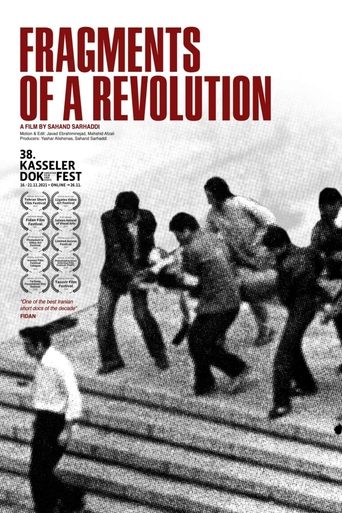
An experimental film about narrations of two journal photos from Iran's revolution in 1979.
Activate Your Account!
You must create an account to continue watching