The history of the Ariane rocket is a space epic that has seen Europeans unite and innovate to make a place for themselves in the space race. Faced with Soviet and then American supremacy, men and women from the four corners of Europe have achieved the impossible. Ariane has become a true monument, thanks to the passion of those who dreamed of it and to their tenacity in the face of the various obstacles that stood in their way. This undeniable European success is now at a turning point in its history. The new Ariane 6 program is currently being developed to meet the challenges of tomorrow: will it be able to meet the challenges of a more competitive environment than ever before?
A film about contemporary life in Auschwitz. In an observation from dusk till dawn, it portrays the theater of everyday life around the grim confines and captures the energies and activities of a world fascinated by this former concentration camp.
The first American space station Skylab is found in pieces scattered in Western Australia. Putting these pieces back together and re-tracing the Skylab program back to its very conception reveals the cornerstone of human space exploration.
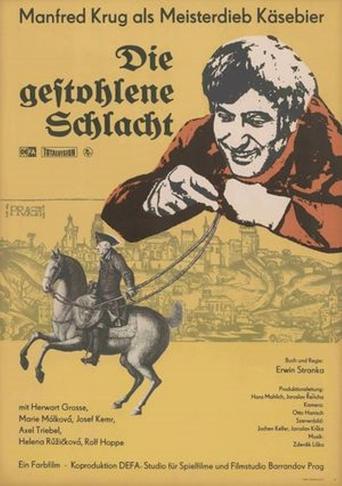
In 1757, the second year of the Seven Years' War, Frederick II the Great stands at the gates of Prague. He has been trying to take the city for weeks, as the enemy commander Duke Charles of Lorraine is inside. Frederick has just defeated him, but the tide could soon turn against the Prussians, as new Austrian troops are approaching. None other than the famous master thief Andreas Christian Käsebier is to sneak into Prague to open the gates from the inside. As a reward, the king promises him freedom. Käsebier accepts the offer because he is tempted to steal an entire city. But by chance, Käsebier learns that the king wants to betray him. After a successful battle, he is put back behind bars for life. This doesn't suit the master thief at all, especially as he has just fallen in love with Katka in Prague.
Felix Yzagun Manalo is a sprawling historical epic that traces the origin of Iglesia Ni Cristo (The Church of Christ) which is established in the Philippines from its humble beginnings in 1914 through the present day.
The story is based on the life of Rifleman Jaswant Singh Rawat. 55 years ago during 1962 Indo-China war , when the destiny of war was pre decided, there stood a brave soldier from 4th Garhwal Rifle against all odds and guarded our post from Nurunaang Base in Arunachal Pradesh then called NEFA border.
A love story played out against the backdrop of World War II.
The Gothic prince Ranimiro and his daughter Amaya have been taken prisoner by the Basques. He will be tried by the Council of Elders, while the Basque leader Íñigo, who arrested him, falls in love with his daughter Amaya, unaware that she is the current owner of the golden bracelet that symbolizes Basque tradition and that, according to legend, the man who marries her will be proclaimed king of Vasconia.
Igie Ehanire a research student on African Art history gets touched, he gets more perturbed about the injustice of the British invasion of Benin.
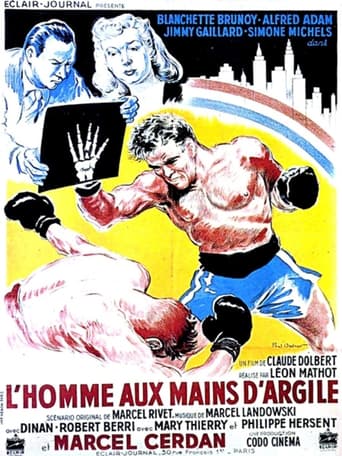
The fictionalized life, and interpreted by himself, of the popular boxing champion Marcel Cerdan. Training sessions, matches, victories, flight to the U.S.A. where the title of world champion is disputed, form the whole subject of the film.
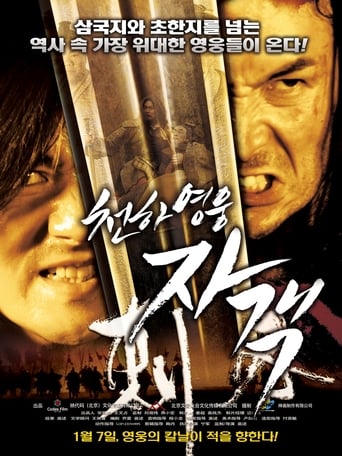
Game of Assassins is about General Tu Jia who trains a trio of young assassins to seek revenge against villainous King of Wei. And one of the assassins succumbs to the dark side for temptation of wealth and power.
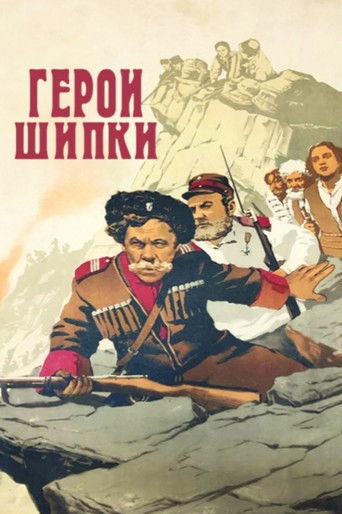
Heroes of Shipka was the first solo effort for Soviet director Sergei Vasilyev, who had previously collaborated with his late brother Georgi. The film is set in 1887 during the pivotal battle between the Russians and the Turks at the Shipka Pass. Stressing the solidarity of the Soviet states, tribute is paid to the courageous Bulgarian volunteers who helped the Russians fend off their mutual enemy.
The movie that wowed audiences at Expo 70. The film combined scenic images including aerial cinematography with rousing classical music such as Sibelius' Karelia Suite. Using then ground-breaking technology, the film required three separate but synchronised 35mm film projectors which projected their images onto an extra-wide screen. In 2004/2005 Archives New Zealand commissioned a restoration at post production facility, Park Road Post. Hugh Macdonald, the original director, was involved in the restoration and Kit Rollings, the original sound mixer assisted with the updated soundtrack. The remastered film was released for sale on DVD in 2014.
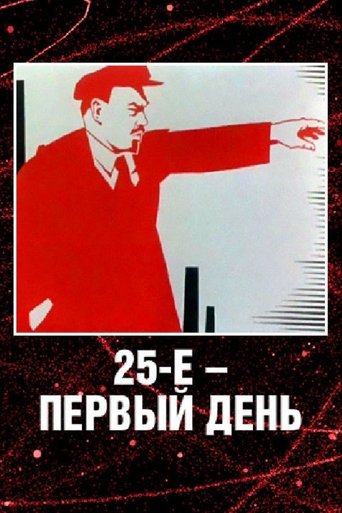
A short film made by Yuri Norstein for the 60th anniversary of the October Revolution, The 25th - the First Day recounts that day using art from the revolutionary period.
This is a film with music. Or about the music and texts that accompany, in a poetic way, a decisive battle between Unitarian and Federalists. The vicissitudes of the birth of a nation based on the play written by Mariano Llinás and Gabriel Chwojnik, whose images achieve some hypnotic strength.
Nuremberg durting the time of Albrecht Durer and the famous geographer Martin Behaim: the locksmith Peter Henlein is looking for a way to make bullets more accurate by designing a new form. Just as he welds together two round balls into an elongated shape, he believes he's discovered that his assistant Konrad is trying to alienate his wife from him. There is a struggle, during which Henlein's new kind of bullet strikes him in the chest. The doctor, unaware that there are two bullets lodged in his body, because there was only one shot, only removes one.
Based on the events that took place in Odessa in 1910, when, on the instructions of the Foreign Bureau of the RSDLP, a prominent Bolshevik underground worker arrived in the city under the guise of a French timber merchant, who was to organize the delivery of illegal literature to Russia through the Odessa port. The task can be completed. In Odessa, a variety show theater was created, which, having gained fame, toured Russia and received "theater props" from France...
In mid-19th Century Korea, the people of Joseon Dynasty embrace the new religion Donghak. After the founder is executed, Choi Si-hyeong becomes Donghak’s second-generation leader and successfully propagates the religion, but in doing so becomes the object of oppression by the royal court.
Activate Your Account!
You must create an account to continue watching