When a young SS soldier encounters an avant-garde theater-troupe of survivors celebrating the end of WWII, he must come to terms with his complicity in their grief.
“Once clothed as an official, you represent law and justice.” This was taught to young detective Xian who worked under Detective “Silent Dog” Ao to catch mountain robbers. To everyone’s dismay, the robbers turned out to be detectives from neighbouring counties who were forced to rob the ruling county to save the poor. Through trickery and lies, Ao started a bloodbath to kill the robbers. Shaken to the core by Ao’s deceit, the originally naïve Xian abandoned his dreams to uphold righteous values. Not to be outdone, he ended up murdering the treacherous Ao for his own gains. With blades and blood, Xian was later hailed as a legendary detective.
The life of a runaway slave who founded the Quilombo dos Palmares, an outlaw community of Brazilian slaves.
Russia, January 25, 1725. "Give it all...". The emperor's weakening hand was able to write in his will only these two short incomprehensible words that kept Russia in a bloody struggle for the crown for a century.
Murat Pasha is a police chief known for his harsh punishments. Yunus, a driver who is brought before him, has fallen in love with the pasha's servant. Although Yunus says he intends to marry her, he cannot escape being thrown into prison. Meanwhile, the servant woman Yunus is in love with is pregnant, and so she is also thrown into prison. Many people beg Murat Pasha to pardon the young couple, but to no avail. Moreover, those who intervene are also punished. Among those punished is the servant woman, whose revenge will be great.
Pickup trucks are essential to the American way of life; manufacturers compete to outsmart, outmaneuver and outlast each other; experts, designers and historians weigh in on the most influential innovations in the truck world over the past 120 years.
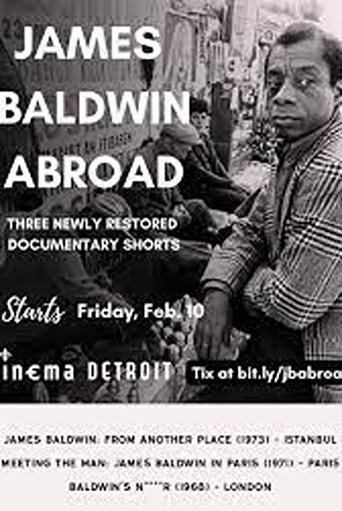
Showcasing three short films by American writer James Baldwin, wherein he muses about race, sexuality and civil rights, among other topics, in Istanbul, Paris and Great Britain.
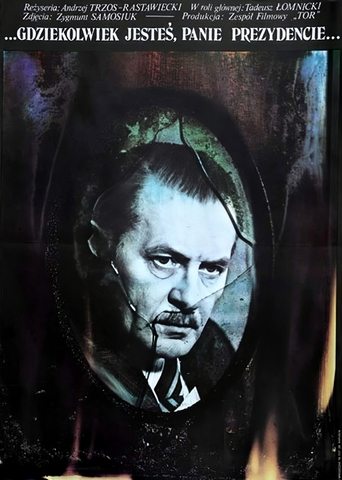
Stefan Starzyński, the mayor of Warsaw, organizes life in the capital in September 1939 and lift the inhabitants' spirits via radio announcements. After the surrender, he does not use his last chance to escape.
The life of the famous French writer Alexander Dumas the Elder. Screenwriter Jaroslav Dietl did not hide his admiration for this literary giant, and in addition to the screenplay he also wrote a three-part TV play about Dumas (starring Vladimír Menšík). In Kachyn's film, Dumas played the father and son of the Štěpánková brothers, and it was a very difficult and difficult task for these young actors.
One of the most controversial men of his age, Alexander Hamilton was a gifted statesman brought down by the fatal flaws of stubbornness, extreme candor and arrogance. His life and career were marked by a stunning rise to power, scandal and tragedy. But his contributions survive. As Secretary of the Treasury during the tumultuous early years of the republic, Hamilton led the transformation of the young country into industrial powerhouse.
One thousand miles from nowhere lies lonely outpost of coral and sea called Midway. It was here in 1942 that the United states and Japan fought the greatest naval battle of all time, and changed the course of World War II. Join Titanic discoverer Dr. Robert Ballard as he, a team of experts, and four World War II veterans return to Midway to do the impossible: to locate at least one of the five downed aircraft carriers, including the U.S.S Yorktown. Hear the amazing accounts of the four men who narrowly escaped with their lives, and watch as they pay their final respects to their fallen comrades three miles below the waters of Midway.
This documentary-style film recreates the infamous Asama Sanso Incident of 1972 wherein an extreme faction of the Students Allied Red Army holed themselves up in a mountainous cabin in the dead of winter. By the time the police finally caught up with them, it was discovered that they had murderously turned upon themselves in a bizarre extension of their radical philosophy. This event virtually marked the end of the Student Revolution.
Film adaptation on the actual assassination event of Wang Jingwei happened in 1939.
It stars B. Saroja Devi as Kittur Chennamma, an Indian freedom fighter who led an armed rebellion against the British East India Company in 1824, and died in captivity in 1829.
A Terrible Beauty is the story of the men and women of the Easter Rising in Dublin in 1916, Irish and British, caught up in a conflict many did not understand and of the innocent men and boys, executed because of what transpired in The Battle of Mount Street Bridge. The British soldiers were the last of the Great War volunteers, who joined up together to fight the Germans. They knew that there was a strong chance they would die in France, but to die in Dublin would never have crossed their minds. The Irish Volunteers were weekend warriors many of whom had no idea they were about to take part in large scale battles on the streets of Dublin.
Telugu language film 1961
A biopic on the author M. R. James. If M.R. James wrote his ghost stories purely to entertain his friends, why do they seem to strike such resonances in readers? Why are they so terrifying? Clive Dunn's fifty minute documentary sets out to try to answer this question. In the words of its fictional narrator, nicely played by Dangerfield's Bill Wallis, "was there something that made [Monty James] believe that evil and malice could become palpable?"
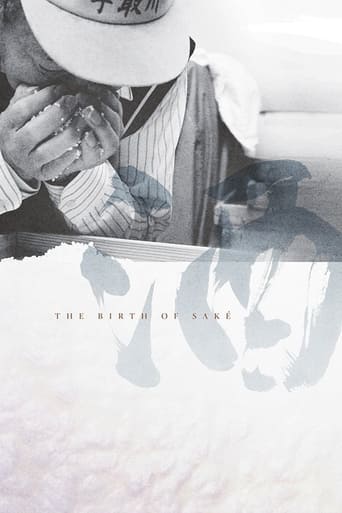
Through the unrelenting winter in the north of Japan, a small group of workers must brave unusual working conditions to bring to life a 2,000-year-old tradition known as sake. A cinematic documentary, The Birth of Sake is a visually immersive experience of an almost-secret world in which large sacrifices must be made for the survival of a time-honored brew.
Activate Your Account!
You must create an account to continue watching