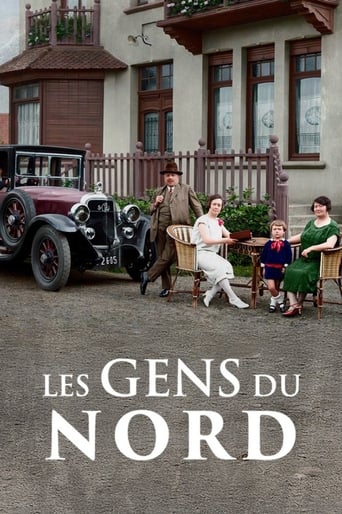
A documentary drama retelling the shift of Mitterand's policy. In May 1981, F.Mitterrand is elected President of the Republic, after more than twenty years in the opposition. He wants to change the life; he believes in the supremacy of politics over economics. He wants it to be fast and executes his programme to realise the socialist transformation. Two years later, Pierre Mauroy and Jacques Delors introduce an unprecedented austerity plan and open the parenthesis of austerity... that would never be closed.
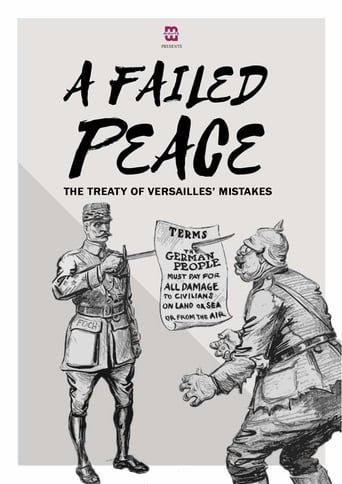
At the end of WWI, the treaty of Versailles established the conditions for peace in Europe. The aim for the victorious powers was to make Germany pay reparations, and to guarantee a future without war. Yet a decade later, the denunciation of 'Versailles' became a powerful lever for the nazis to obtain power as these reparations would mark the beginning of the humiliation of the German people, and nurture a feeling of having been bestowed a hopeless future. In the 20 years that follow the end of WWI, the issue of reparations and responsibility will effectively poison international relationship. The treaty negative impact goes well beyond WWII as the new European borders it implemented led to many conflicts during the twentieth century. This documentary shines a light on the causality between the decisions taken with the treaty of Versailles, and the ensuing events of the century.
Unique archives show a world that no longer exists: pre-war Poland in which two cultures: Jewish and Polish, coexisted wall-in-wall; cottage in a cottage; town next to town. "Po-lin" - meaning "we will stop here" in Yiddish - does not deny the painful past. It only shows that there was something more next to them. Worth remembering and - perhaps - reconstruction.
For longer than the United States has been an independent nation, there has been a Marine Corps. They consider themselves the very best America has to offer. Embodying fierce patriotism, extraordinary courage, and innovative weapons, they are a force. This documentary focuses on their training and examines what it means to be a Marine.
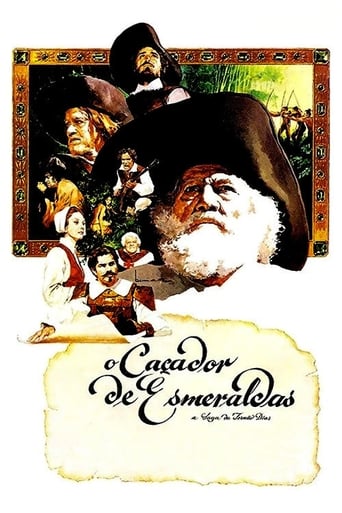
The life of Fernão Dias, a 17th century Brazilian frontiersman known as "the Emerald Hunter".
This program presents the life and ministry of George Muller, who cared for thousands of orphans in 19th century England. He never asked anyone for money. Instead he prayed, and his children never missed a meal.
Did Adolf Hitler survive WWII and live on under an assumed identity? Norwegian researcher Skule Antonsen sides with Spanish documentary filmmaker Idelfonso Elizalde to follow in the footsteps of Adolf Munchenhauser, a Hitler look alike captured by the Allied forces in Berlin 1945. When Munchenhauser is released from Camp Rebecca in 1946, a secret prison camp in the Nevada Desert, he decides to stay in the U.S. Skule digs into Munchenhausers life and hears a lot of stories, but none of them reveal his real identity. Is it possible that Adolf Munchenhuser really was Adolf Hitler? As Skule digs deeper for the truth it becomes clear that there are powerful forces that will do anything to stop him.
Knut Erik Jensen's personal visual poem, an Elegy for a culture that no longer exists. Stella Polaris is a personal document in fiction form of a bygone era and culture in the northernmost part of Norway. At the same time described the current Finnmark in the scene from our own time. The story is narrated by a woman's eyes, both as children in the busy fishing village and as an adult in the present. She returns to the birthplace and remember how life was before the fishing village was closed. Love story between her and her childhood friend is central to the action. 'Stella Polaris' is in the form of associative told with an unconventional dramaturgy.
This documentary of repressive political realities in Cameroon begins with the 1990 publication of an open letter to President Biya calling for a national conference - and the immediate arrest of the letter's author and publisher. The narration then examines the nation's colonial history, beginning with the first German missionary in 1901, the establishment of schools, French occupation following World War I, the paucity of books written by and published by Cameroonians, and the repression of the CPU, a leftist organization of the 1950s and 1960s. Cameroon and its people are the lark, its feathers plucked first by colonialism and then by native strongmen: 'Alouette, je te plumerai.'
It follows the resistance to modernization in rural Mexico. It is a reminder that it is still possible to live in tune with our essence as human beings.
The trial of the Catonsville Nine, the nine Catholic activists who in 1968 went to the draft board in Catonsville, Maryland, took 378 draft files and burned them to protest the Vietnam War.
Lifting the lid on one of the most iconic singers, songwriters and performers of all time with a look at the most powerful moments that molded Elton John's career and identity. Highlighting each moment are Elton's own words from his writings and interviews as he reflects on each major milestone that altered the trajectory of his life.
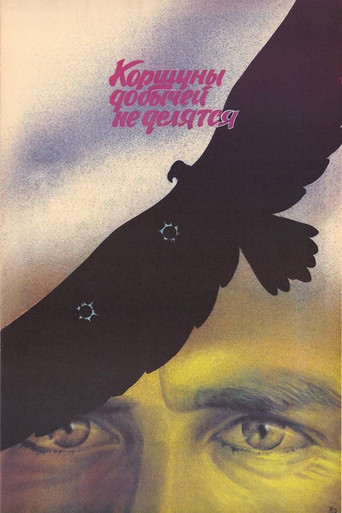
A Moldovan village in the late forties. Andrei Brume, a Komsomol member, university student and MGB lieutenant, is on a mission to fight a criminal gang. The situation is extremely dramatic. On the one hand, there are night raids by Stratan's gang, on the other - endless official extortion, respectfully referred to as a "state loan", when the chairman of the collective farm, Maria Josan, groping the trigger of a revolver, calls on hard workers to respond to the call of the Motherland...
Coming to a P.E hall near you, is another chapter in the sacred and sanguinary saga of Havoc in Highfields. When some average drifter by the name of “Turkey” thinks he can have a straightener with a manic Pigeon Fella in the yard after he took his hallowed Petits Filous, the enraged Pigeon Fella challenges him to a quarrel in the wastelands of Highfields. The stakes are sky piercingly high because this time, the champion will dethrone The High King of Highfields and shall have the force of the cavalry resting in his smiting hand.
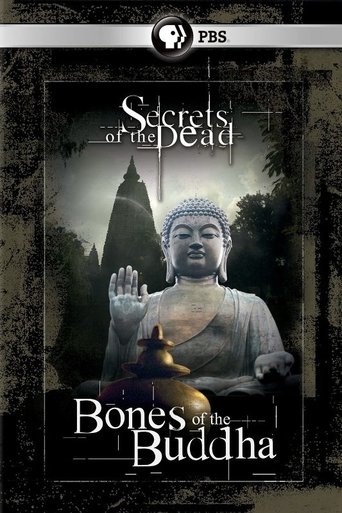
Bones of the Buddha is a 2013 television documentary produced by Icon Films and commissioned by WNET/THIRTEEN and ARTE France for the National Geographic Channels. It concerns a controversial Buddhist reliquary from the Piprahwa Stupa in Uttar Pradesh, India. It was released in May, 2013, and was broadcast in July 2013 in the US on PBS as part of the Secrets of the Dead series.
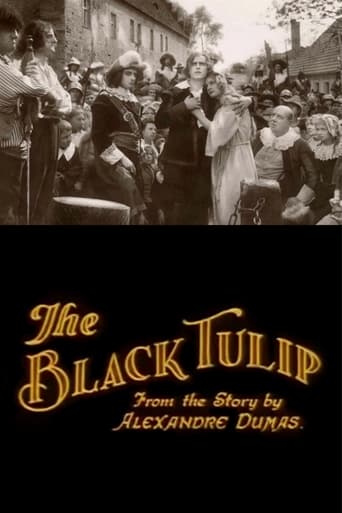
In 17th century Holland, a faction of royalists is scheming to restore the monarchy and jail the De Witt brothers, who control the Republic. At the same time Tulip Fever is raging, and bulb-grower Cornelis van Baerle tries to obtain the secret of black tulips. Van Baerle will soon find himself threatened by radical royalists and rival bulb-grower Isaac van Boxtel.
Activate your FREE Account!
You must create an account to continue watching