The July days of 1917 in Petrograd. Hundreds of demonstrators took to the streets, including the elderly and children. They are marching with red banners, singing songs. And suddenly, machine gun fire is heard from the attic. The dead and wounded fall to the pavement. And immediately detachments of mounted Cossacks poured out of the alleys... Andreika, the son of a St. Petersburg worker, miraculously survived this altercation. But little Elena's mother was killed. That's how Andreika got a little sister. The Provisional Government issues a decree on Lenin's arrest. There are spies all over Petrograd. One of them, Ensign Kolokov, disguised as Uncle Vitya's janitor, settled not far from Andreika's house.
Wager is Count Mauritz Armborg, the young master of the estate. Linnanheimo plays Katariina (Catherine) the nanny to Mauritz's nieces and nephews. The two fall in love and decide to escape to Italy via Denmark where they have planned to get married. There are always complications because Mauritz's grandmother doesn't want him to marry below him - she has decided that Mauritz is to marry the Swedish beauty, Ingeborg Liliecrona.
Takarazuka Revue Moon Troupe 2018 production of the Viennese musical 'Elisabeth'
Queen Elizabeth has worked with 14 Prime Ministers, including holding confidential weekly meetings. It is not known whether she has influenced her Prime Ministers, or what happens when they clash.
The action takes place at the beginning of the 16th century. The rich Belarusian lands that are part of the Grand Duchy of Lithuania, located at the intersection of trade routes, are attacked by Tatars. With rapid raids, the Crimean cavalry reaches all Belarusian cities without exception. The conquerors stormed the fortress, robbed, stole the population into slavery, leaving behind ashes. On the way, the troops of the Crimean Tatars, among the few who have not yet been defeated, stand up to the brave squad and brave residents of the city of Slutsk, whose defense after the death of the husband of Prince Semyon Olelkovich was led by Princess Anastasia Slutskaya.
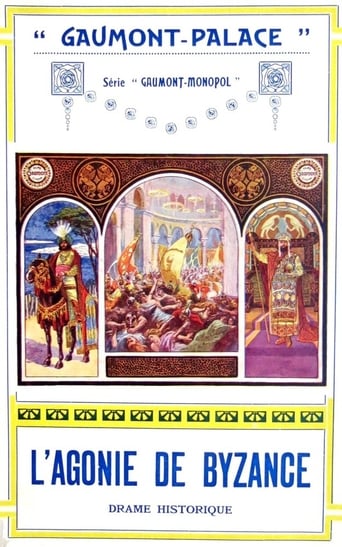
The fall of Constantinople to the Ottoman Turks, an event that marked the end of the Byzantine Empire.
By a twist of fate, Prince Olensky, a scholar of art history and the director of the Hermitage, is entrusted with the mission of preserving the museum's collection for Russia during the October days of 1917.
At Carnac, in the Morbihan, the multitude of menhirs continues to question archaeologists. The most recent scientific research has identified dozens of new alignments of stones, some of which lie under the sea. Why, in the Neolithic period, did men erect gigantic funerary monuments at Carnac, to the glory of dignitaries as powerful as the Pharaohs? From often minute clues, scientists try to pierce the grey areas that still remain on this site and this unique society that radiated and disappeared suddenly in the heart of Brittany.
Chinatown Fair opened as a penny arcade on Mott Street in 1944. Over the decades, the dimly lit gathering place, known for its tic-tac-toe playing chicken, became an institution, surviving turf wars between rival gangs, changing tastes and the explosive growth of home gaming systems like Xbox and Playstation that shuttered most other arcades in the city. But as the neighborhood gentrified, this haven for a diverse, unlikely community faced its strongest challenge, inspiring its biggest devotees to next-level greatness.
George Stoney investigates the living conditions, both good and bad, in the rural, segregated South.
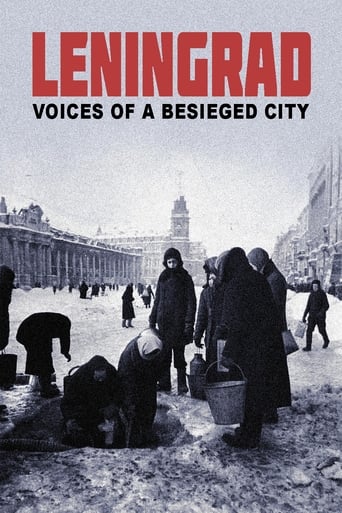
It was one of the great crimes of the Second World War: from 1941 to 1944, a total of 872 days, the siege and starvation of Leningrad by the German Wehrmacht on Hitler's orders lasted. Over a million people fell victim to the blockade, most of them dying of hunger. Countless of these starving people wrote diaries with the last of their strength, and cameramen filmed in the paralyzed city. Evidence from the hell of the siege, many of the film recordings, but above all the written memories on which this documentary on the occasion of the 80th anniversary of the liberation is based, remained under lock and key after the war. The voices of those who had suffered through this terrible time should not be heard by anyone, because they did not fit the pathos of the Leningrad heroic song that was officially sung. Most of the recordings come from women. The writers feared neither the enemy nor the Communist Party or Stalin, who often proved incompetent in providing for the population.
Showcasing three short films by American writer James Baldwin, wherein he muses about race, sexuality and civil rights, among other topics, in Istanbul, Paris and Great Britain.
It’s 2017 in Bisbee, Arizona, an old copper-mining town just miles from the Mexican border. The town’s close-knit community prepares to commemorate the 100th anniversary of Bisbee’s darkest hour: the infamous Bisbee Deportation of 1917, during which 1,200 striking miners were violently taken from their homes, banished to the middle of the desert, and left to die. Townspeople confront this violent, misunderstood past by staging dramatic recreations of the escalating strike. These dramatized scenes are based on subjective versions of the story and “directed,” in a sense, by residents with conflicting views of the event. Deeply personal segments torn from family history build toward a massive restaging of the deportation itself on the exact day of its 100th anniversary.
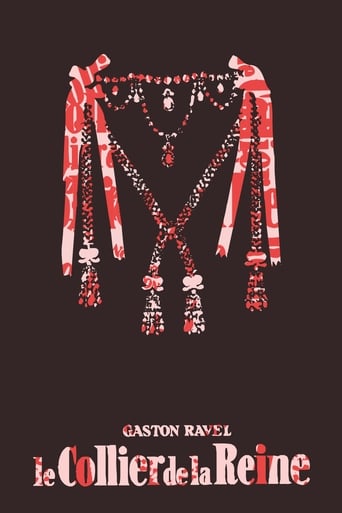
Adaptation of Alexandre Dumas's novel 'The Queen's Necklace' which portrays the Affair of the Diamond Necklace which occurred before the French Revolution.
Hidden in the heart of Russia, there is a Soviet-era city where thousands of people live and work behind barbed-wire fences monitored by armed guards. It is Ozyorsk (Ozersk), located in the Chelyabinsk Oblast, one of the most polluted places on the planet and home to the largest stockpiles of nuclear material. Its code name: City 40.
A writer, Kamouraska is based on a real nineteenth-century love-triangle in rural Québec. It paints a poetic and terrifying tableau of the life of Elisabeth d'Aulnières: her marriage to Antoine Tassy, squire of Kamouraska; his violent murder; and her passion for George Nelson, an American doctor. Passionate and evocative, Kamouraska is the timeless story of one woman's destructive commitment to an ideal love.
This is a story about a young couple whose newly planned life was destroyed by the impact of the Great Purges of 1934–1938 in Mongolia. The main goal of this movie was to provide a testimony for the many Buryats and Mongolians who were persecuted during the Great Purges initiated by Joseph Stalin. In 1937 and 1938, many people, and even entire families, were killed after being wrongfully accused of conspiracies. The movie was shot on location near the Buryat village of Dadal in the Khentii province of Mongolia. The acting and other participation of many local villagers was a great addition to the authenticity of the film
This epic traces, from the Beginning, the lineage of the race of peace-loving people. Mankind at its best is highlighted as greatness of character across the centuries is displayed: Noah heeding God's command, Moses leading the Israelities, Jesus Christ dying to save humanity and promote His message of peace. Moving into our modern epoch: Columbus's discovery of America, the Declaration of Independence, the Emancipation Proclamation; A race of free humans committed to the proliferation of peace and freedom. What becomes of this race when autocratic powers threaten democracy in the time of the first World War?
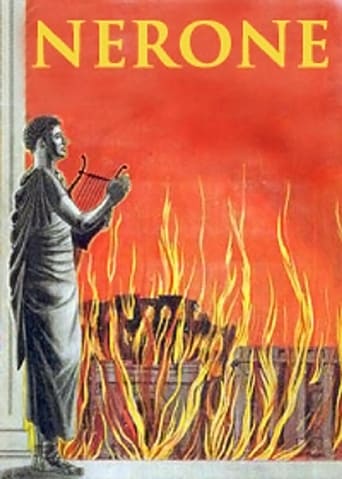
Roman emperor Nero is used to getting what he wants. He has grown tired of his wife Octavia, and has become infatuated with Poppea. He succeeds in making Poppea the new empress, but soon he faces opposition from an outraged populace. Informed of the danger of an imminent popular uprising, Nero orders to set fire to the city, which he watches from a terrace, rejoicing and playing his lyra.
Activate your FREE Account!
You must create an account to continue watching