This documentary is a captivating account of the defense of Wake Island by a small contingent of United States Marines and civilian contractors. From December 8th until December 23rd, 1941 the defenders thwarted an aerial attack and an attempted amphibious landing from a naval task force before finally being overwhelmed by the third attempt by the Japanese Imperial Navy.
Film homage to the great Spanish poet Federico García Lorca, in which they dramatize fragments of his poems and the play "La casa de Bernarda Alba". From his texts, the voice of the poet himself weaves the plot. His characters come to life: El Amargo, which runs from a poem taken from "El Cante Jond" to the "Romancero Gitano". The Woman, blurred and present in so many of his poems. The Mother, a living synthesis of his play-writing. The balcony is open from the hidden Granada to exciting New York. From the rider of tireless riding to the mysterious baroque of Holy Week. From the first babble of the poet to his violent death. Spain is behind its lyric. Also in many images and tensions of the film. The argument of this one wants to approach the argument of a poet. His life and his work, united irremediably.
Though their ranks largely included slaves and prisoners of war, the gladiators of ancient Rome enthralled the masses, and the most successful fighters in the game were treated as superstars, as this thorough documentary reveals. Historians and scholars recount the amazing stories of these larger-than-life warriors -- who included women, senators and even an emperor -- in this episode of the History Channel series "History's Mysteries."
This American Experience tells Whitman's life story, from his working-class childhood in Long Island, to his years as a newspaper reporter in Brooklyn when he struggled to support his impoverished family, then to his reckless pursuit of the attention and affection he craved for his work, to his death in 1892.
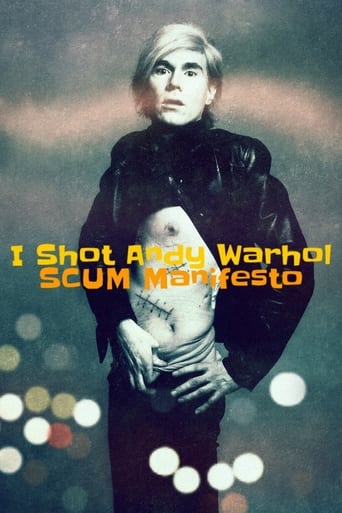
New York, June 3, 1968. Valerie Solanas enters the Factory, Andy Warhol's studio, and fires three shots at him, who miraculously survives, but is seriously wounded. What led this woman to try to kill the famous pop artist, as well as to write a manifesto calling for the eradication of men?
As World War II looms, Pope Pius XI calls on a humble American priest to help him challenge the evils of Nazism and anti-Semitism. But death intervenes, and Pope Pius XII now carries out a very different response to Hitler and the Holocaust.
The film tells the story of a gang leader who helps in the national struggle. Paşa receives gold from foreign powers in order to neutralize the National Forces. Meanwhile, Captain Murat, gang leader Kuduz Recep, and his men raid Paşa's house. They seize all the gold and set off for Ankara. Kuduz Recep says he cannot continue on the journey because he was wounded in the raid. He takes the gold and flees with his men. Captain Murat pursues Kuduz Recep and his men. Hamza, one of Recep's men, takes advantage of Recep's injury, ties him up, and throws him into the river. He hides the gold and takes over as the leader of the gang. Captain Murat finds Recep in the river and they begin searching for Hamza together. Captain Murat is killed during a clash with Hamza's men. Meanwhile, Recep finds Hamza and takes the gold. He will then set off to transport the gold to Ankara.
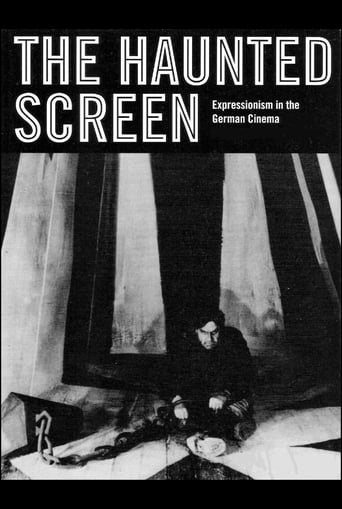
In this film essay, critic Peter Buchka explores the German cinema of the 1920s, ranging from the disquieting images of Fritz Lang's Metropolis to the castrating sexuality of Marlene Dietrich in Die Blaue Engel. The program provides an introduction to Weimar cinema, with Buchka's essay narrated over the images from film clips of 1920s era German films.
Based on true events of the mysterious death of CPN-UML leader Madan Bhandari in Dashdhunga, Nepal.
End of the 1930s. The times of Stalin's terror. Lieutenant Scherbakov got the order to shoot several "enemies of the people". Unexpectedly, a rural wedding found itself at the crime scene. Pursuant to the instruction, witnesses were also eliminated...
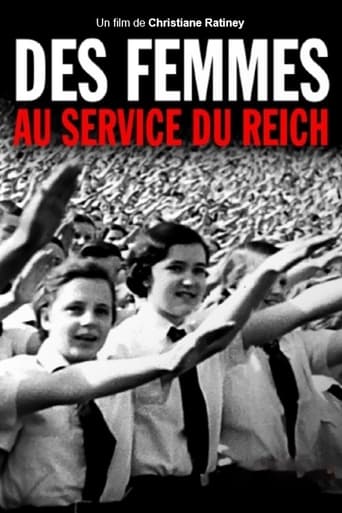
German women may be perceived as passive witnesses to the horrific crimes committed by the Nazi regime, but many were active participants that were as brutal and merciless as their better-known, male counterparts. Over the past 15 years, a new generation of international historians has been digging into the truth of how deeply the Third Reich’s women were involved in the atrocities. Combining their fresh analyses with striking archival footage, this film reveals previously unknown stories about the women who refused to live in the shadow of Nazi men.
Péter, a literary critic, is tasked by the secret police to persuade Social Democratic politician, Anna Kéthly, who has been living in exile for decades, to return home.
A journey through the artistic life of the British-American rock band The Pretenders, formed in 1978, and a portrait of its leader, the charismatic singer and songwriter Chrissie Hynde.
Charles Louis Schulmeister (1770-1853) was a smuggler and a revolutionary, but also a chief of police and Napoleon Bonaparte's favorite spy. A look back on his adventurous life with the purpose of unraveling the many mysteries of his unique path.
The film is set in Lithuania after the Second World War. It shows dramatic events in a small Lithuanian farming community, where people are split between the Soviets and the "brothers in the woods", who are fighting to defend their land from the Soviets after the end of the Second World War.
The film portrays the 1952 revolution and 1980 coup in Bolivia through the lives of two brothers, Juan José and Martín. Juan José, the legitimate son of Luís, is transformed, by his experiences as a youth in 1950s, to become a boss of one of the groups of paramilitaries during the 1980 coup. Martín, the illegitimate son of Luís and an indigenous peasant, becomes a trade union leader during that period.
Activate your FREE Account!
You must create an account to continue watching