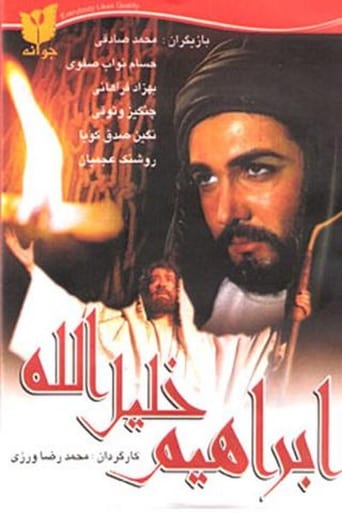
M. Sadeghi stars as the title character in filmmaker Reza Varzi's epic retelling of the life and times of Abraham, known as the patriarch of Judaism, Christianity and Islam, the world's three most prominent monotheistic religions. Led by God from Mesopotamia to the land of Canaan, Abraham entered into a covenant with the Lord that, once fulfilled, would see him father a great nation of kings.
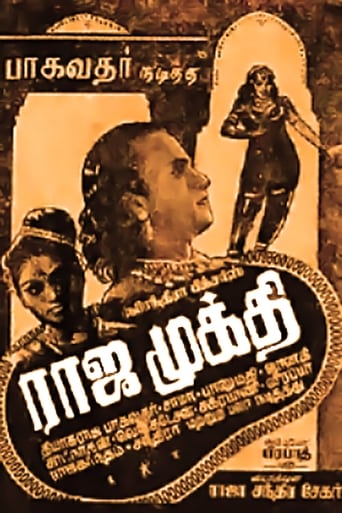
King Rajendra Varman and Queen Mrinalini are reigning the Vyjayanti empire. Mahendra Varman is the rival and the neighbouring king. Kannika is the minister’s daughter, who is in love with King Rajendra Varman and aims to attain him at any cost. This convoluted tale of palace intrigue, suspicion, unreciprocated love, seduction, villainy and piety was interspersed with excellent music.
Grand Duke Konstanty marries Countess Joanna Grudzińska. However, Joanna still loves Major Łukasiński, and she agreed to the marriage out of a sense of patriotic duty. Łukasiński is arrested. The November Uprising breaks out. The conspirators capture Belweder Palace. Joanna hides Konstanty from them.
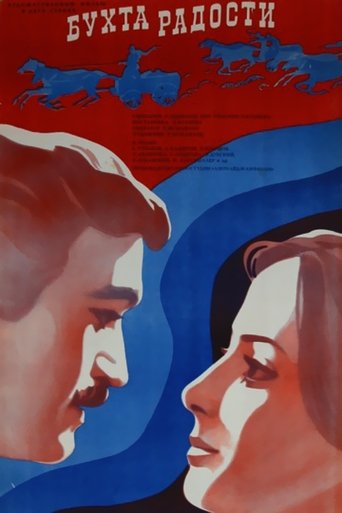
The film is about the first oil-well in the world in the world in the 1920th.
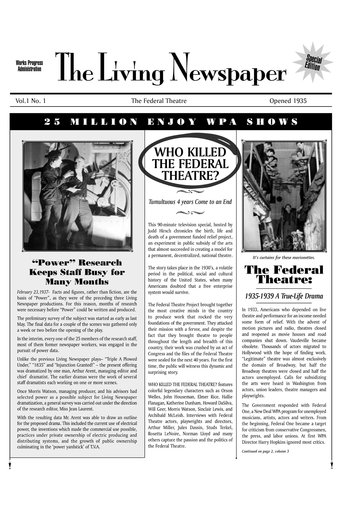
Part journalistic investigation and part performance documentary, "Who Killed The Federal Theater?" tells the story of the Federal Theatre Project within the context of a volatile period in the political, social and cultural history of the United States. The film features interview segments with playwrights, including Arthur Miller, and with actors, directors, designers, and historians. It also incorporates rare archival materials and dramatic sequences, including professionally re-created scenes from Federal Theatre productions that transport viewers back in time to a bygone era in American history and entertainment.
A young composer and double bass virtuoso, who returns to Romania after studying in Vienna, is arrested by the political police soon after getting engaged and taken to the Pitesti prison, where a brainwashing and torture-based experiment is under way. The horrible communist experiment, copied after the Soviet model, is headed by the much-feared Ciumau.
The Czech revival movement is divided at the end of the first half of the 19th century. While the older generation, such as František Palacký, urges restraint, students lean towards radical positions. A report on the revolutionary events in Paris prompts Czech Prague residents to write down the demands of the Czech nation for self-determination and the proclamation of a constitution. Tensions peak during the All-Slavic Congress in Prague's Žofín. Vienna rejects the Czech demands and the congress is brutally dispersed by the Austrian police. Prague begins to build barricades...
Part two of Blackton's "The Life of Napoleon". After Waterloo, Napoleon reminisces. His triumphs are seen in flashback. The film ends with the exiled Napoleon overlooking the beach of St. Helena.
The film is about the life of Dmitry Cantemir and the Moldovan people from November 1710 to July 1711. Turkish troops are preparing for war with Russia. The Sultan entrusted him with the throne of Moldavia. Cantemir secretly established ties with Peter I and concluded a military-political agreement with him, according to which Russia took Moldova under its protectorate, pledged to help expel the Turks and restore the former borders of the Moldovan state.
Swept up in political unrest during World War I, two sisters in St. Petersburg cope with turbulent romances as Russian history is made around them.
The continued story of the circumstances that led to the founding of what would become a huge tourist destination in the desert.
The story of Johann Friedrich Böttger, an apothecary’s apprentice and alchemist’s assistant. Fleeing from the Prussian King, he goes to Saxony, where King Frederick August the Strong takes him to a fortress and demands that he create gold. Böttger is equipped with everything he would need for the task, but he has known for a while that actual gold production is a myth and instead experiments with porcelain—white porcelain, as the Chinese are said to possess. In 1709, he finally succeeds in surprising the King with the "white gold," the first white porcelain made in Europe, he hopes for freedom.
Two siblings lose their parents amidst turmoil in revolutionary France and are adopted by a peasant family. Once grown up, the older brother enlists in the Napoleonic Wars.
We follow leading experts on a quest to unlock the mysteries surrounding the tomb of Christ, using the latest scientific techniques to restore the Aedicula housing the tomb.
This film illustrates the struggles of Canadian prairies women to achieve a more just and humane society within the farm movement and at large. During the early 1900s, women on the prairies looked for ways to overcome their isolation. Out of the resulting farm women's organizations grew a group of women possessing remarkable intellectual abilities, social and cultural awareness, and advanced worldviews.
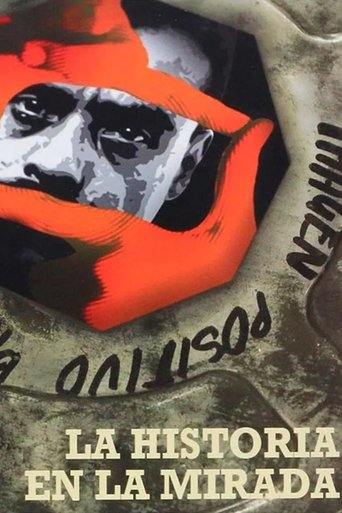
The film portraits the stage previous to the outbreak of the Mexican Revolution, from the end of Porfirio Díaz´ government, the social volatility, the ephemeral government of Madero and the presence of the working class in the figures of Villa and Zapata, until the signing if the Constitution of 1917. All of this through moving images, filmed during those events mainly by the Alva brothers, filmmakers of that time. Those images let us perceive the contradictory and shuddered glance of the people of that period.
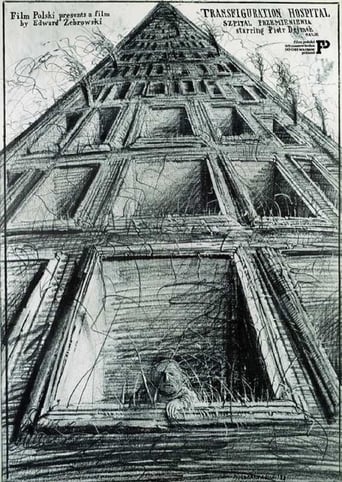
Shortly after the beginning of World War 2 a young idealist doctor is employed in a psychiatric hospital, where his notions of proper care for the patients are challenged by staff and the German occupation.
Based on the true story of the "death match" where the Soviet team "Start" scored its second victory over the German team «Flakelf» on August 9, 1942
Activate your FREE Account!
You must create an account to continue watching