The film tells the story of Pir Sultan Abdal, a famous folk poet in Turkey, who criticized some Ottoman governors, Hizir Pasha in particular and as a result was hung by him.
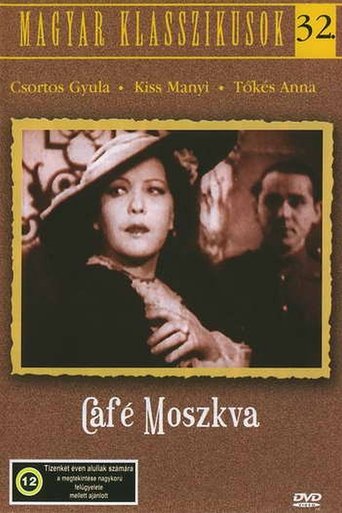
About a man's disappointment in love, and this provides the foundation for the upcoming trial of a much more significant love. The scene of the fatal meeting, the bar, which is a kind of world-model, and its environment: a fort under siege, from where it's almost impossible to escape...
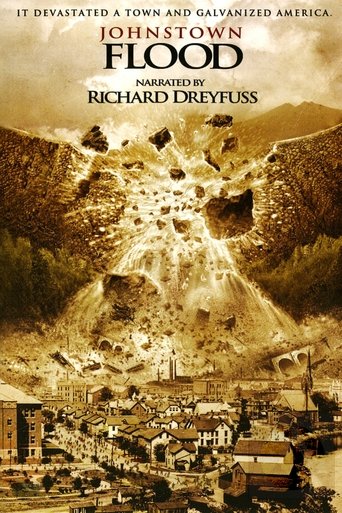
On a stormy day in May of 1889, the South Fork Dam impounding Conemaugh Lake exploded, unleashing a 40-foot wall of water. The bustling industrial city of Johnstown, PA, in the valley below was reduced to a wasteland, killing more than 2,200. This heavily dramatized documentary reviews the factors that led to the dam's collapse, while dramatic reenactments and survivors' personal testimonies detail the horror.
The Maginot Line: thousands of subway bunkers and concrete defenses lining the French border from Belgium to the Mediterranean Sea, a monumental engineering feat that was celebrated as a technical masterpiece when it was created. When the impregnable wall was demolished by the unbeatable Nazi war machine in 1940, the conquered fortress became the shattered symbol of French defeat.
A band of 14th-century warriors with some very unique combat skills protect a princess during an attempted coup.
This feature documentary is a portrait of Peter Watkins, an Oscar®-winning British filmmaker who, for the past 4 decades, has proved that films can be made without compromise. With the proliferation of TV channels, documentaries are enjoying an unprecedented boom fuelled by audiences seeking an alternative to infotainment. But now documentary filmmaking, too, finds itself constrained by the imperatives of television. However, there is a rebel resisting this uniformity of the spirit. Pre-eminent among today's documentary filmmakers concerned about this mind-numbing standardization, Peter Watkins has never strayed from either his principles or the cause.
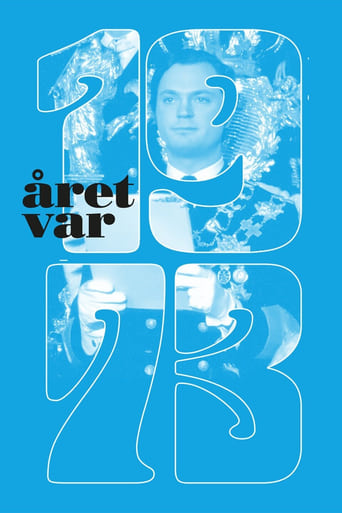
At the end of August 1973, a robber takes hostages at the Kreditbanken at Norrmalmstorg. A week or so later, on September 15, King Gustaf VI Adolf dies in Helsingborg's hospital and Sweden gets a new king: Carl XVI Gustaf. In Chile, the military takes power and the popularly elected president Salvador Allende is overthrown. That and much more in this column about the year 1973.
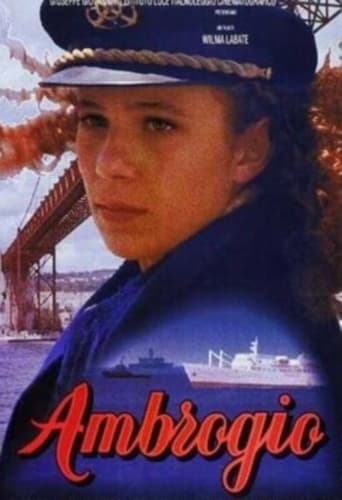
A woman wants to graduate to the Italian Naval Academy in the 60s. She has to fight her family, her friends and a world not ready to accept her.
The main character is Anna, an outstanding pediatrician. She survived the harsh years of war in a concentration camp and cannot accept the behavior of her daughter Natalia, who uses her connections and cares only about material goods. Anna is reminded of 1939, when Piotr, who had been missing for forty-five years, arrives in Poland. Together, they visit places that are important to them: Auschwitz, Sachsenhausen, and Ravensbruck.
Murdered more than 5,000 years ago, Otzi the Iceman is the oldest human mummy on Earth. Now, newly discovered evidence sheds light not only on this mysterious ancient man, but on the dawn of civilization in Europe.
For centuries, humans have sought to express beauty in architecture and art, but it is only recently that neuroscience is helping to determine how and why beauty plays an important role in our wellbeing. Architects and neuroscientists are embarking on a new field of study in which subliminal responses to one’s built environment may influence the future of design. Experts argue that positive subliminal reactions lead to a pleasurable experience, one reminiscent of a powerful meditation session. The question remains: what makes a building beautiful - or more specifically, which elements of the built environment does the brain recognize as beautiful? Narrated by Martha Stewart.
The story of Nikos Belogiannis member of the communist party and officer of Ellas that has come back to Greece only to get arrested, tried for espionage on behalf of Russia and executed.
Two siblings lose their parents amidst turmoil in revolutionary France and are adopted by a peasant family. Once grown up, the older brother enlists in the Napoleonic Wars.
Inspired by true events. Buenos Aires, 1979. Bill Evans, the great jazz pianist, arrives in Argentina for a series of concerts. One of them is in San Nicolás, a town in the province of Buenos Aires. Evans (a heroin addict for twenty years), along with his two musicians and his manager, get into the Argentine businessman's car. On the day of the concert, they learn they will be playing during the "Miss Winter 1979" pageant. Out-of-tune piano, boxing, drugs, death, memories, whiskey, and empanadas. In a town similar to his childhood, the impossible and the true collide for Evans.
Gurudas was a Sanskrit teacher in a village school in undivided Bengal. While teaching he felt the absence of an up-to-date lexicon in the Bengali language which has gained a new shape delinking itself from the original Sanskrit. In no time, he devoted himself to reconstructing a Dictionary and spent most of his life in pursuit of culling vocabularies from the mouths of common people. In the wake of the partition of Bengal in 1947, he came over to West Bengal and found shelter in a refugee camp. Meanwhile, he lost his daughter, son, and wife one after another, and was thrown into abject poverty still undaunted in spirit Gurudas went ahead with his mission. The only woman beside him was his widow daughter-in-law who kept vigil like unflinching flame of love and affection. When his work saw the light of day the erudite came crowding to show honor. The govt. conferred a befitting award but he refused. He was opposed to all these empty shows of honor.
A documentary about the 1944 mass escape from the German prisoner of war camp Stalag Luft III for British and Commonwealth airmen that eventually was dramatized by the famous film "The Great Escape".
During the war, on the banks of the Garonne, there is a café, the Café du Pont, where workers and sailors gather. Ten-year-old Pierrot's parents dedicate all their time and energy to the place. The German Occupation imposes restrictions and fear, but Pierrot knows that his father discreetly carries out brave actions and that his mother, both strong and fragile, knows how to settle any conflict - in her own way.
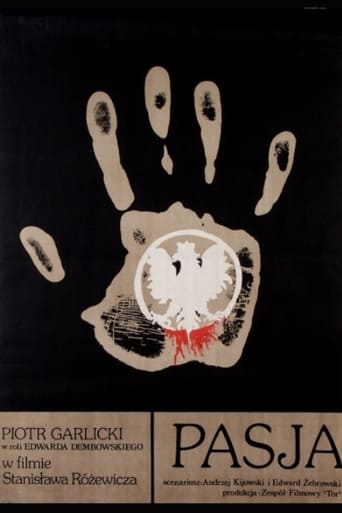
The last days in the life of Edward Dembowski (1822-1846), the organizer of the Kraków Uprising in 1846. The informal leader of the uprising, determined to fight for the unification of Polish lands and the liberation of the peasants, negotiates with other politicians.
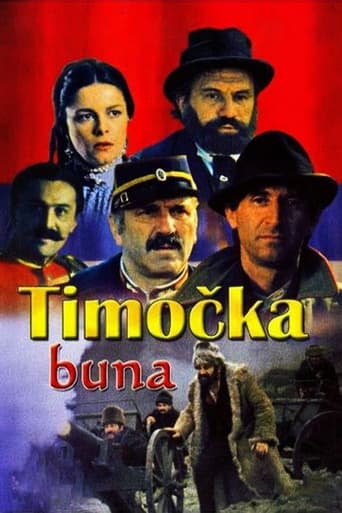
In 1883 Milan Obrenovic, arrogant and despotic king of Serbia, felt threatened by the militia segments of his army. In order to remove that threat he disbanded militia. However, people of Timok Valley decide not to surrender their arms to the regular troops. The movie was made for the 100th anniversary of the event.
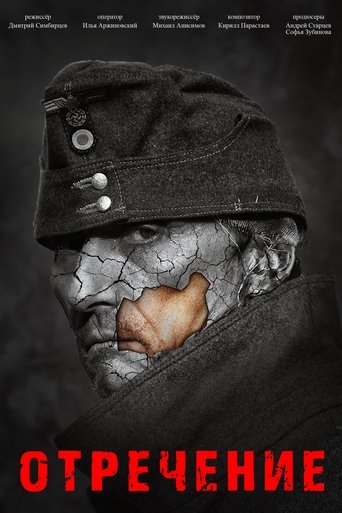
The Germans, pursued by Soviet soldiers, retreat. Among them is a wounded Hans, who decides to take a break in one of the destroyed houses in Gomel. Hans has a nightmare, after which he decides to take the path of renunciation...
Activate your FREE Account!
You must create an account to continue watching