Chris Marker’s documentary traces the course of the Cuban Revolution, from its early optimism to the aftermath of the Bay of Pigs invasion. Through on-the-ground footage and interviews—including two with Fidel Castro—the film captures the spirit and contradictions of a nation in transformation.
A studio. A man and a woman. Moving images on the screen, which he comments on, spurred on by her questions. All the footage was shot from the window of a flat: views of the street, the metro line running above it, the canal, into the windows of the buildings opposite. The flat belongs to the man’s lover, the man is a guest, spending his nights there but never his days. By the canal, young men from Afghanistan set up makeshift shelters as the man looks on, developing increasing sympathy for them. The seasons change, winter, spring, summer.
Pushkin and Puschin met at the Tsarskoye Selo Lycee. After the Decembrist revolt of 1825, Puschin was exiled to Siberia while Pushkin was allowed to return and later supported the Tsar. Despite the distance, their friendship endured through letters and poetry.
February 1948. The struggle of decisive social forces for the heart of Europe.
Film portrays the expedition of the British explorer David Livingstone to Africa to discover the source of the Nile, his disappearance, and the expedition to find him led by Stanley.
In the Middle Ages, the earl Wetter von Stahl is accused of having bewitched Catherine, the daughter of the blacksmith of Heilbronn. The earl tries to be exonerated by proceeding himself to the interrogation of the young woman, who apparently shows an "unnatural possession".
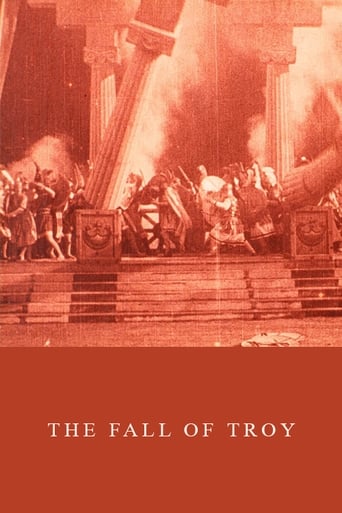
Menelaus is the king of Sparta and temporarily departs from his residence, leaving Helen, the queen of Sparta, without him. When Paris of Troy, ambassador and son of the king, arrives in Sparta, he kidnaps Helen and brings her to Troy where the two fall in love. The Greeks attempt to siege the city walls of Troy, but fail. The Greeks then place a huge wooden Trojan horse with Greek warriors hidden inside under the walls of Troy, pretending to be dedicated to the gods and ending the war. Falling for the trap, the Trojans break down the city walls to bring the wooden horse inside.
A commune built around the pursuit of spiritual perfection through the occult begins to see its prophecies come true.
During the Civil War, two soldiers fighting on opposite sides meet.
About the preparation and conduct of an expedition to the North Pole led by the famous explorer of the North, sailor and hydrographer Georgy Yakovlevich Sedov (1877-1914), organized by him in 1912 with private donations. The film is set in 1912-1914.
During turbulent times of the First Serbian uprising in 1804, on a freshly liberated land, a woman who betrayed her husband to the Turks has been taken to the court. A complicated truth and the real motives of the case get overlooked by the judge, a neutral Turk.
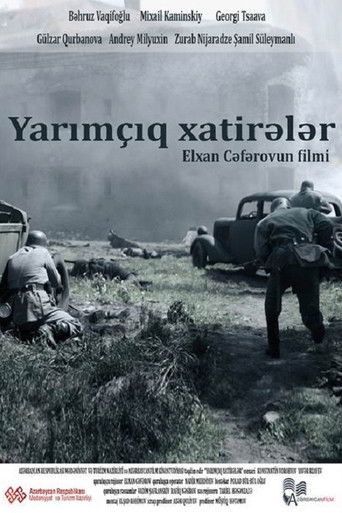
An Azerbaijanian veteran of battle for Brest fortress takes gun again 50 years later - to defend Nagorny Karabakh from Armenians.
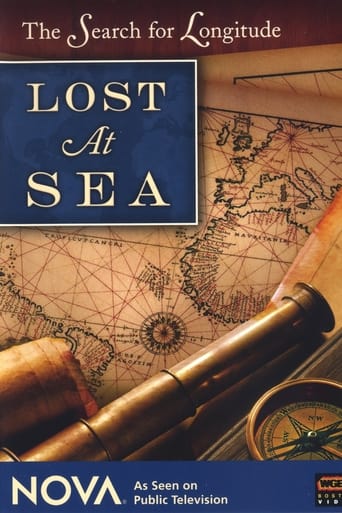
It was one of humankind's most epic quests - a technical problem so complex that it challenged the best minds of its time, a problem so important that the nation that solved it would rule the economy of the world. The problem was navigation by sea—how to know where you were when you sailed beyond the sight of land - establishing your longitude. While the gentry of the 18th Century looked to the stars for the answer, an English clockmaker, John Harrison, toiled for decades to solve the problem. His elegant solution made him an unlikely hero and remains the basis for the most modern forms of navigation in the world today. This film will be both a celebration of Harrison's invention and an adventure story. An expedition on a period sailing vessel as it sails the open sea will demonstrate the life and death importance of finding your longitude at sea.
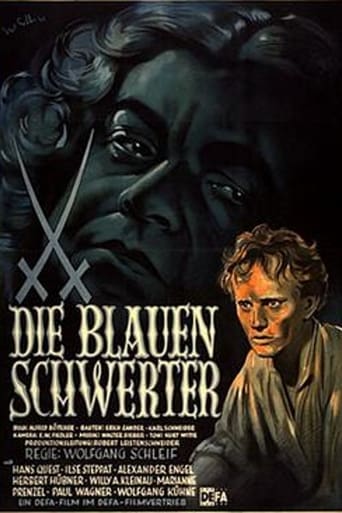
The story of Johann Friedrich Böttger, an apothecary’s apprentice and alchemist’s assistant. Fleeing from the Prussian King, he goes to Saxony, where King Frederick August the Strong takes him to a fortress and demands that he create gold. Böttger is equipped with everything he would need for the task, but he has known for a while that actual gold production is a myth and instead experiments with porcelain—white porcelain, as the Chinese are said to possess. In 1709, he finally succeeds in surprising the King with the "white gold," the first white porcelain made in Europe, he hopes for freedom.
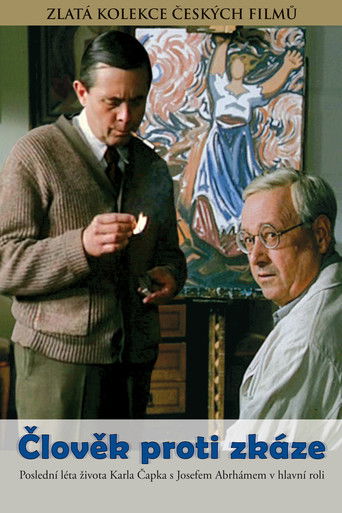
Biography of Karel Čapek.
The story of the laborer family Debruycker during the turbulent strike by Vieille Montagne in 1971.
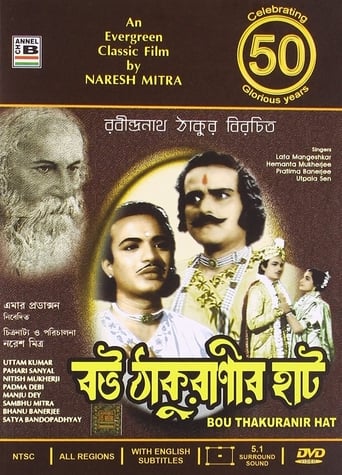
Bou Thakuranir Haat is a Bengali drama film directed by Naresh Mitra based on a novel of Rabindranath Tagore in the same name, published in 1883. The film is based on the real-life story of Jessore Raj Pratapaditya. Pratapaditya is described as an antagonist more than a protagonist in this film.
Boris Malagurski explains how the military-industrial complex, big business and political interest groups endanger peoples' health and existence, focusing on the examples of Serbia, Cuba, Chile, Italy and Bolivia.
Rome is on the thresh-hold of the Holy year 1925, the city wishes to present itself as 'spotless' to the outside world. The appearance of a child's corpse puts an end to these aspirations. The police arrest a small time crook who has committed a robbery but has nothing to do with the murder of the child.
Zanussi has described the film as his most autobiographical work. A young boy in post-World War II, Communist-dominated Poland, whose father's decision to remain in Britain after the war has made his family politically-suspect with the local Party authorities, is sent by his mother to stay with an "aunt" (in reality an old family friend) in Warsaw.
Activate your FREE Account!
You must create an account to continue watching