In 1906, Georges Braque and Pablo Picasso were 24 and 25 years old. The Butte Montmartre is their Parisian sanctuary where artists in need of recognition meet. Braque and Picasso become friends to the point of never leaving each other. For the moment, their paintings do not interest many people; only Apollinaire, then aged 26, and the young gallery owner Daniel-Henry Kahnweiler, 22, saw immense potential in them. And in addition to their passion for painting, these four inseparable boys share the same appetite for modernity. Collages, diversions of materials and geometrization of forms: cubism opened the way to abstraction. A revolution initiated by Picasso and Braque, which profoundly changed the course of the history of modern art.
Both a visit to a very peculiar exhibition at the Bundeswehr Military History Museum in Dresden, Germany, as well as an unprejudiced look at the artistic depiction of violence throughout history and the ways in which that depiction has been gendered.
Andrzej, who lives in the lowlands, comes to Zakopane. He rents a carriage and orders himself to be taken to the Strążyska Valley.
Made famous by the 1957 Hollywood movie, the bridges of the River Kwai emblematize one of the most misunderstood events in history. Contrary to the romanticized film version, the structures represent a period of terror, desperation, and death for over 16,000 POWs and 100,00 local slaves. The Thailand - Burma Railway was the vision of the Japanese Imperial Army: a 250-mile track cut through dense jungle that would connect Bangkok and Rangoon. To accomplish this nearly impossible feat, the fanatical and ruthless Japanese engineers used POWs and local slaves as manpower. Candid interviews with men who lived through the atrocity - including Dutch, Australian, British, and American POWs - illuminate the violence and horror of their three-and-a-half-year internment. From Britain's surrender of Singapore the enduring force of friendship, The True Story Of The Bridge On The River Kwai narrates a moving and unforgettable account of a period in history that must be remembered.
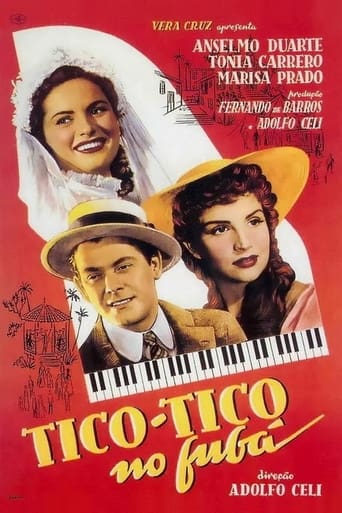
A fictionalized biography of Brazilian composer Zequinha de Abreu (1880–1935), who penned the song "Tico-Tico no Fubá" that became an international hit in the 1940s.
In 1850s Southern Ostrobothnia, the new county police chief angers the peasants with his arrogance, dishonesty and violent methods. Jussi, a young farmer, dares to stand up to the police chief. His courage makes on impression on the maidservant Liisa.
Ella Fitzgerald was a 15-year-old street kid when she won a talent contest in 1934 at the Apollo Theatre in Harlem. Within months she was a star. Over the next six decades, her sublime voice would transform the tragedies of her own life and the troubles of her times into joy. JUST ONE OF THOSE THINGS retraces this extraordinary journey.
The film covers the period from 1947, when UPA troops broke with fights abroad, and to autumn of 1959, when in Munich KGB agent Bohdan Stashynskyi killed Stepan Bandera.
Luz is in jail, accused of murdering her own children. Her husband and her mother-in-law say she killed them in cold blood. Dr. Rebollar tries to help the woman, but she refuses to remember anything. Luz thinks of jail as the purgatory: it's only one step to reach the Heaven.
Through a unique architectural and engineering lens, “Rise & Fall: The World Trade Center” recounts the inspiring, true story behind an American icon, and the remarkable group of people who dreamed it and made it real. No ordinary pair of buildings, the Twin Towers featured a unique structural design—and dozens of other technical breakthroughs—that made the then-tallest buildings in the world possible. But did these innovations contribute to their collapse on 9/11? With the help of harrowing first-hand testimonies, expert interviews, and never-before-seen graphics, and with the benefit of two decades of engineering hindsight, viewers will understand how the Towers rose…and why they fell.
Focuses on Davy Crockett before & during his time at the Alamo as one of the defenders, and ultimately, one of those who gave their lives.
The story of the persecution of homosexuals and intellectuals in Cuba under Fidel Castro's dictatorship, from the beginning of the Cuban Revolution (1953-59) until the early 1980s. Interviews with relevant personalities of Cuban culture who suffered persecution demonstrate that concentration camps for gays existed in Cuba.
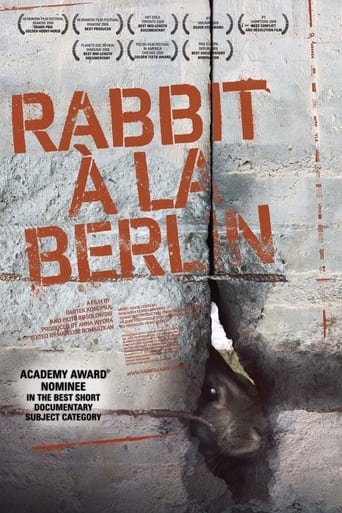
The untold story about wild rabbits which lived between the Berlin Walls. For 28 years Death Zone was their safest home. Full of grass, no predators, guards protecting them from human disturbance. They were closed but happy. When their population grew up to thousands, guards started to remove them. But rabbits survived and stayed there. Unfortunately one day the wall fell down. Rabbits had to abandon comfortable system. They moved to West Berlin and have been living there in a few colonies since then. They are still learning how to live in the free world, same as we - the citizens of Eastern Europe.
The Philippines, 1898, during the Spanish-American War. Fifty Spanish soldiers guarding the outpost established in the small village of Baler endure the cruel siege of the Filipino rebels for eleven months, although the war is almost lost…
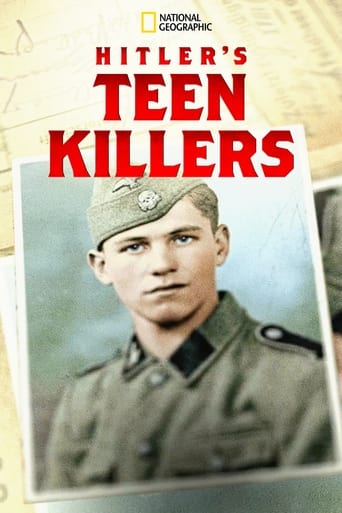
They grew up under the Nazi regime. They pledged to give their lives for Hitler. They were fanatics who would not be stopped. They were the 20,000 teenagers who made up the 12th SS Panzer Division. Unleashed in France to halt the Allied invasion, they would sow terror and destruction in their wake. Historical colorized archives and a handful of survivors tell us this story.
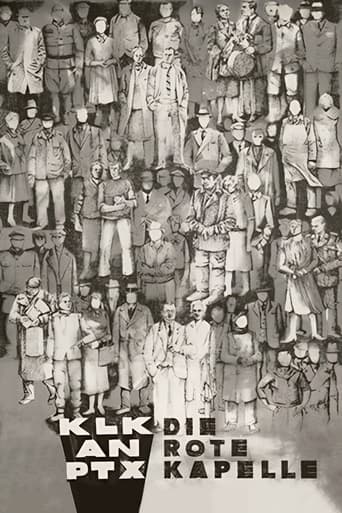
East German film about the history of Red Orchestra, a real life German pro-Soviet spy ring created after the rise of Hitler that turned into a resistance movement led by a leftist Nazi officer, Harro Schulze-Boysen, and Arvid Harnack.
Based on an ancient story Sang-e Sabor it's the story of a girl Nardaneh who one day hears a voice telling her that soon she will marry with a dead man. One day she enters a castle and in one of it's room finds a dead body with a book beside it. She begins to read the book and follows the instructions step by step.
The Serbian state is a friend of the Ottoman Empire, but the Byzantine Empire wants to destroy this friendship. To this end, the Byzantine knight Nicholas will marry the daughter of the Serbian king and has also kidnapped the Ottoman artillery commander. Malkoçoğlu takes action to rescue the artillery commander and prevent the marriage.
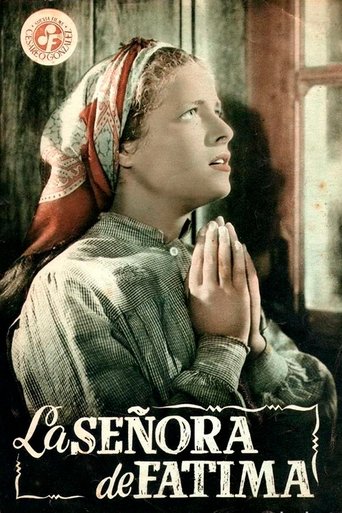
The story of the 1917 miracle of Fatima, in which the Virgin Mary appeared to three children--two girls and one boy..
Italy, 1848. Clara, daughter of a rich Milan trader, is in love with Enrico, a political dissident, but she is forced to marry Count Severi.
Activate your FREE Account!
You must create an account to continue watching