Danish social democratic propaganda film. During the Occupation, the young freedom fighter Søren had a good working relationship with a comrade in the resistance movement, despite the fact that Søren was a social democrat and his comrade a communist. After the liberation in May 1945, the differences that had been less important during the war begin to stand in Søren's way. Both his friendship with his comrade and his relationship with the wealthy Inger fall apart in the summer of liberation. But through his work in the Social Democratic Party, Søren experiences a renewed enthusiasm and resumes his relationship with Inger. Together, they actively engage in the party's work and both see it as an extension of the struggle for freedom during the occupation. Denmark's entry into NATO is particularly important.
Uma, a mute Brahmin girl, lives with her uncle's family as she is an orphan. Since Uma has a faulty horoscope which indicate widowhood, the family finds it impossible to get her married off. According to a custom prevalent at the time, Uma is given in marriage to a tree.
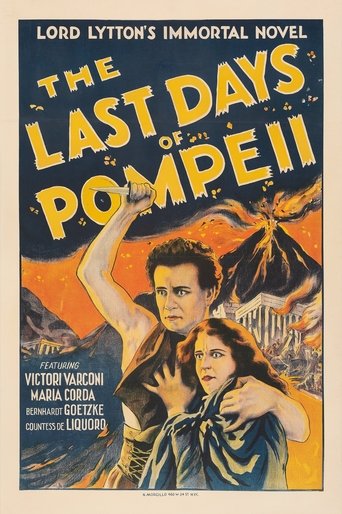
Carmine Gallone and Amleto Palermi’s The Last Days of Pompeii 1926 stages in sumptuous colour tinting the epic fall of the ancient city buried by Mount Vesuvius’ eruption. Adapted from Edward Bulwer-Lytton’s love story, the film was innovative in its special effects and an early major box-office hit. A beautiful tinted restoration print was prepared using photochemical processes by Centro Sperimentale di Cinematografia-Cineteca Nazionale in the mid-1990s and the premiere screening of the restoration print was held in the amphitheatre in Pompeii, followed by a screening at the major restoration festival ‘Il Cinema Ritrovato’ in Bologna in 1998.
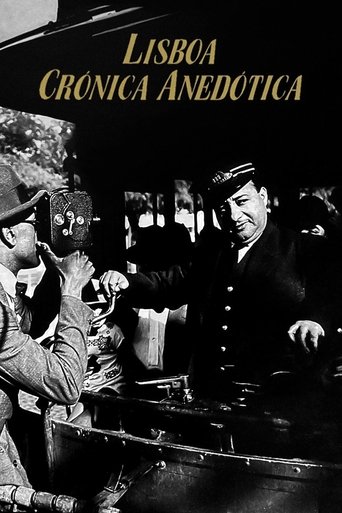
Caleidoscope of documentary-like scenes and re-enacted episodes of a day in the life of a large port town – Lisbon, from the old district around Saint George's Castle down to the docks and the 'Sagres' on the Tagus river, to the new commercial districts.
In this short film directed in the style of Andrei Tarkovsky, eternity and the downfall of the Soviet empire are explored in a deeply symbolic and poetic way. The film follows a protagonist as they traverse a desolate landscape, reflecting on the transient nature of life and the inevitability of death. Through a series of dreamlike sequences, the audience is presented with a powerful meditation on the idea of eternity, and how it can be seen in the rise and fall of empires. The film culminates in a powerful scene of the protagonist standing atop a hill, looking out at the ruins of the Soviet empire, and contemplating the eternal cycle of life and death.
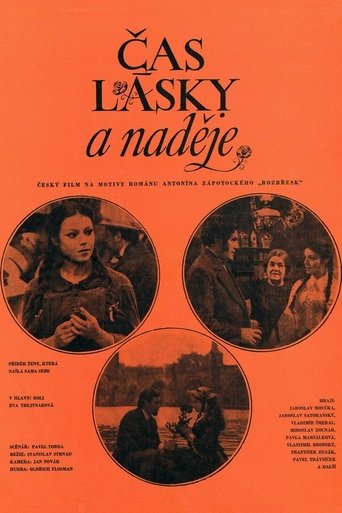
A colour-printed melodramatic selanca from the beginnings of the organised labour movement in Bohemia... Antonín Zápotocký, the second workers' president, is the author of the literary novel Rozbřesk - the plot is said to be inspired by the fate of his grandmother and mother.
Based on a true story of Polish submarine "Orzel" (The Eagle): September 1939, "Orzel" is coming to Estonian neutral harbor in Tallin. Under pressure from Germany Estonians have intern the ship. Commander Grabinski decides to escape to England through the Baltic Sea, without any maps that has been confiscated and with only small amount of fuel on board.
Fated to die at the hands of a child, a demon wreaks havoc on the lives of the to-be parents.
Errakota Veerudu is a Telugu film released in 1973. Produced by T Gopalakrishna under the banner of TGK Films, MSP Sarathy directed the film. Nandamuri Taraka Rama Rao and Savitri are playing the lead roles in the film, which has music by Ghantasala Vijayakumar.
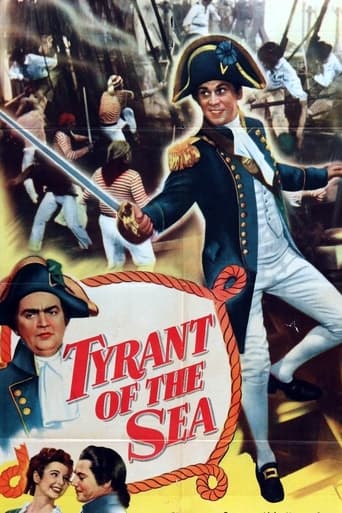
In 1803, the only thing standing between Napoleon and his plan of world domination is England and the British Navy. The admiralty, learning that Napoleon has assembled an invasion fleet decides to send out one of its vessels to destroy it the French flagship under cover of fog. Forced out of retirement, ruthless, tyrannical and temperamental Captain William Blake is put in command. He wields his command with sadistic fury until an epidemic of scurvy attacks the crew and, when he refuses to go ashore for needed provision, mutiny and insubordination results...and, then, the French flagship arrives.
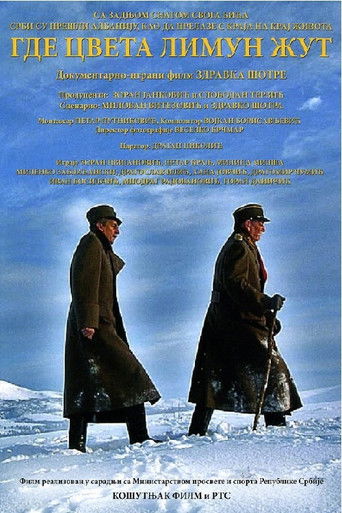
By the end of 1915, during the second half of World War I, which had started by the Austro-Hungarian Empire's attack on a small Kingdom of Serbia, Serbian people, its army, and the state found themselves in the greatest tribulation in its long history. Serbia is attacked by the combined militaries of Austro-Hungarian Empire, Germany, and Bulgaria. Defending every road, every hill, every creek, during the time when every village, every plato, every crossing was becoming a historical landmark, Serbia, relying on the Allies, moved its people, its government, and its remaining troops to Kosovo--the only unoccupied part of the Serbian territory, but soon had to cross Albania in the hopes of reaching the Allies' ships in the Mediteranian.
A historical account of the du Pont chemical manufacturing company and its vital role in the growth of the USA.
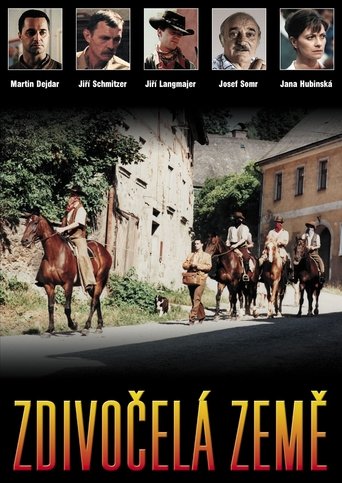
After World War II, fighter pilot Antonín Maděra returns from England to his native village in the Ore Mountains to forget the hardships and horrors of war and to "live, work, and love his neighbors," as he himself says. But Svatý Štěpán, which his family had to leave in 1939, is no longer the same place it used to be. However, even in his wildest dreams, he could not have imagined what really awaited him there.
The official Rocky Mountain National Park Centennial film. The stunning cinematography will take you on a journey into Rocky Mountain National Park’s spectacular landscapes. This film includes historic images and interviews with national park rangers who share their heartfelt insights on the value of national parks to our generations and those to come.
Based on testimony by Ethel’s brother, David Greenglass, the Rosenbergs are arrested by the FBI. The couple is accused of passing secret information about the atomic bomb to the USSR. Though the Rosenbergs maintain their innocence from the start, the media and public opinion seem to have condemned them from day one. The trial does nothing to change this and ends in a death sentence. On Friday June 19, 1953, Julius and Ethel Rosenberg are executed in the electric chair. Julius first, then Ethel. 30 years later, the truth finally comes out. Declassified FBI archives reveal that Ethel was not guilty of being a spy; she was merely married to one. Julius did indeed commit espionage for the Soviet Union, though primarily as a recruiter, nothing at all like the fictional James Bond. This documentary, made entirely of archival footage and animated illustrations, offers a tale of espionage as well as a complex family tragedy.
Poland in the 80’s was a country ruled by crisis and a sense of hopelessness. Only few knew how to turn crisis into a business. It was a golden time for them. How did they know what would bring them money? How did they operate in a country where almost everything was forbidden?
After receiving a housewarming rug from his sister, a Cambodian adoptee discovers a dark history hidden underneath its surface.
A fan of Hot Tub Time Machine, Republican Congressman Adam Kinzinger invites the left-wing Hollywood director Steve Pink to follow his efforts to hold Donald Trump accountable for the January 6 insurrection.
Activate your FREE Account!
You must create an account to continue watching