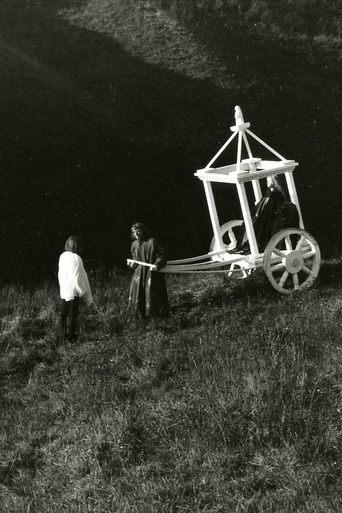
The title is a reference to the Book of Isaiah 42:6, “I, the LORD, have called thee in righteousness, and will hold thine hand, and will keep thee free, and give thee for a covenant of the people, for a light of the Gentiles.” The film is an episodic, cinematic biography of David Ben-Gurion, from his days as a youth in Poland when he met Herzl in the town of Plonsk, through his move to Palestine/Israel, becoming leader, the days of the Independence War and the establishing of the State of Israel, signing the reparations agreement with Germany, and all the way to the making of this film – in the aftermath of the Six-Day War. Perlov’s film highlights all the key milestones in the leader’s life which it goes about doing in the tradition of the reflexive documentary, through the creator’s subjective and artistic pov. The film goes back and forth between documentary and scripted scenes, black and white and technicolour, and even archival footage colourised in bold, artificial colours.
For longer than the United States has been an independent nation, there has been a Marine Corps. They consider themselves the very best America has to offer. Embodying fierce patriotism, extraordinary courage, and innovative weapons, they are a force. This documentary focuses on their training and examines what it means to be a Marine.
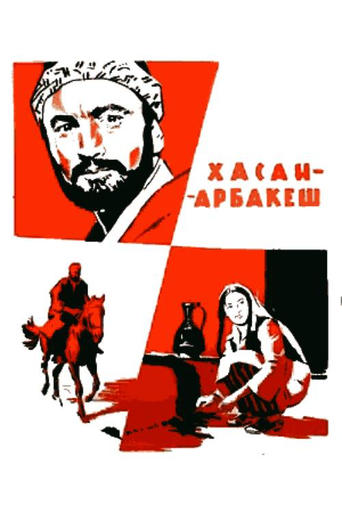
A story about the clash of two cultures, two worlds - traditional Tajik culture and the new, invading and imperialist in its nature, Soviet culture, about the formation of self-awareness of the Tajik dekhkanin in the 1920s-1930s.... Poor Hasan thinks and experiences a lot before he is able to comprehend the changes in his life, to realize that old traditions and customs are no longer valued. Bent by need and disenfranchisement, he finds the strength to stand up against the Basmachi.
Alexander, a tribal warlord and former political prisoner, kidnaps British tourists, holding them for ransom until Britain and the Greek puppet government in Athens meet his demand for amnesty for his band of freedom fighters.
A drama that tells the story of the physician and politician MUDr. František Kriegel, the hero of the Prague Spring of 1968, who was arrested and kidnapped to Moscow on the night of August 21st together with five leaders of the party and the state (Dubček, Černík, Smrkovský, Špaček and Šimon). He was the only Czechoslovak politician who managed to stand up to Brezhnev in Moscow captivity, even under the threat of liquidation, and not to sign the Moscow Protovol which meant agreeing to the occupation of Czechoslovakia in 1968.
The action takes place during the German occupation of Ukraine in 1919. The main characters are folklore characters - the brave soldier Semyon Kotko and the beautiful maiden Sofya.
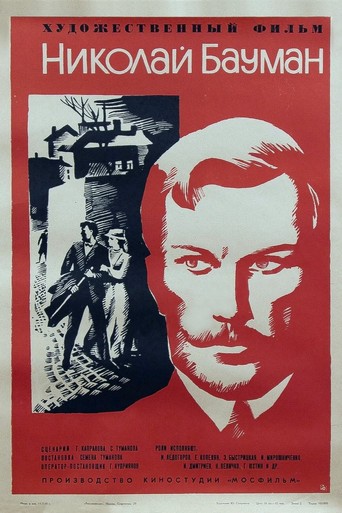
This film tells about two years of life (1904-1905) of the revolutionary-Leninist, one of the founders of the newspaper "Iskra" Nikolai Ernestovich Bauman, who was killed on October 18, 1905 by a Black Hundred, a security agent, during a demonstration of the Moscow committee of the RSDLP.
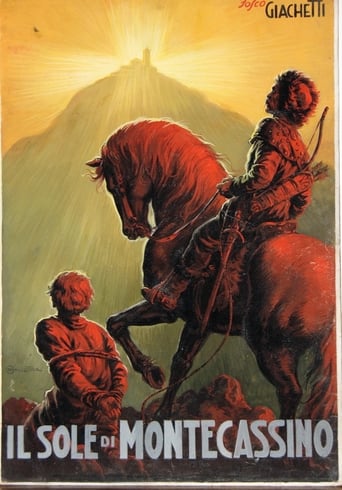
The life of Saint Benedict, the founder of Western Monasticism.
Vienna at the turn of the century: The industrialist Friedrich Hofreiter is a vain, self-important man who is used to taking what he wants and who enjoys exercising power. His tender wife Genia increasingly recognizes his deceitfulness. The Russian pianist Alexei Korsakov, a subtle artist, commits suicide because of her. Hofreiter, on the other hand, travels to the Dolomites with his friend and family doctor Dr. Mauer, who is in love with the young Erna. Hofreiter makes her his lover in front of Mauer's eyes. In turn, he provokes Genia's lover into a duel and shoots him. In the end, there is only emptiness. Faithful adaptation of Arthur Schnitzler's stage play.
Two lovers in a small town in Maryland are torn apart by the Civil War--she is loyal to the south while he heads north to join the federal army, determined to protect the Union. Eventually his unit arrives in his hometown and he is reunited with his lover, but things aren't the way they used to be.
Octavius Caesar (later renamed Augustus Caesar, son of the murdered Julius Caesar), Marc Antony, and Lepidus form the triumvirate, the three rulers of the Roman Empire. Antony, though married to Fulvia, spends his time in Egypt, living a life of decadence and conducting an affair with Queen Cleopatra. In Antony's absence, Caesar and Lepidus worry about Pompey's increasing strength.
Told by gauchos from Brazil, Argentina and Uruguai, the legend says that Anahy de las Missiones wandered around the Plata Basin during the time of Cisplatina War (1825-1828), stealing the dead.
Both a visit to a very peculiar exhibition at the Bundeswehr Military History Museum in Dresden, Germany, as well as an unprejudiced look at the artistic depiction of violence throughout history and the ways in which that depiction has been gendered.
This documentary reveals amazing evidence connected to Moses’s ability to write the first books of the Bible and why most mainstream scholars are blinded to that possibility today.
A historical costume drama where the fragments of the adventurous lives of Bernt Notke, one of the most influential Late Gothic painters, and carpenter Michel Sittow are brought together by the story of the panel painting "Danse Macabre" by Notke and the way the painting reached Tallinn, Estonia from Lübeck.
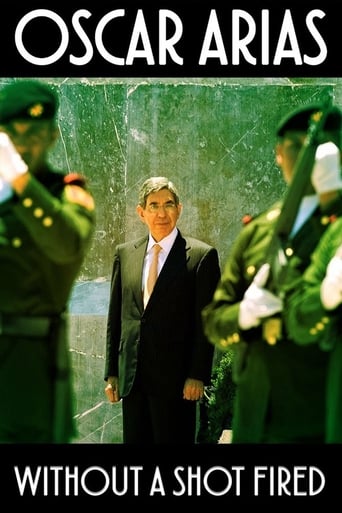
This is the story of a tiny country that made a decision to do something that no other country had ever done -- it decided to abolish its army and declare peace to the world. And this is the story of a young boy who grew up in that country, and how he ended up challenging -- and sometimes even convincing -- the greatest powers in the world to follow Costa Rica's example. "Oscar Arias: Without a Shot Fired" is a Don Quixote-like saga with great historical touchstones -- Ronald Reagan and Mikhail Gorbachev, Cold War politics and Communism, Central American War and Peace. It follows a slight, academic, and most unlikely hero over the course of more than fifty years, as he travels the world in a quest to stop the spread of the weapons of war. In the end, it is a story about the triumph of reason, of the sparrow triumphing over the eagle, and how the impossible dream can sometimes come true.
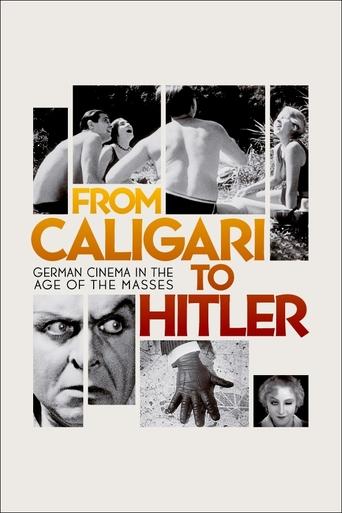
Film journalist and critic Rüdiger Suchsland examines German cinema from 1919, when the Republic of Weimar is born, to 1933, when the Nazis come into power. (Followed by Hitler's Hollywood, 2017.)
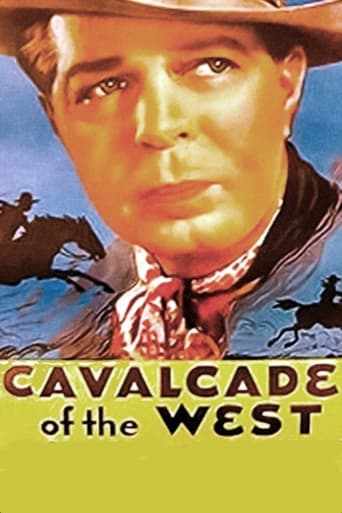
Two brothers are separated when young. One becomes the pony express rider Clint Knox and the other the outlaw Ace Carter.
Maharaja Gemunu is based on the odyssey of King Gemunu (ruler of Sri Lanka 161–137 BC) who is renowned for defeating and overthrowing King Elara, the usurping Tamil prince from the Chola Kingdom, who had invaded the Kingdom of Rajarata in 205 BC.
Activate your FREE Account!
You must create an account to continue watching