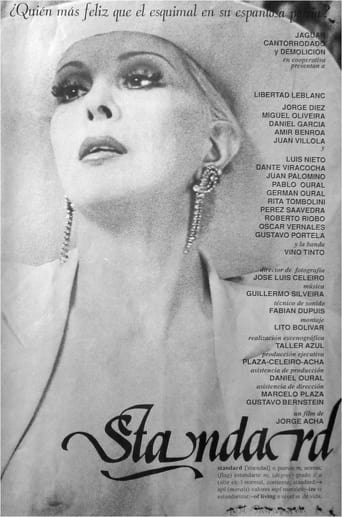
Five bricklayers work to construct and subsequently demolish a monument under the direction of a pseudo-architect. As they toil, the workers succumb to distractions and base desires, effectively dismantling the myths of national identity and cultural foundations.
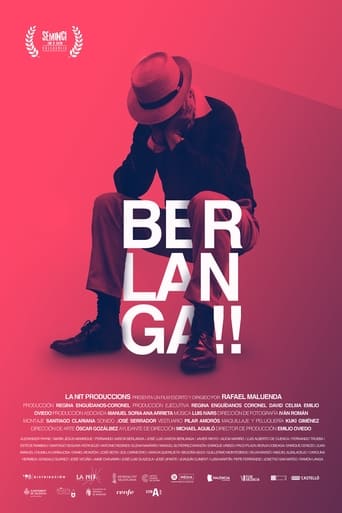
How does the vision of the brilliant Spanish filmmaker Luis García Berlanga (1921-2010) remain relevant in a time whose popular culture has little to do with his own? Since to understand the secrets of an artist it is essential to know the person behind, his family, his friends, his collaborators, as well as prestigious filmmakers and actors trace a collective portrait of a creator as singular as he is universal.
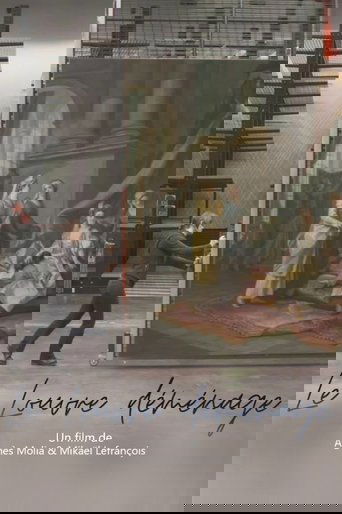
From the evacuation of the reserves, threatened by the flooding of the Seine in June 2016, to the first transfers of works to the Louvre's conservation center in Liévin, a look back at a spectacular rescue operation.
The story of The Last Hours of Jesus Christ.
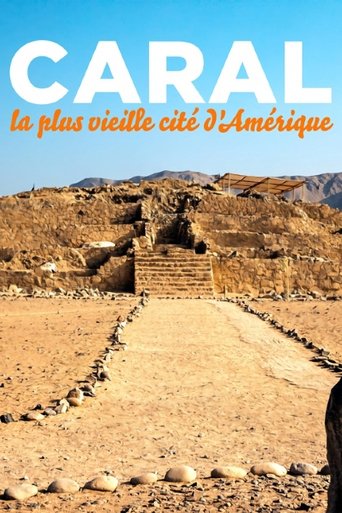
The Sacred City of Caral or Caral-Supe is the capital of the Norte Chico Civilization of Supe located in the Supe Valley, 200 km (124 miles) north of Lima. The Sacred City of Caral is the earliest known civilization in the Americas, it dates to the Late Archaic period. Radiocarbon analysis performed by the Caral-Supe Special Archaeological Project (PEACS) dates its development between 3000 to 1800 B.C.. It is believed that this civilization started by the merging of small villages based on trade of agricultural and fishing products. Its importance rests on the success of techniques of domestication of cotton, beans, potatoes, chilis, squash among other products. Success in agriculture was due to the development of water canals, reservoirs and terraces. They used guano, bird excrement, and anchovies as fertilizer.
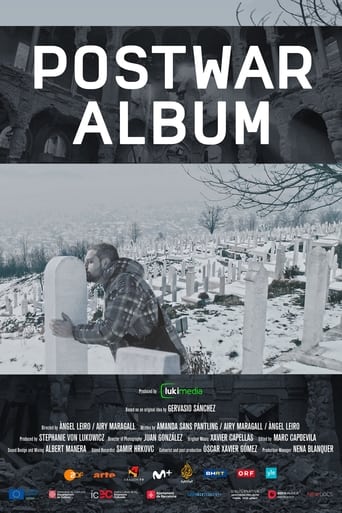
Winter 2019. Spanish war photographer Gervasio Sánchez, who documented with his camera the long and tragic siege of Sarajevo during the Bosnian War (1992-95), returns to the city in search of the children he met among the ruins, those who survived to grow up, live and remember.
The story of the Bugattis of Milan and Molsheim, the eccentric family behind the brand: Carlo, the patriarch and furniture designer; Rembrandt, the troubled sculptor; Ettore, the gifted engineer; Jean, the unfortunate heir. Art and design. Beauty and luxury. The fastest cars. Races. The need for speed.
A gripping documentary about the courage and determination of a young English stockbroker who saved the lives of 669 children. Between March 13 and August 2, 1939, Nicholas Winton organized 8 transports to take children from Prague to new homes in Great Britain, and kept quiet about it until his wife discovered a scrapbook documenting his unique mission in 1988. Winton was a successful 29-year-old stockbroker in London who "had an intuition" about the fate of the Jews when he visited Prague in 1939. He quietly but decisively got down to the business of saving lives. We learn how only two countries, Sweden and Britain, answered his call to harbor the young refugees; how documents had to be forged and how once foster parents signed for the children on delivery, that was the last he saw of them.
The musical version of the successful play of Oldřich Daněk was transferred to the screen by director Jiří Sequens in 1986. It takes place in the 14th century in Bohemia during the reign of King Wenceslas IV. Heroes of the story are three mercenaries who always fight on the wrong side and are always beaten, but they are moral winners of all conflicts and skirmishes.
Seville, 1766. Count Almaviva falls in love with a young woman called Rosina, who lives under the tutelage of the old doctor Bartolo. Thanks to the help of his servant Figaro, the count seduces Rosina and marries her. Three years later, Count Almaviva returned to being the libertine he was.
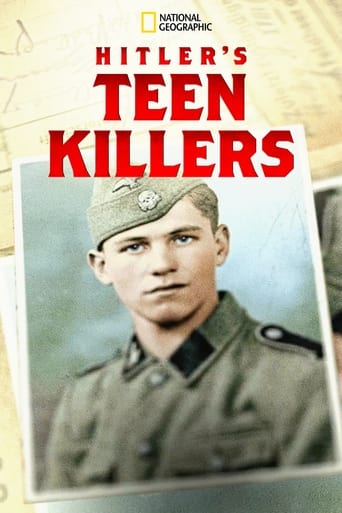
They grew up under the Nazi regime. They pledged to give their lives for Hitler. They were fanatics who would not be stopped. They were the 20,000 teenagers who made up the 12th SS Panzer Division. Unleashed in France to halt the Allied invasion, they would sow terror and destruction in their wake. Historical colorized archives and a handful of survivors tell us this story.
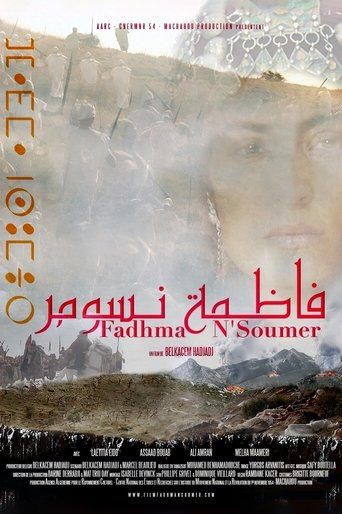
This film, is about the courage and the determination of a young woman in djurdjur"as mountain in Algeria, fighting for her ancestor land during the earlier years of french occupation.
A young journalist (Lespert) helps the French President compile his memoirs.
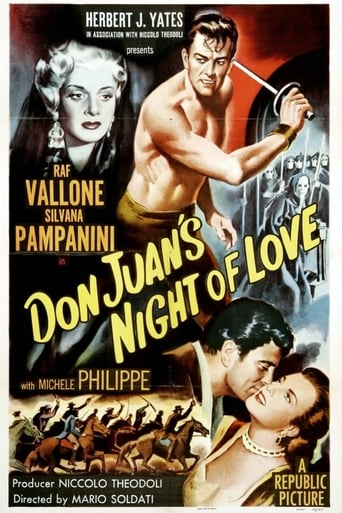
Don Caesar de Bazan, a reckless nobleman, falls for Maritana, a gypsy dancing girl. When Maritana is insulted by a drunk, Don Caesar wins her love by coming to her rescue. The two go to Madrid, where the girl is summoned to dance before the Queen. Maritana also attracts the attention of King Charles. Don Jose, the prime minister, who secretly loves the Queen, plots to get Maritana for the King. To do this, he schemes to have Maritana marry a nobleman so she can enter the King's court.
Mandrin, the French army deserter, becomes the leader of a gang of smugglers in Piedmont. He is loved by the beautiful innkeeper Rosetta but draws attention to the Marquise de Montbricourt, favorite of the king, who comes from Versailles just to see him. She will saved his life and allow him to marry Rosetta.
As the director and the cameraman of a documentary project, Meng and Jianxian are travelling around Taiwan filming statues of religious and historical figures. Their conversations and debates on the statues often touch the political reality of Taiwan. Meng's girlfriend, Ning, is involved in a mediocre commercial feature film (initially as location scout and subsequently as an actress). Instead of realizing her ambition, she finds herself being exploited by the filmmakers. On the other hand, Meng and Ning's relationship is gradually faded.
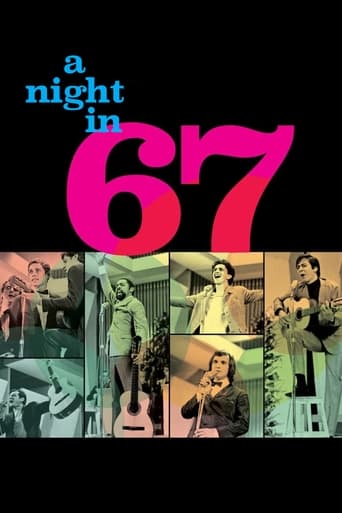
In the 1970s, "festivals" were incredibly popular in Brazil, as they were recorded before a live studio audience, and usually featured a number of elimination rounds. They also formed the springboard for the career of many a big-name stars, such as Chico Buarque, Caetano Veloso, Roberto Carlos and Gilberto Gil. Appearing on such a program was no cakewalk, however: audiences could be as wild in their condemnation as in their appreciation of an artist. Extensive archive footage (including performances and behind-the-scenes interviews) from the turbulent final evening of the Festival of Brazilian Popular Music 1967 paints a fascinating picture, not only of the transformation of Brazilian music into real "festival" music, but also of a society starting to buck against the yoke of military rule.
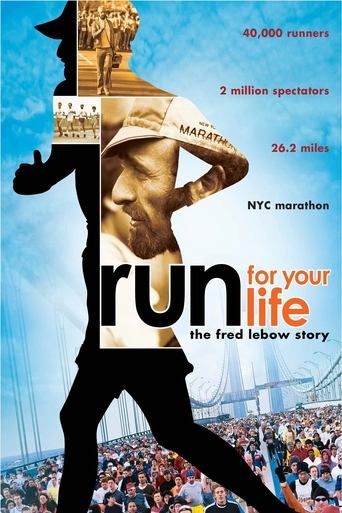
Without one eccentric first-generation Jewish immigrant from Transylvania, the New York City Marathon simply wouldn't exist. Ehrlich's fun, loving, and inspirational tribute to the late Fred Lebow shows how one man's imagination, determination, and love for running created one of the world's most popular sporting events.
Activate your FREE Account!
You must create an account to continue watching