TAITA BOVES chronicles a thirst for revenge that devastated a country. It tells the true story of Jose Tomás Boves, a cruel man who became a legend during the Venezuelan War of Independence, the most violent in the Americas. He went from seafarer to pirate, horse smuggler to prosperous merchant, prisoner to military chief. Spanish by birth, he spearheaded a grass roots troop of slaves, mulattoes, Indians and mestizos that crushed Simón Bolívar and his patriot army. Respectfully referred to as "Taita" by them, he fought for the underprivileged and the poorest of the poor, and curtailed three centuries of order in this colonial region. This film is about his passions and power, his loves and misadventures, and a bloody saga that rocked Venezuela.
This documentary bears witness to the events that took place more than thirty years before the filming of this movie, on October 17, 1961, in Paris, during the Algerian War. It is a work not only about historical truth but also about memory. Constructed primarily from interviews conducted with those involved in the events, along with archival footage, photographs, and radio broadcasts from the time, our investigation proves that nearly 200 Algerians were killed (drowned, tortured) that night and in the days that followed by the French police. "A Missing Day" seeks to ask two key questions: how could such events have unfolded in the capital of a Western democracy barely thirty years ago? And why have they been silenced ever since?
Argentinean singer and tango legend Ada Falcón disappeared without a trace in 1942 at the height of her career. This is the story of how she was located sixty years later, living in an unexpected way, in an unexpected place.
The story of "Electric Wave" takes place on the eve of the liberation of Shanghai, and is based on the true story of the martyr Li Bai. It is a city card born from the red genes of Shanghai. There is no dialogue in the dance drama film, and the emotional explosion is vividly expressed through the body, conveying the strong love between the two through their dance, eyes, and body movements. The emotional struggle and compromise, as well as the mutual empathy between them, are more intense and lasting than any line of dialogue. The film is adapted from the original dance drama of the same name.
On October 4, 2018, France celebrated the 60th anniversary of the Fifth Republic. It is a republic born in the throes of the Algerian War and one which—from the day it was founded by General de Gaulle until the presidency of a very Jupiterian Emmanuel Macron—has been assailed as a “Republican monarchy” by partisans of a more assertive parliamentarian state. By revisiting the struggle of those who dared oppose the new regime — only to suffer a crushing defeat on September 28, 1958, when they were barely able to garner 20% of the vote against the constitutional text — this film shines a powerful new light on the origins of the Fifth Republic and its consequences for the next 60 years. It is a constitutional debate that planted the seeds for a complete upheaval of the French political landscape, on the left in particular, and set the country in motion toward what would be called the Union of the Left.
Based on the events from the Italian civil war. In 1860's, a member of a guerrilla force captures a colonel from the opposing army and later leads one of the sides to victory.
Between the end of the Second World War and the abolition of the "offence of homosexuality" in 1982, 10,000 sentences were handed down in France. Sentences in correctional courts, fines and sometimes imprisonment, the convictions were mainly against men. The last witnesses of this period speak out and tell of four decades of clandestine life, just before the tragedy of AIDS.
Follow the fascinating evolution of jazz dance from its origins in Africa, through to its modern-day interpretations which reveal the political and social influences affecting the dance form today.
The life and execution of Gertrudis Bocanegra, a sympathizer of the libertarian cause and a prominent figure in Mexico's independence from Spain.
The father of medical in Kos, Hippocrates, believes that illnesses can be treated with medicines and herbs instead of prayers and comes into conflict with the medical establishment of the island. Leaving Kos, he goes to Athens, where he is called to face a plague for save the city.
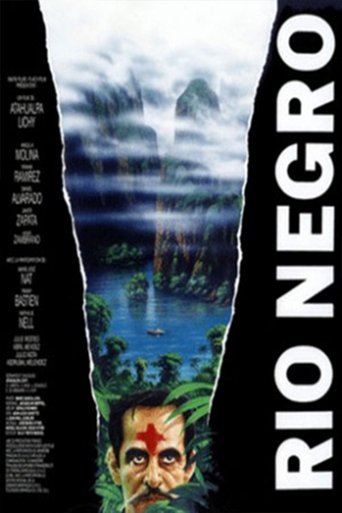
The struggle of two men, Osuna and Funes, hungry for power and wealth in a small town in Venezuela, during the dictatorship of Juan Vicente Gómez.
Set in the Middle Ages the film tells the story of a wonder child, the little sculptor Wawrzek, who goes to work for a great master, Wit Stwosz. The story culminates in the unveiling of Stwosz's greatest masterpiece, the Altar of St. Mary's Church in Cracow.
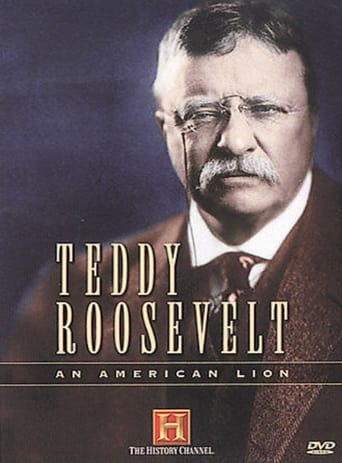
This thorough documentary covers the life of President Theodore Roosevelt, from his birth until his death.
A television adaptation of the famous 1858 Lincoln-Douglas debates, in which Abraham Lincoln did verbal battle with Stephen Douglas, his opponent for a U.S. Senate seat, over the issue of slavery.
A history of the pit bull.
January 1917. The workers and peasants of Russia, hunted by the tsarist government in the trenches, forced to defend alien interests of the king, the landowners and exploiters-capitalists. Bolshevik worker Yakov Orel, selflessly performing party mission, said the soldiers the truth about war, about revolution, about what the overthrow of the autocracy does not mean the liberation of the workers from the yoke of landlords and capitalists exploitation. For example, one regiment of the film reflects the events that took place in the whole of the Russian army between February and October 1917.
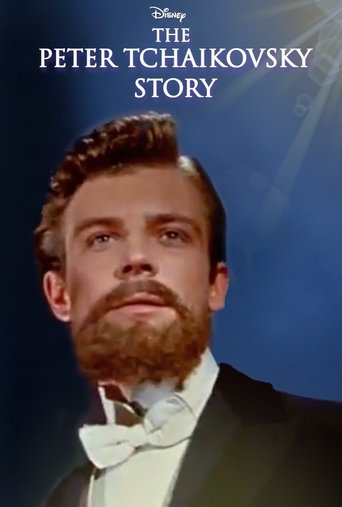
The story of young Tchaikovsky through the premiere of his "Sleeping Beauty" ballet.
A journalist wants to make a film about the life and death of Claretta Petacci, the mistress of Benito Mussolini. For this, she will turn to her sister Miriam.
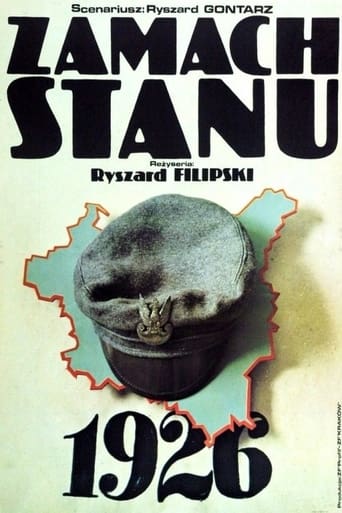
Fall 1925. Six hundred officers demonstrate in front of Józef Piłsudski’s country house in Sulejówek, demanding the Marshal’s return to active political life. May 1926—a government crisis; Wincenty Witos forms a new government. Piłsudski’s move sparks clashes between supporters and opponents of the ousted government. Piłsudski appoints Kazimierz Bartel as prime minister. The beginning of the “moral reform.” Ignacy Mościcki becomes president. Summer 1930. A joint platform of opponents to the Sanacja government is formed. “Centrolew” is established.
Activate your FREE Account!
You must create an account to continue watching