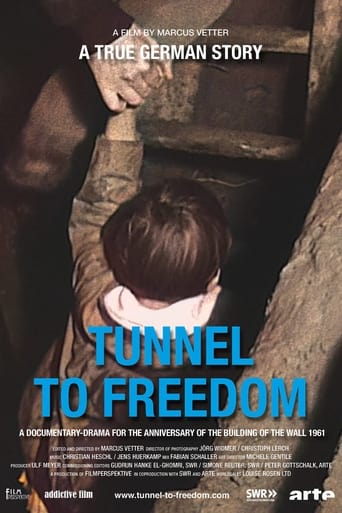
13 August 1961: the GDR closes the sector borders in Berlin. The city is divided overnight. Escape to the West becomes more dangerous every day. But on September 14, 1962, exactly one year, one month and one day after the Wall was built, a group of 29 people from the GDR managed to escape spectacularly through a 135-meter tunnel to the West. For more than 4 months, students from West Berlin, including 2 Italians, dug this tunnel. When the tunnel builders ran out of money after only a few meters of digging, they came up with the idea of marketing the escape tunnel. They sell the film rights to the story exclusively to NBC, an American television station.
Meredith Monk's "Ellis Island" is a haunting, reflective piece on Ellis Island and the immigrants who passed through there.
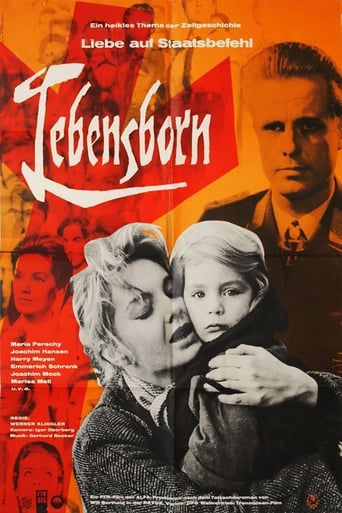
Revealing story about the mysterious Nazi organization "Lebensborn," which was intended to serve the SS in pursuing population policy and racial hygiene goals by systematically producing "hereditarily valuable" children. The film depicts an anti-Hitler Knight's Cross recipient with false papers who becomes a witness and victim of relevant events in a Lebensborn home, where 30 enthusiastic BDM girls and a number of SS hooligans and frontline soldiers have just moved in to "give the Führer a child."
A film-détournement biography of Mao Tse-tung in which the life of the recently deceased Great Helmsman is told in his own words, using quotes culled from various Red Guard publications. The rise to power of the film's namesake appears as the inevitable outcome of a dialectical logical. Or so the voice-over might lead one to believe. If the usual practice of détourned films is for the soundtrack to undermine the image, here the reverse occasionally takes place. The images critique Mao's words. They show that which, even in the official visual record of the times, the narrative elides. The film is dedicated to Li Yhi Zhe, the nominal author of a famous Democracy Wall critique of the Maoist state.
July, 1936. The terrible Spanish Civil War begins. When the streets are taken by the working class, the social revolution begins as well. The public shows are socialized, a model of production and exhibition of films, never seen before in the history of cinema, is created, where the workers are the owners and managers of the industry, through the unions.
For eight centuries, between the 9th and 1st century BC, the Etruscans, inhabitants of the Italian peninsula, were one of the most powerful peoples of the Mediterranean basin, and when they disappeared they left behind impressive necropolises, vestiges of sanctuaries and even entire cities. How did they attain such power? How far did they extend their dominion and influence? What were the causes of their decline?
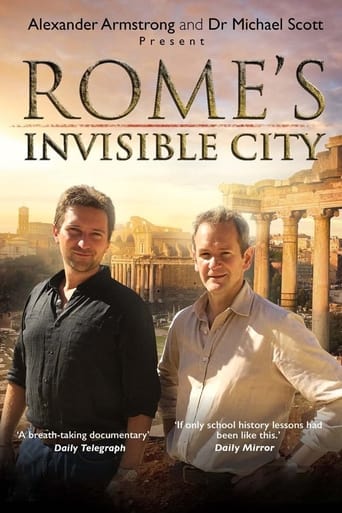
With the help of a team of experts and the latest in 3-D scanning technology, Alexander Armstrong, along with Dr Michael Scott, explores the hidden underground treasures that made Rome the powerhouse of the ancient world.
Under Pharaoh Amemphis III's reign, the most powerful in the kingdom, as vizier Burkis and a fanatic and xenophobic priest, will try to overthrow the Pharaoh. They will even murder the crown prince, Aker. But his twin brother will find a way to foil those fanatical plans.
Siti Zubaidah is based upon the 19th century poem 'Syair Siti Zubaidah Perang Cina'. It centers on Siti Zubaidah, the wife of Sultan Zainal Abidin, who is left defenseless after her husband is taken hostage by a Chinese empress. She eventually allies herself with Princess Rukia of Yunnan, who had fled her own palace under threats of sexual assault. Taking matters into their own hands, they adopt male identities and lead a military conquest across China to rescue the Sultan. Directed by B. N. Rao and starring Maria Menado, the Cathay production borrowed from both of its niches at the time: the film language and costume styles of Malay cinema and Chinese wuxia films, resulting in an imagined reality fusing both visual cultures. At the core of the myriad garbs, armour, accessories and makeup donned by the characters, the tale chronicles the adoption of transformative identities to overcome adversity, enact justice and revenge.
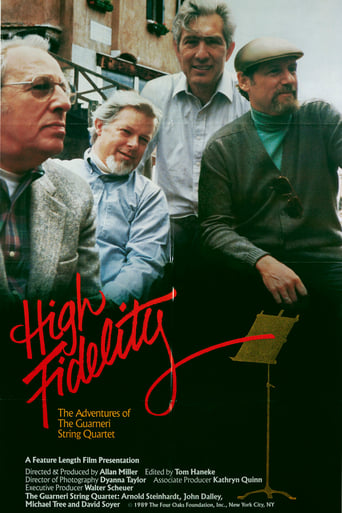
Relationships, rehearsals, performances, hobbies, and family life of the members of the Guarneri String Quartet.
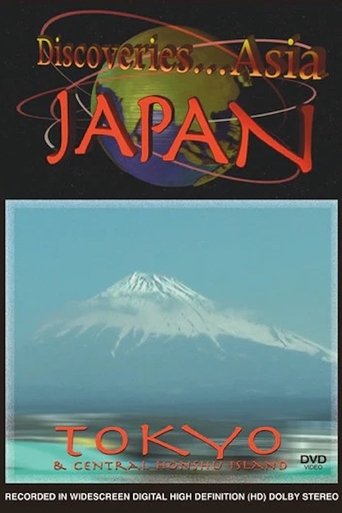
For centuries the Japanese warred among themselves and their neighbors, creating a colorful, rich and sometimes brutal legacy. Intriguing to outsiders for centuries, modern Japan is no less so In the 21st century. Focuses on Tokyo and its environs, with attention to scenery, shopping and shrines.
For centuries, humans have sought to express beauty in architecture and art, but it is only recently that neuroscience is helping to determine how and why beauty plays an important role in our wellbeing. Architects and neuroscientists are embarking on a new field of study in which subliminal responses to one’s built environment may influence the future of design. Experts argue that positive subliminal reactions lead to a pleasurable experience, one reminiscent of a powerful meditation session. The question remains: what makes a building beautiful - or more specifically, which elements of the built environment does the brain recognize as beautiful? Narrated by Martha Stewart.
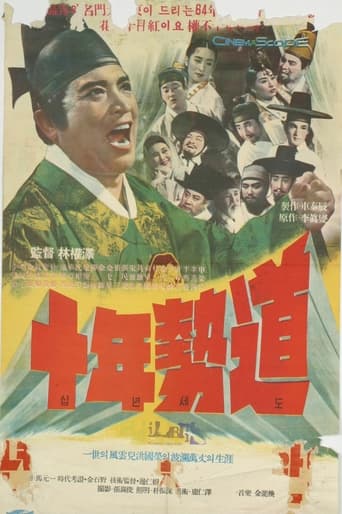
During the reign of King Yeongjo in the Joseon Dynasty (1302-1910), the villainous retainer party led by Jang Ji-hang gains power after cutting the head off a royalist Hong seong-won. His son Hong Guk-yeong passes a state exam and tries to assist the king in ruling well, but he is also put to death by Jang's false incrimination. But he is called a faithful politician in history.
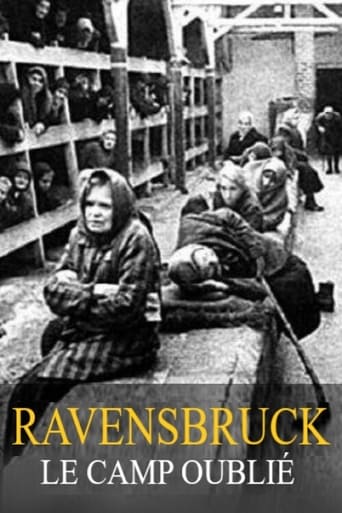
Located nearly 80 kilometres north of Berlin, Germany, the former municipality of Ravensbrück was home to a prison between 1939 and 1945 that became a concentration camp designed specifically for women. It was built by order of Heinreich Himmler, a high dignitary of the Third Reich and head of the SS. Of the more than 130,000 people who were deported there, almost 90,000 never returned. Based on witnesses, international experts and computer-generated images, the document reveals the atrocities committed in Ravensbrück.
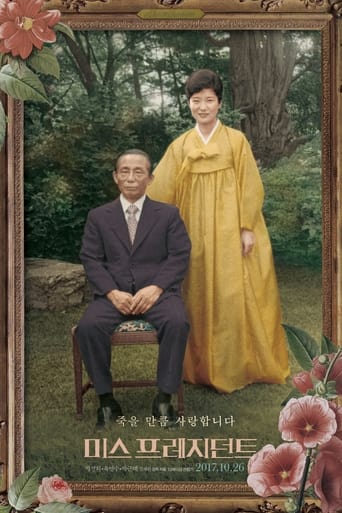
My father led a coup in 1961. Two years later, I became the president's daughter.
When Air Force Space Command receives a signal from an alien satellite in Earth orbit an emergency meeting with the President reveals a government conspiracy.
"The Burning of Atlanta" is the story of the destruction of a major city near the end of the war, and the desperation and terror this causes in the lives of those who watch their entire society collapse around them.
The death of King Henry the Fourth and the coronation of King Henry the Fifth.
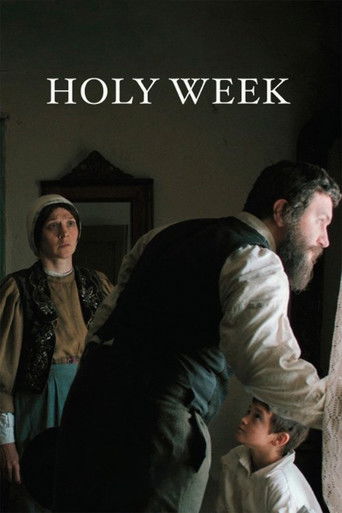
The Holy Week, around 1900, somewhere in Romania. The tense relationship between the Jewish innkeeper Leiba and Gheorghe, his Christian employee, reaches the point where the innkeeper decides to expel the latter. Revengeful, Gheorghe promises Leiba that he will return on Easter Night to “settle” his accounts. This threat comes as a last straw against Leiba’s attempts to cohabit with his hostile, anti-Semitic environment. From then on, Leiba will struggle distinguishing between the real danger and the one fabricated by his anxieties, engaging onto a path of transformation leading to extreme consequences.
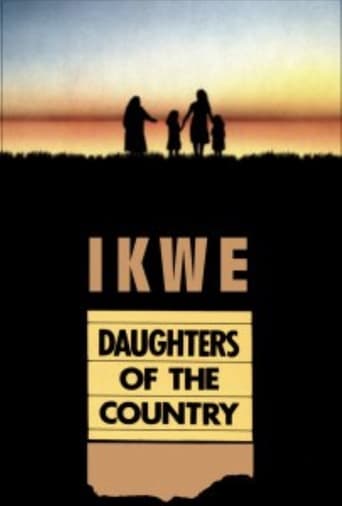
A young Ojibwa girl from 1770 marries a Scottish fur trader and leaves home for the shores of Georgian Bay. Although the union is beneficial for her tribe, it results in hardship and isolation for Ikwe. Values and customs clash until, finally, the events of a dream Ikwe once had unfold with tragic clarity.
Activate your FREE Account!
You must create an account to continue watching