In 1944, two prisoners miraculously escaped from Auschwitz. They told the world of the horror of the Holocaust and raised one of the greatest moral questions of the 20th century.
This feature documentary is a portrait of Peter Watkins, an Oscar®-winning British filmmaker who, for the past 4 decades, has proved that films can be made without compromise. With the proliferation of TV channels, documentaries are enjoying an unprecedented boom fuelled by audiences seeking an alternative to infotainment. But now documentary filmmaking, too, finds itself constrained by the imperatives of television. However, there is a rebel resisting this uniformity of the spirit. Pre-eminent among today's documentary filmmakers concerned about this mind-numbing standardization, Peter Watkins has never strayed from either his principles or the cause.
In 1950, five years after their release from internment, the women return to Singapore for a reunion, unaware of the intrigue that is to involve them in treachery and murder.
The drama documentary tells the real life story of Samurai woman Takeko Nakano who in 1868 fights for her clans' independence in a final battle that marks the end of the Samurai era.
Massimo returns to Venice after years of fighting against the Turks. He finds his beloved Elena, who in the meantime has married the doge who is tyrannizing the city.
A portrait of the American actress Jamie Lee Curtis, daughter of the legendary actors Tony Curtis and Janet Leigh, mythical scream queen and brilliant comedy actress.
Based on the famous novel of Milos Crnjanski, the story follows Serbian migrations from the Austro-Hungarian Empire during the XVIII century.
Vitaphone production reels #2471-2478; third Warner Bros. feature film - the first being The Jazz Singer and the second Tenderloin - to include talking sequences, along with the by now usual Vitaphone musical score and sound effects. A copy of this film survives at the Library of Congress in Washington, D.C., but the sound disks are lost.
In 1958, in the midst of the Algerian War and two months before the World Cup, the French Football Federation (FFF) discovered on April 15th that nine of its players of Algerian origin had secretly left France to join the headquarters of the National Liberation Front (FLN) in Tunis, where the Provisional Government of the Algerian Republic (GPRA) was based. They chose to leave everything behind—careers, fame, money—to support the FLN cause: the independence of the Algerian people. Their daring escape was worthy of a thriller and made headlines across the international press. For four years, the FLN team toured the world and became the standard-bearer for a people. FIFA refused to recognize the team and threatened federations that played against it with sanctions. Nevertheless, the team made a lasting impression with 57 wins, 14 draws, and 12 losses in 83 matches. Ferhat Abbas, president of the GPRA, told them, "You have gained ten years for the cause of independent Algeria."
Noor Jahan, the empress of the Mughal empire, becomes the favourite wife of Emperor Jahangir and steadily begins to exert more influence on the throne through her love for him.
Arko, a film student, invites Subir Banerjee, who played the legendary role of Apu, to attend an award ceremony in Germany. But the old man hesitates to accept the invitation.
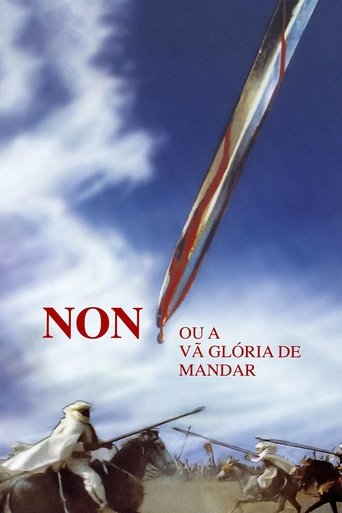
Episodes from throughout the entire military history of Portugal are told through flashbacks as a conscripted student of history recounts them to his fellow soldiers while they march through an African colony in revolt during 1973.
Melvyn Bragg explores the dramatic story of William Tyndale and his mission to translate the Bible into English, which made him a threat to the authority of the church and state.
August Strindberg's historical play about the king he called Sweden's traitor.
Against the backdrop of a conflict between former friends, and now a soldier and a prisoner, events break out that will make them make a difficult choice. This choice changed the history and attitude to true heroism.
The life of Anthony of Padua (1195-1231) from his arrival on Sicily's shores via shipwreck in 1221 to his death. He's a Portuguese monk who, once in Italy, seeks out St. Francis. Anthony's gift as a great preacher is discovered by happenstance. He spends much of his life in and near Padua, a city run by usurers. Anthony offers protection and friendship to Folco, at one time a petty criminal and acolyte to the usurers, later falsely accused of murder. Anthony's teaching and his spiritual strength lead to changes in the character of Padua and an end to usury. He became its patron Saint soon after his death, and 32 years later, his casket is opened and his tongue remains intact.
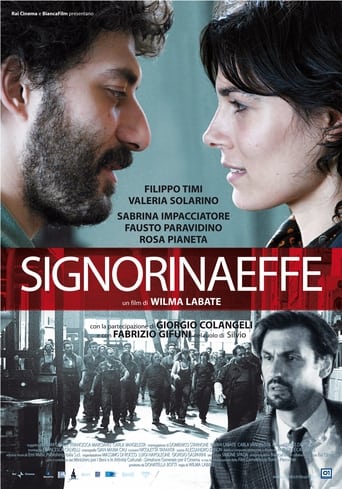
A white and a blue collar worker fall in love during the 1980 strike at FIAT that marked the end for labor movement in Italy.
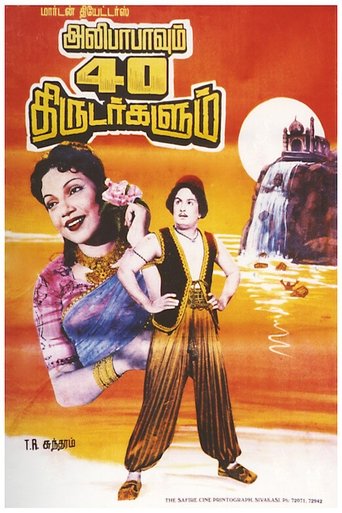
Alibaba's brother is killed by dacoit Abu Hussain and the body is kept in the cave. Since Alibaba too has the password, Abu visits him as a merchant with 40 barrels, each one hiding one of his men.
In the spring of 1789, France is devastated by famine. The French people begin to rise in unrest against the ruling French king Louis XVI. Ronan, a young peasant, leads a revolt marching to Paris, where he encounters Olympe, an assistant governess of the children of Marie Antoinette of Austria. The two fall in love during the tumultuous stirrings of the French Revolution, their romance playing out amid encounters with major Revolutionary figures such as Georges Jacques Danton, Maximilien de Robespierre and Camille Desmoulins. After they are separated, Ronan and Olympe find each other again on 14 July 1789 in the course of the assault on the Bastille prison— an encounter that seals their destiny even as a new era begins.
Based on the true story of Operation Shaman Shield, when Hungarian soldiers evacuated 540 people, including 180 children, from Afghanistan as NATO forces withdrew. Coming Fall 2025.
Activate your FREE Account!
You must create an account to continue watching