Behind the iconic Eiffel Tower lies the story of an incredible challenge to erect a thousand-foot tower that went far beyond a design competition, and marked a major turning point in engineering history. It was the beginning of radical transformation where iron was pitted against stone, engineering against architecture, and modern design against ancients. Press campaigns, lobbying, public conferences, denigration of opposing projects, bragging about big names - all participants engaged in a fierce battle without concession. Using 3D recreations, official sources (reports, letters, drawings...) and intimate archives obtained from their descendants, this film will bring to life this vertical race through a fresh and visual way to mark the centenary of Eiffel death.
HK historical drama.
A second version of Gance's Napoléon, with sound.
It had been a crisp September morning like so many others. And then it was not. An explosion of evil would carve a path of death and destruction. The untold stories of resilience and unity from survivors pay tribute to hope amid tragedy.
The remarkable story of WWII infantryman and photographer Tony Vaccaro, who created one of the most comprehensive, haunting and intimate photographic records of the war using a smuggled $47 camera while developing the negatives in his helmet at night.
Fall 1925. Six hundred officers demonstrate in front of Józef Piłsudski’s country house in Sulejówek, demanding the Marshal’s return to active political life. May 1926—a government crisis; Wincenty Witos forms a new government. Piłsudski’s move sparks clashes between supporters and opponents of the ousted government. Piłsudski appoints Kazimierz Bartel as prime minister. The beginning of the “moral reform.” Ignacy Mościcki becomes president. Summer 1930. A joint platform of opponents to the Sanacja government is formed. “Centrolew” is established.
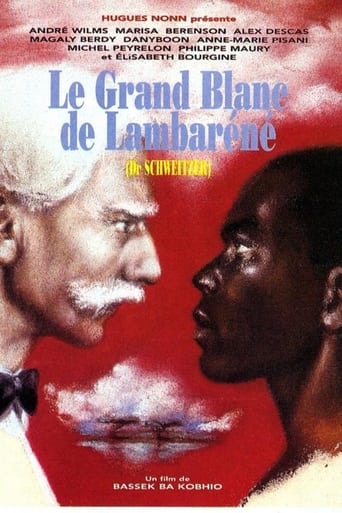
Albert Schweitzer (1875-1965), the mission doctor, theologian and philosopher who founded a hospital in the rainforests of Gabon, achieved sainthood in his lifetime, at least in the popular imagination. The critical assessment of his life and works in recent years, however, has been slightly more ambivalent. Ba Kobhio Bassek is the first director to examine this medical missionary from a purely African point-of-view.
Based on opera "Prince Igor" by Borodin.
Neandertal man disappeared abruptly 30,000 years ago. Who was that "other" man and what is the most plausible hypothesis leading to his extinction? An investigation using all current knowledge available tries to answer these questions.
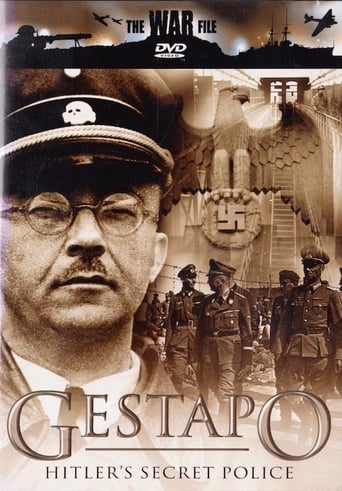
The rise and fall of Nazi Germany's terrifying secret police force from 1933 through 1945.
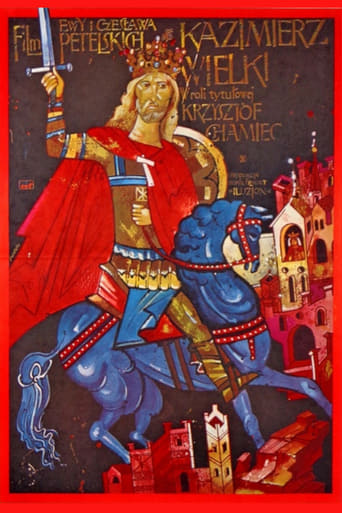
The life and reign of Polish king Casimir III The Great.
The screen adaptation of Osip Turyansky's novel "Beyond the boundaries of Pain", which is considered one of the best works, depicting the First World War as a hell through which seven people doomed to death, including the future author of the novel, passed.
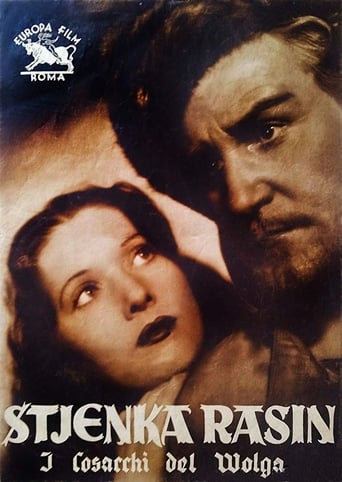
Russia, 1667: The Cossacks, led by Rasin, are ill-treated by Prince Dolgoruki who arrests and sentences Rasin to forced labor on the ship that brings the Prince and his daughter to her arranged wedding. But the Princess falls for Rasin.
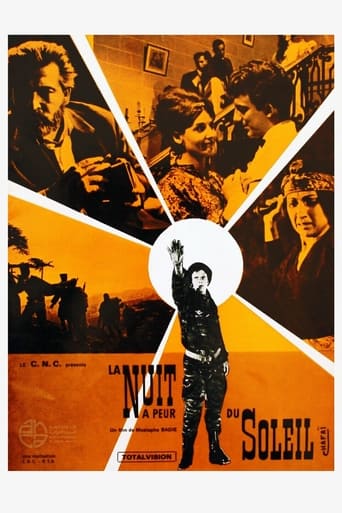
Historical film in four scenes which retrace the returns, the progress and the outcome of the war of liberation in Algeria. The first painting, “The land was thirsty” describes aspects of injustice and colonial oppression. The second “The Paths to the Prison” recounts the sufferings of the people engaged in combat. The last two are the stories of two lives.
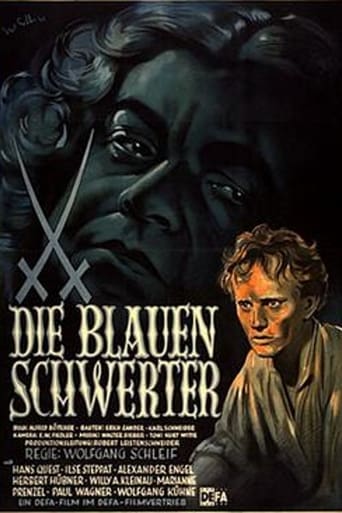
The story of Johann Friedrich Böttger, an apothecary’s apprentice and alchemist’s assistant. Fleeing from the Prussian King, he goes to Saxony, where King Frederick August the Strong takes him to a fortress and demands that he create gold. Böttger is equipped with everything he would need for the task, but he has known for a while that actual gold production is a myth and instead experiments with porcelain—white porcelain, as the Chinese are said to possess. In 1709, he finally succeeds in surprising the King with the "white gold," the first white porcelain made in Europe, he hopes for freedom.
Inspired by true events, "The 86" highlights the activities of a band of 86 street thugs that were famous for their strong presence in the venezuelan capital city during the 1980's.
This film within a film is based on the painting Las Meninas by Diego de Velazquez. A young boy enters the canvas of the famous picture of the Spanish king and his court. In order to return to the real world, he must convince the artist to create his famous painting. The other plot involves a film director who is not sure how his film within a film will be created. He is distracted by his troubled marriage and has difficulty focusing on his project.
1848, Tuscan countryside. Edo and Lupo are two peasants running away after having robbed their boss. Chased by mercenaries, they'll meet bandits, damsels in distress, eccentric nobles, and revolutionaries along the way.
The Last Twins is the never-before-told story of an unsung hero of the Holocaust, Erno “Zvi” Spiegel, who risked everything to save dozens of young twins from almost certain death at Auschwitz. Under the shadow of Dr. Josef Mengele’s horrific experiments, Spiegel used his courage, compassion, and ingenuity to shield the most vulnerable—the sets of twins targeted for brutal medical experimentation. Mengele put Spiegel in charge of the young boys, but Spiegel used his position to protect and comfort the children, all of whom had been torn from their families and subjected to inhumane tests under the constant threat of extermination. Through first-hand testimony and exclusive archival material, The Last Twins brings to life the voices of those who survived because of Spiegel’s defiance. It is a testament to resilience, sacrifice, and the power of one person to make a difference, even in humanity’s darkest hour.
Activate your FREE Account!
You must create an account to continue watching