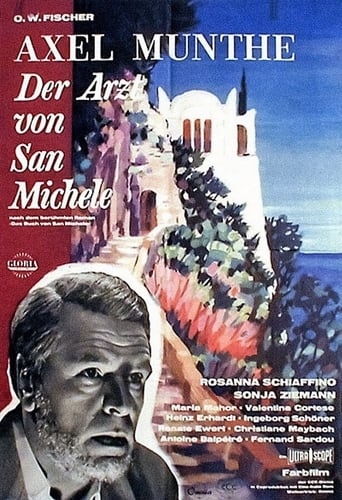
A biographical drama is based on the 1929 autobiography of Swedish doctor Axel Martin Fredrik, The Story of San Michele. It follows the physician, psychiatrist, and adventurer as he travels the distances from Lapland to his Villa San Michele on Capri, with special stops in Paris and Rome. Personal physician to Queen Victoria, also physician to the Swedish royal family (he spent his last years living in the Royal Palace in Sweden), "Axel Munthe" knew everyone from the poorest clients to the most well-endowed. His love of animals, his support of bird sanctuaries, his involvement with architecture as he constructs his impressive villa throughout five summers, and his interests in archaeology and hypnotism are all explored.
The action of the film takes place in the 17th century. Piotr Wolski returns to the country and is appointed juridic governor. A man tries to rule fairly and restore order. He soon falls in love with Konstancja, but his background causes problems.
A nobleman bribes a maidservant to gain access to the palace and poison the crown prince. Another noble, loyal to the royal family, learns the of the plot and must learn the identity of the would-be assassin before he can succeed in throwing the country into chaos.
An adventuress in love with an Austrian agrees to become the mistress of a Russian officer in exchange for the release of Austrian hostages.
1961 - the year when Swedish UN soldiers are in the crisis-ridden Congo and Secretary General Dag Hammarskjöld dies in a plane crash. Swedish film's biggest hit, "Are there angels?", has its premiere with Christina Schollin in one of the roles. Yuri Gagarin becomes the first man in space and the Volvo P 1800 appears on the roads. Ewy Rosqvist is a rally ace and in April the regal ship Vasa is lifted up after 333 years at the bottom of Stockholm's stream. In August, the Berlin Wall is built and outside the Stockholm archipelago, Radio Nord broadcasts music and news.
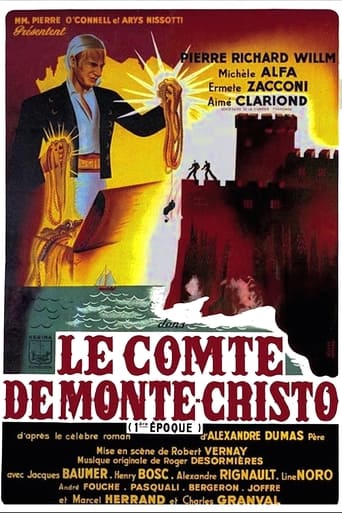
Edmond Dantes is falsely accused by those jealous of his good fortune, and is sentenced to spend the rest of his life in the notorious island prison, Chateau d'If. While imprisoned, he meets the Abbe Faria, a fellow prisoner whom everyone believes to be mad. The Abbe tells Edmond of a fantastic treasure hidden away on a tiny island, that only he knows the location of. After many years in prison, the old Abbe dies, and Edmond escapes disguised as the dead body. Now free, Edmond must find the treasure the Abbe told him of, so he can use the new-found wealth to exact revenge on those who have wronged him.
During the Mexican Agrarian Reform, an engineer travels to a town to distribute the land of the landowners among the peasants.
The story of revolutionary woman Manon Roland.
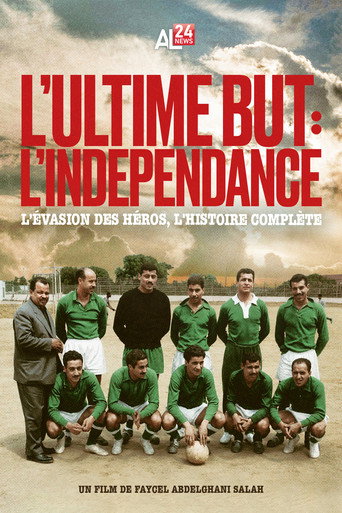
Delve into the story of the Algerian footballers who traded European pitches to join the fight for independence. In 1958, in the midst of the War of Independence, talented players secretly left their clubs to form the FLN team – a living symbol of the Algerian people's struggle. This clandestine team, banned by FIFA, served as a mouthpiece for the Algerian provisional government until 1962. Footballer Rachid Mekhloufi explained: “This departure of the best Algerian players playing in France was no accident. With the control of the media, few French people knew what was happening in Algeria. The FLN representatives in France were ahead of the curve in terms of publicity. Truly ahead of the curve, because a move like this allowed the French people and the rest of the world to open their eyes.”
The story of Sadık and Osman, who heroically resisted the Balkan gangs that carried out bloody raids on Turkish villages in the Rumeli Province of the Ottoman Empire in 1910.
Documentary on the Greek history of the first half of the 20th century, from the Balkan wars until December events, with a special emphasis on the Asia Minor Catastrophe and its aftermath, through filmed documents by Joseph Hep, George Prokopiou, Achilleas Mandras, Philopimenas Finos, Gabriel Loggos and Kyriakos Kourbetis.
At the brink of World War I, Fritz Shimon Haber was Germany's greatest chemist. Haber's Nobel prize-winning synthetic fertilizers saved world's population from mass starvation. But as World War I broke out killing millions of German soldiers, the desperate German forces asks Shimon Haber to provide the army with new kind of weapon. Haber has already sacrificed his and his family's Jewish identity in order to become a respectable German citizen. With his decision to invent such a weapon, Haber was the first scientist in human history to unleash a weapon of mass destruction. Later he paid the ultimate price for his ambition as his wife Clara committed suicide and his invention was used for murdering millions of Jewish people during World War II.
This two-part, three-hour biography, offers an incisive portrait of Henry Kissinger, the enigmatic powerbroker who served in the topmost echelons of American diplomacy. Whether celebrated or reviled, Kissinger’s contradictions reflect those at the heart of America’s foreign policy during the second half of the 20th century, a period in which America became the unchallenged superpower in the world yet often pursued policy at odds with its own highest ideals.By examining his life up to and throughout his tortured relationship with President Richard Nixon, Kissinger endeavors to understand precisely what drove his relentless drive for power. It is a story of deep contradictions — of Kissinger’s obsession with securing American supremacy, staving off nuclear war, and checking the power of our enemies, even while consorting with dictators and tolerating widespread violation of human rights.
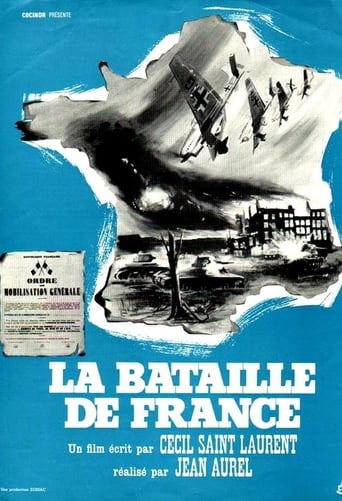
A montage of newscasts tracing the events of the "damned war" and the German invasion of 1940.
This documentary interweaves films and voice recordings by Maya Deren with interviews featuring colleagues and contemporaries who worked with or knew her firsthand. Drawing on archival material and commentary from figures such as Jean Rouch and Jonas Mekas, the film traces Deren’s work and influence across experimental cinema and ethnographic thought.
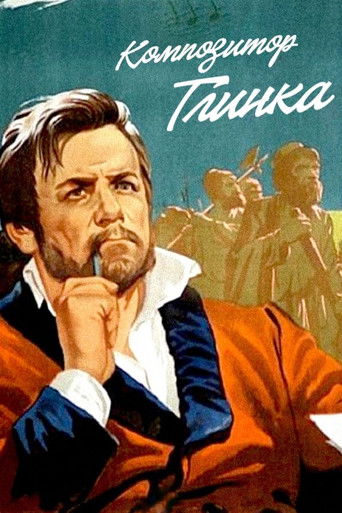
The young composer Mikhail Glinka performs his new work at a soiree at earl Vielgorsky's house. However, the public is accustomed to Western music, and reacts coldly to the creation of the composer. This makes him very sad, but soon he decides to go learn the art of music in Italy. After returning from Italy, he is full of desire to write national Russian opera. Vasily Zhukovsky proposes a subject: a feat of Ivan Susanin. Tsar Nicholas I change the name of the opera to A Life for the Tsar and assigns a librettist - Baron Rosen. Acquaintance with the future co-author shocked Glinka: Rosen speaks Russian with a noticeable German accent. The premiere was successful, but Glinka was still not entirely happy with the libretto: "False words were written by Rosen". When Nicholas I learned that Ruslan and Lyudmila was written on Pushkin's subject, he sees it as sedition. The bitter experience of the composer brighten his supporters.
Twenty-five hundred years before the reign of Julius Caesar, the ancient Egyptians were deftly harnessing the power of engineering on an unprecedented scale. Egyptian temples, fortresses, pyramids and palaces forever redefined the limits of architectural possibility. They also served as a warning to all of Egypt's enemies-that the world's most advanced civilization could accomplish anything. This two-hour special uses cinematic recreations and cutting-edge CGI to profile the greatest engineering achievements of ancient Egypt, and the pharaohs and architects who were behind them. Includes Djoser's Step Pyramid at Saqqara, Senusret's Nubian Superfortresses, Hatshepsut's Mortuary Temple at Dier el-Bahari, Akhenaten's city at Amarna, and the temples of Ramesses the Great at Abu Simbel.
King and prison escapee join forces. Hsu Feng & Carter Wong Play Yuan Loyalists who thwart an attack from the Mongol General and Mantis Master Chang Yi.
One of the most controversial men of his age, Alexander Hamilton was a gifted statesman brought down by the fatal flaws of stubbornness, extreme candor and arrogance. His life and career were marked by a stunning rise to power, scandal and tragedy. But his contributions survive. As Secretary of the Treasury during the tumultuous early years of the republic, Hamilton led the transformation of the young country into industrial powerhouse.
Since 1950, Tibet has been occupied by China. Dorjee, a young Tibetan, grew up in peace 40 years later. After the death of his father, it all comes to a point, where he realizes that his wings are already cut, what it means to be Tibetan in a country which is called "China". Inside Tibet and in exile, a last cry for freedom starts.
Activate your FREE Account!
You must create an account to continue watching