The 17th century rebellion in Kakheti masterminded by Bidzina Cholokashvili gets about the whole Georgia. An Imeretian youth nicknamed as Bashi-Achuk is a real exterminator of the Persians. He attacks the Persian escort and sets free the Georgian women who were supposed to be locked up in the Shah’s harem. Bashi-Achuk’s twin sisters are among the rescued captives. Abdushahil, a Persian warrior who was defeated by Bashi-Achuk in wrestling, falls in love with Mzisa, Bashi-achuk’s sister. Mzisa brings Abdushahil to the camp of the Georgian rebels. Abdushahil learns that he is a Georgian too. As a child he was kidnapped and brought up in Persia. Abdushahil’s army gives up and the Georgians win the battle.
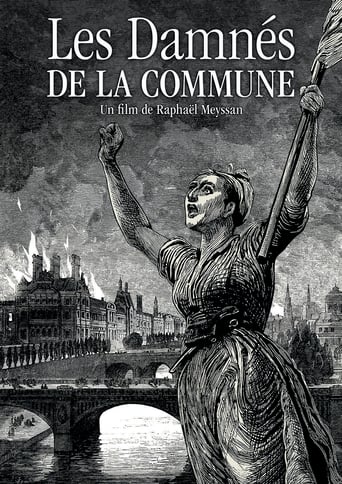
Exclusively created with period engravings, this animated feature explores the Franco-Prussian War of 1870 and the ensuing Paris Commune revolution in 1871.
Inspired by Giampaolo Pansa's controversial book, the film traces the story of a family torn apart by political divisions at the end of the Second World War: a son joined the partisan brigades and a daughter, instead, joined the militia of the Republic of Salò.
The film follows a character known as The Cinematographer, who is looking for someone called Atieh (Future). As he calls out to her, he is magically transported back in time from the early twentieth century to the reign of Naser al-Din Shah in 19th century Iran. Captured by the Shah's guards, he shows films from the history of Iranian cinema to the Shah. The Shah is entranced and eagerly shows his family the apparently magical medium.
In 1945, at the end of World War II, Neus Català returns to France, where she recalls her life under the Nazi yoke.
One of the most ambitious Bulgarian projects in recent years, Heights is an adaptation of Milen Ruskov's novel of the same name, published in 2011. The film explores the Bulgarian realities of the 1870s a few years before the war, that would liberate the country from the Ottoman occupation. Directed by Victor Bojinov and adapted by Neli Dimitrova, the story follows Gicho a young man in a revolutionary group led by Dimitar Obshti, a real-life revolutionary fighting against the Turks. After a successful train robbery Obshti entrust Gicho with a special mission: to deliver a letter to Vasil Levski, the country's most famous freedom fighter, now considered hero and dubbed The Apostle of Freedom.
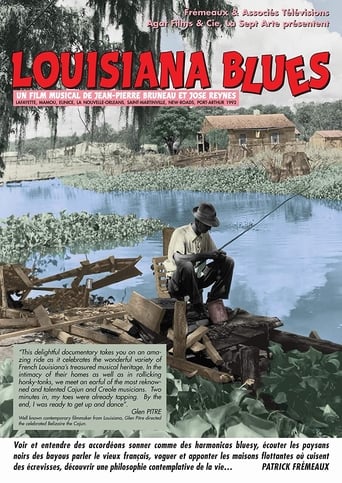
From the camera of celebrated French documentarians Jean-Pierre Bruneau and Jose Reynes, and in the tradition of The Buena Vista Social Club, comes the exhilarating musical documentary Louisiana Blues. From the backwoods of Baton Rouge to the heart the Big Easy, creole and Cajun music have endured despite years of tumult. This film explores not only the musicians who continue to produce this music, but the climate, culture, and way of life that have shaped them. Innumerable zydeco superstars appear onscreen and deliver legendary performances, including Beau Jocque, D.L. Menard, and Zydeco Joe.
The eventful history of Tyko Vylka, the first Nenets artist, cartographer, polar explorer, participant in World War II, chairman of the Novaya Zemlya Island Council.
Ten families read letters from their loved ones killed during Operation Iraqi Freedom in this powerful and moving HBO documentary by Oscar and Emmy Award-winning filmmaker Bill Couturie (Dear America: Letters Home from Vietnam). Photos of the soldiers in military and civilian life are shown as family members read the final correspondence received from Iraq and share their thoughts and memories about the fallen troops and the realities of war.
At the height of the Korean War, 15,000 U.S. troops were trapped and outnumbered 10-to-1. In a harrowing battle, these soldiers fought 78-miles to freedom and saved the lives of 98,000 refugees. After 60 years of silence, the survivors of the Chosin Reservoir Campaign of the Korean War take us on an emotional and heart-pounding journey through one of the most savage battles in American history.
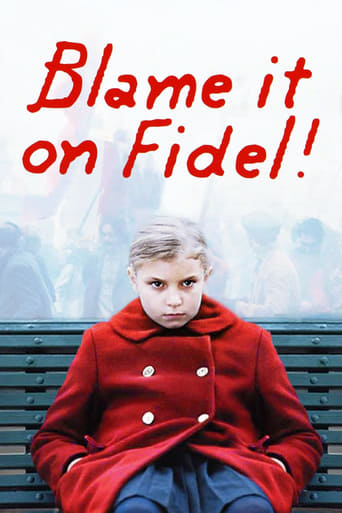
A 9-year-old girl weathers big changes in her household as her parents become radical political activists in 1970-71 Paris.
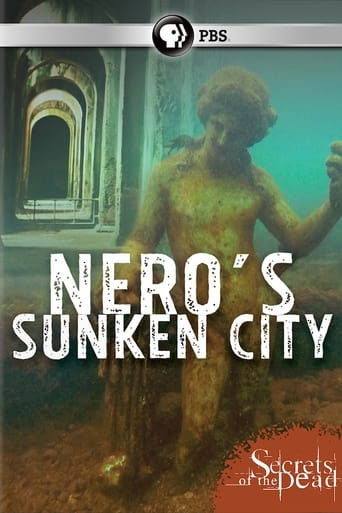
Beneath the turquoise waves of the Bay of Naples lies an extraordinary underwater archeology site, the ancient Roman city of Baiae. From the first century to the third century AD, Baiae was the exclusive playground for the rich and powerful among Rome’s elite. What made Baiae such a special place? What really went on there? And why did it disappear?
Memories of the old Baltic sailor who participated in a revolution and a few wars...
Based on the historical legend, this commercially successful film delves into the context of why Mughal emperor Shah Jahan built the Taj Mahal in fond remembrance of his wife, Mumtaz Mahal.
During the American Revolution, Alexander Hamilton and Aaron Burr are both courting beautiful Margaret Moncrieffe. Fast-forward several years and they again find themselves on opposite sides, this time about compensation for the properties of Tories--colonists who sided with the British--during the war. Hamilton falls for Maria Reynolds, who it turns out is secretly the wife of prominent pawnbroker Jacob Clingman, a friend of Burr's. The pair conspire to destroy Hamilton, who is now Secretary of the Treasury and married to the daughter of a prominent army general, by making public several love letters Hamilton had written to Mrs. Reynolds.
Monsieur de Fontenelle has resisted feelings of love and passion all his life, but at an advanced age he meets a young woman who makes him discover the feeling he has always wanted to ignore: love.
Country Dr. Robert Koch is desperate: a tuberculosis epidemic is decimating the children in his district and no one is able to do anything about it. Every fourth child is already sick and the parents must helplessly watch as their young ones die. Now Koch is undertaking to find the cause of the tuberculosis --- something he has already been working on for years --- which has been causing this plague of illness. His work is made more difficult by envy; for example, that of his teacher, who was wounded defending his honor. But his greatest obstacle is the famous Berliner scientist and Reichstag deputy, Privy Councilor Rudolf Virchow: He is extraordinarily skeptical of Koch's theory, that the cause for tuberculosis is a bacteria.
Estado de Excepção is a documentary about CITAC (Coimbra Theater Initiation Circle), a university theater group, revealing history since it was constituted in 1956 until the aftermath of the 1974 revolution. It is the history of the theater group university and, through it, the history of theater in Portugal, revealing two remarkable decades of the History of Portugal. Through the Academy of Coimbra, the documentary reproduces student life, the position of women in society, and the change in mentalities of being and being in the world. It reproduces the existing censorship and the fight against the dictatorship, the resistance to an exhausted regime, as well as the emerging contradictions of the democratic revolution. CITAC has a heritage of 50 years of experience in Coimbra. It carries with it the possibility of the theatrical and civic formation of thinking bodies, constituting a proper ball of a possible model, generation by generation, between studies, theater, and social drama.
In one of the most hostile lands on the planet, an ancient people called the Israelites forged an army and carved out an empire. Their ancient military exploits are described in one of history's most famous religious texts; the old testament of the Bible. But by reading between the religious lines, ancient military historians unlock the soldier's secrets of the bible by examining the weapons, the strategies; and the commanders, some of whom are unlikely warriors, like Abraham, Moses, and Deborah.
Hashire Melos! is the title of two Japanese animated films. The first was directed by Tomoharu Katsumata and released on Japanese television on February 7, 1981. It was either 68 or 87 minutes long, and its official title did not include the exclamation mark on the end. The second, with the exclamation mark, was a 107-minute remake of the first and was released on July 25, 1992. It featured direction and screenplay by Masaaki Osumi, music by Kazumasa Oda, art by Hiroyuki Okiura and Satoshi Kon, and background art by Hiroshi Ohno. Both were produced by Toei Company Ltd. Visual 80, and both were based on the original short story written by Osamu Dazai in 1940.
Activate your FREE Account!
You must create an account to continue watching