Taking place at the Concentration camp Buchenwald at the end of March 1945, prisoner Hans Pippig discovers in a carrying case of an incoming prisoner a Jewish child. If reported the three-year-old is sure to die. On the other hand, a violation of the rules of the camp would threaten the long prepared uprising of the concentration camp prisoners against the SS.
August 1945. In a converted theological seminary on the outskirts of Nagasaki, a young doctor works to help his patients, as unsettling news comes of a new weapon used by the Americans on the city of Hiroshima. When the second nuclear weapon is dropped on Nagasaki, the hospital staff must work to save lives in the midst of the concentric circles of death that their city has become.
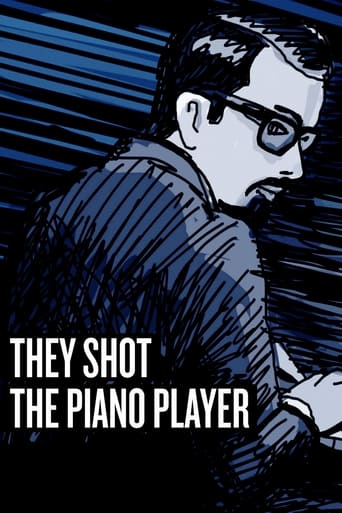
New York, 2010. Jeff Harris, a music journalist, sets out to uncover the truth about Francisco Tenório Júnior, a young Brazilian samba-jazz pianist who disappeared in Buenos Aires on March 18, 1976.
Nicolas Philibert goes to America after killing a French aristocrat. On his return he tries to divorce his wife, Charlotte, but when he sees others trying to woo her his own interest is rekindled.
In 1930s Italy, a wealthy Jewish family tries to maintain their privileged lifestyle, hosting friends for tennis and parties at their villa. As anti-Semitism intensifies under Fascism, they must ultimately face the horrors of the Holocaust.
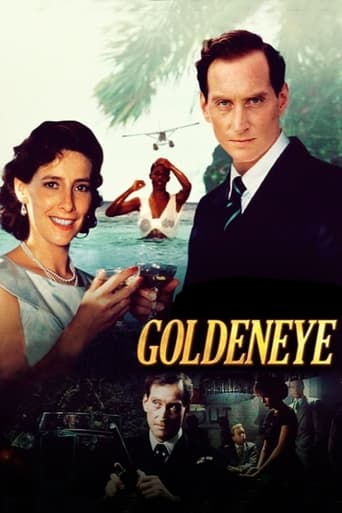
British writer Ian Fleming's life and loves suggest that of his spy-novel hero, secret agent James Bond.
Anni, a daughter of a wealthy family and used to secure life, falls in love with Veikko, a war invalid of the Continuation War. Anni leaves her past behind her and starts leading the life of a pioneer, in the wild forests of northern Karelia, in a settlement farm. After a rosy start, the fate crushes Anni’s dreams and her love for Veikko is put to a test.
Liberation tells the dramatic story of the battle waged on two fronts during World War II - the Allied campaign to liberate Europe and Hitler's genocidal campaign against the Jews. The World War II documentary uses film footage, radio broadcasts, and period music gathered from archives around the world. Interwoven throughout the film are the compelling stories of the Jews of Europe - unforgettable stories of tragedy, courage, resistance, and survival. Liberation begins in 1942, when Adolf Hitler was still at the height of his power and the Allies began envisioning a cross-channel invasion of Europe.
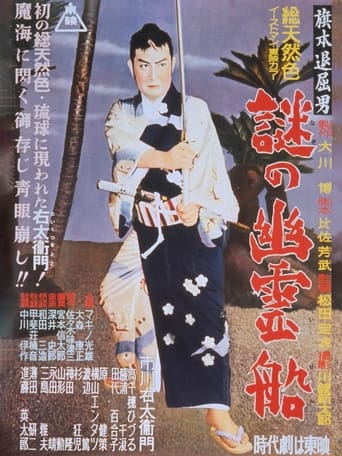
Bored Hatamoto film #20
Based on the inspiring true story of Lilly Ledbetter, an ordinary Alabama tire factory supervisor who discovers she's being paid less than her male peers. Her fight for fair pay takes her to the Supreme Court and Congress, while powerful forces try to shut her down. Lilly refuses to accept the status quo and has the courage to fight for what is right.
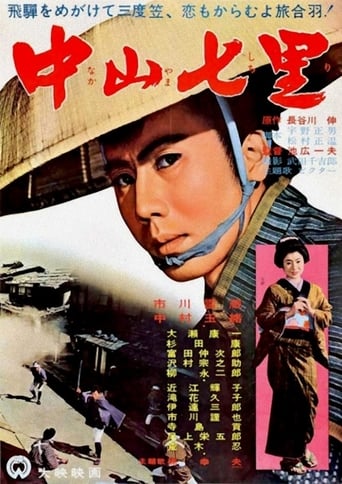
When a corrupt magistrate rapes Oshima, Masa (Raizō Ichikawa) avenges her by killing the officer, becoming thereby a fugitive, haunted and grief-stricken by the fact that Oshima committed suicide. Going underground in the gambling world, perpetually hiding from the law, Masa eventually meets a young woman named Onaka, who looks exactly like Oshima. Tales having two look-alike heroines are a commonplace in Japanese period films, a plot affectation inherited from the kabuki theater. Based on a novel by Shin Hasegawa, Nakayama shichiri was already twice filmed in 1930, one version directed by Namio Ochiai, and from which less than 40 minutes survive, the other directed by Kyotaro Namiki. Both are silent films, preserved by the Makino film institute.
Historical biographical religious drama film based on the memoirs of Ignatius of Loyola, founder of the Jesuit order who was also canonized as a saint in Roman Catholicism.
Chen Wangdao returns from his studies in Japan and takes on the task of translating the Communist Manifesto, which changes the course of his life.
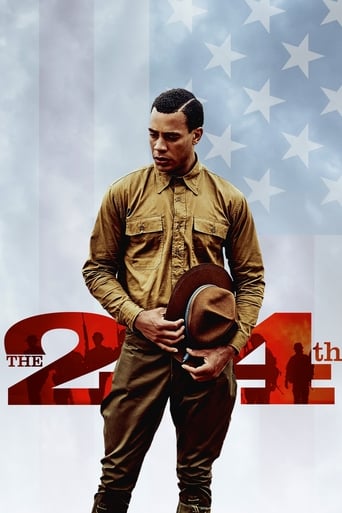
The incredibly powerful and timely true story of the all-black Twenty-Fourth United States Infantry Regiment, and the Houston Riot of 1917. The Houston Riot was a mutiny by 156 African American soldiers in response to the brutal violence and abuse at the hands of Houston police officers.
A dramatization, in modern theatrical style, of the life and thought of the Viennese-born, Cambridge-educated philosopher Ludwig Wittgenstein, whose principal interest was the nature and limits of language. A series of sketches depict the unfolding of his life from boyhood, through the era of the first World War, to his eventual Cambridge professorship and association with Bertrand Russell and John Maynard Keynes. The emphasis in these sketches is on the exposition of the ideas of Wittgenstein, a homosexual, and an intuitive, moody, proud, and perfectionistic thinker generally regarded as a genius.
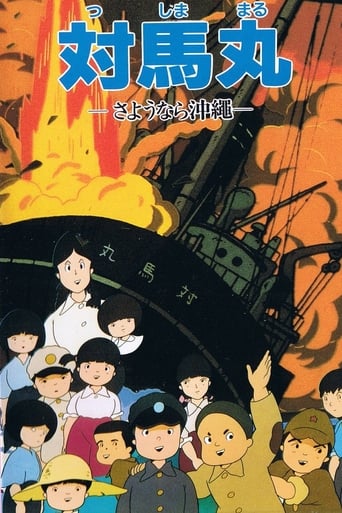
A documentary anime retelling the shipwreck of the freight boat Tsushima Maru, which was carrying 836 schoolchildren home in July 1944 when it was attacked and sunk by an American submarine. Produced by the surviving family members of the Tsushima Maru.
1716, Yoshimune becomes the 8th Shogun as high Shogunate officials are attacked. While the government tries to keep these incidents under wraps, they must take any means possible to get to the bottom of this mystery and find out who is behind them.
In the aftermath of WWI, a young German who grieves the death of her fiancé in France meets a mysterious French man who visits the fiance’s grave to lay flowers.
Serafina, Pulcinella and Isabella are three lusty, beautiful members of a traveling theatrical troupe touring the French countryside in the 17th century, leaving in their wake a crop of broken hearts. This picaresque romantic comedy is based on the 1863 novel Le Capitaine Fracasse by Theophile Gauthier. In the story, the company stops at a castle owned by the scruffy young Baron de Sigognac, who is deeply smitten with the charms of the middle-aged (and somewhat morose) beauty Serafina. He decides to travel with the company, and Serafina perversely tries to get him to woo the youngest of the company, the newly bereaved Isabella.
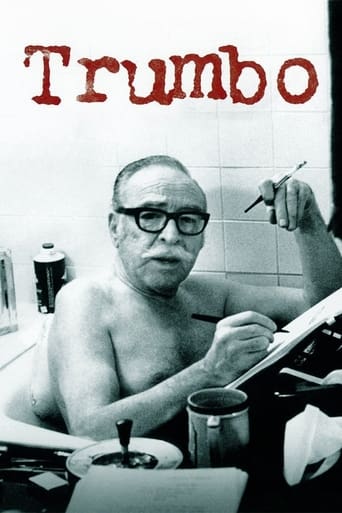
Through a focus on the life of Dalton Trumbo (1905-1976), this film examines the effects on individuals and families of a congressional pursuit of Hollywood Communists after World War II. Trumbo was one of several writers, directors, and actors who invoked the First Amendment in refusing to answer questions under oath. They were blacklisted and imprisoned. We follow Trumbo to prison, to exile in Mexico with his family, to poverty, to the public shunning of his children, to his writing under others' names, and to an eventual but incomplete vindication. Actors read his letters; his children and friends remember and comment. Archive photos, newsreels and interviews add texture. Written by
Activate your FREE Account!
You must create an account to continue watching