Documentary recounts the World War II story of a jewish teenager and an injured soldier join a doomed plot to kill Hitler. They face almost certain death, yet luck and love shine upon them as they outwit Nazi terror and become the first couple married in post-war Berlin.
The movie is based on the events in South Ossetia in August 2008, and portraying a brutal Georgian army engaging in ethnic cleansing at the behest of its omnipresent American masters.
Federal General Judson Kilpatrick is known to many as “Kill Cavalry,” not for the number of enemy troops he has killed, but his own, due to brash decisions that lead to heavy Federal casualties.
A professionally commissioned documentary about the training of Rhodesian Regular Army Officer Cadets. It follows the fortunes of Inf 25/19 - a group of young men commissioned into the Rhodeisan Army in 1977.
At the beginning of 1990s, two Croatian emigrants, economically minded Cinco and politically minded Marinko, arrive in Croatia from Germany, homesick for their families and hometowns. In order to get a German pension, Cinco pretends to be dead and travels in a coffin. Soon, Marinko joins him because he is running away from an old agent of the Yugoslav State Security Service. On their trip in a motor hearse, Cinco and Marinko face many adventures, which culminate when they are stopped at Serbian barricades close to their destination.
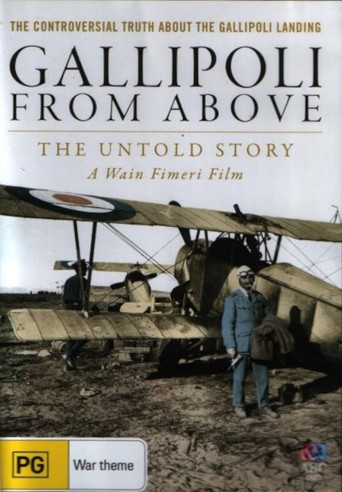
Gallipoli from Above: The Untold Story is the true story of how a team of Australian officers used aerial intelligence, emerging technology and innovative tactics to plan the landing at Anzac Cove. It is now nearly 100 years since the landing and hundreds of books, movies and documentaries have failed to grasp the significance of the ANZAC achievement. Instead, the mythology has clouded the real story of how these two influential Australian officers took control of the landing using every innovation they could muster to safely land their men on Z beach.
Kir Lopukhov and Alyosha Mamykin are classmates who have just received a certificate of maturity. The war began and the guys, without hesitation, also act together in the same artillery special school. They are given just three days to visit the front, for which there is so much to be done! Say goodbye to your Sokolniki. Find classmates. And Kira - by all means learn about the fate of her beloved girl Olya. True, she was evacuated, but according to rumors, she returned to the capital to go to university.
This film takes place in 1941. Five polish women of different ages, and an adopted Jewish girl, have been exiled to a small Bulgarian town on the Black Sea coast. They believe they have found a quiet refuge, but the war even reaches this remote place.
The plot of this film is set in an idyllic village in the middle of Bosnia, connected with outer world only with a tunnel. Story begins in 1996, when refugees in a police escort come close to their, due to war abandoned, homeland and a tunnel - their only connection with the world.
1795, Holland. The French vanguard is pushing towards the north, through a strong blizzard, beyond the enemy lines. At the head of the cavalry, Major Lahure learns that a British fleet, seeking to escape to England, is trapped by the ice off the coast, and prepares one of the boldest ventures of its time.
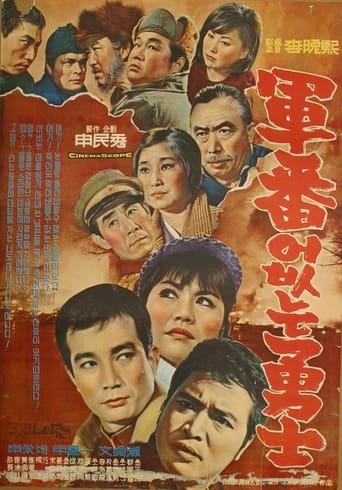
In around the 1950s. A man in charge of a guerilla unit is hiding in the Masingryeong Mountains. On the other hand, his brother, a high government official in the North Korean Ministry of Defense has his father killed blaming him a reactionary. He suffers greatly from the guilt of killing his father and finally decides to give himself up to his brother's guerilla unit. Tragically, however, he is shot to death on his way to the unit to surrender. At his last breath, in his brothers arms, he gives his brother the logistics secrets of the North Korean army.
Soviet WW2 film about operation that resulted in liberation of.Romania and Moldova from the Nazis.
A highly personal journey into the recent history of a war-torn land. Pratt has covered decades of conflict in Iraq and now travels from Erbil to Mosul, charting the country’s active political faultlines and meeting old friends
The documentary explores the extraordinary story of Hitler and the Nazi Party's plans to win WWII by using an array of supernatural and occult superpowers.
On March 24, 1944, in the heart of Nazi Germany, 76 British, Canadian, Norwegian and French pilots who were held in Stalag Luft III, a prison camp of the Luftwaffe, escaped. Unique testimony from the last survivors, recreations and today’s digital images sheds new light on the audacious escape.
A soldier is promoted for bravery, marries a Red Cross girl, and goes home to his parents.
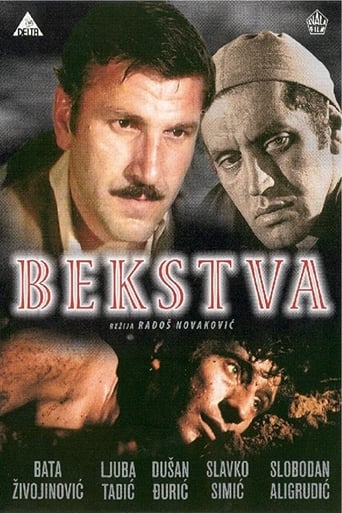
Political prisoners imprisoned in Yugoslavia will try to escape from prison by digging a channel under the ground and join the partisans.
Sergeant Tex Gordon is surprised to learn that his new gunnery instructor is a woman.
Activate Your Account!
You must create an account to continue watching