On June 6, 1944, the Allied Forces executed Operation Overlord, the largest seaborne invasion in history, storming the beaches of Normandy. This pivotal event, known as D-Day, liberated France and Western Europe. A new documentary features interviews with historians, experts, and eyewitnesses, providing detailed insights into the events leading up to this crucial day that played a vital role in bringing an end to World War II.
A soldier coming home after the Paraguay War meets a theater group. A shock between war and art.
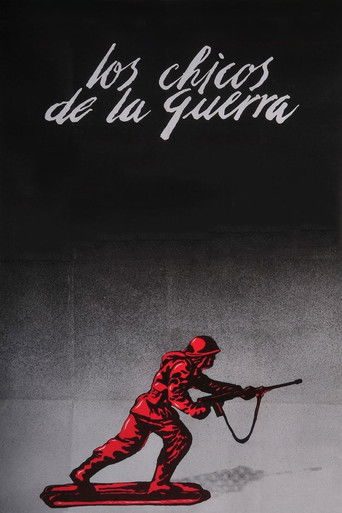
Based on the lives of four boys, all of different social classes and psychological makeup, this film tries to reflect through them the political history of Argentina during the years leading up to the Malvinas War.
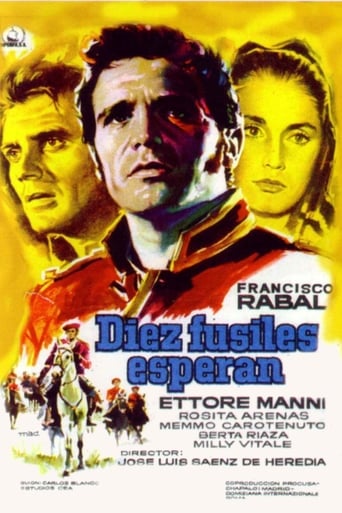
During the first Carlist war in the 1830s in Spain a lieutenant falls into the enemy's hands and is arrested. When condemned, he claims he only wanted to see his newborn baby.
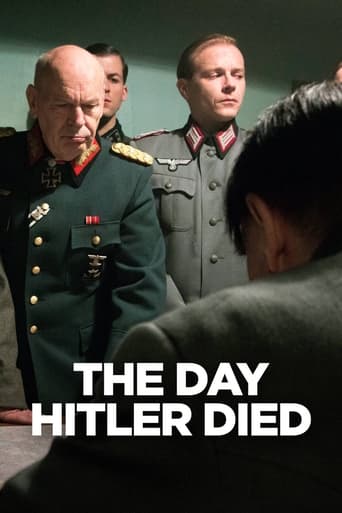
The story of Hitler’s final hours told by people who were there. This special features exclusive forgotten interviews, believed lost for 65 years, with members of Hitler’s inner circle who were trapped with him in his bunker as the Russians fought to take Berlin. These unique interviews from figures such as the leader of the Hitler Youth Artur Axmann and Hitler’s secretary Traudl Junge, have never before been seen outside Germany. Using rarely seen archive footage and dramatic reconstruction, this special tells the story of Adolf Hitler’s final days in his Berlin bunker.
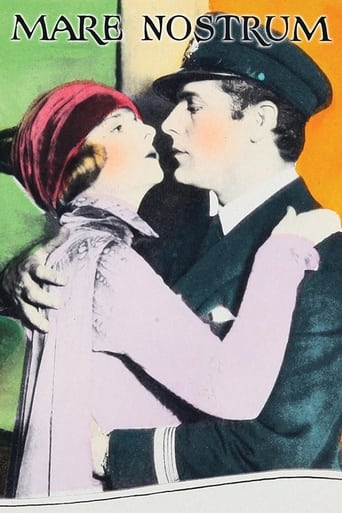
The story of a female German spy who willingly sacrifices her life for her country.
The young country of Estonia is dancing to the jazzy tune of the 1920's when on December 1, 1924, the capital Tallinn is overrun by members of the Comintern in an attempt to stage a Communist coup. The film follows the fates of a young soldier called Tanel and his wife, a telephone operator named Anna, amidst the ensuing chaos which determines whether the country remains independent or becomes a minor province in the Communist Empire.
Reflective observations of Ukraine in wartime are interwoven with eye-witness accounts to contemplate the ultimate tragedy: the normalization of war.
Devoted to the heroes who fought for their homeland’s freedom in the 1947 Indonesian war of liberation.
Newsreel footage from both sides of World War II make a case for convicting Nazi war criminals.
During the Second World War, a fascist warden takes over a prison in Romania and plans to kill communist prisoners under the pretext of attempted escape during their forced transfer to another penitentiary.
This electrifying film documents the efforts of Vincent Bugliosi, one of our nation's foremost prosecutors, as he presents his case that former president George W. Bush should be prosecuted for the deaths of American soldiers in Iraq because he deliberately took our nation to war under false pretenses. Based on Bugliosi's New York Times bestseller, the movie discloses shocking hidden details of how Bush and his people systematically lied to Congress and the country. He shows incontrovertible evidence that Bush, Cheney, Rice, et al committed a monumental crime under our constitution and the laws of this land. He leads us through a legal understanding of what is needed to bring a formal prosecution, setting the stage for what would be the biggest and most important trial in U.S. history.
Tells the tragic story of Mongolian herders in defense of their homeland against the invaders.
Set in the present-day Iraq war, this tense and gripping drama unfolds as two US Marines find themselves stranded and alone in the desert after their unit is all but destroyed in a routine mission. One of their team is taken hostage in the attack, their Humvee is stolen, their communications are down and their supplies are limited.
The final film produced by Warsaw’s Documentary Film Studio is an epic re-enactment of a treacherous mission by the Voluntary Tatra Mountain Rescue Service to aid colleagues stranded behind enemy lines at the close of World War II (several real participants feature in the film). Based on a short story about the rescue by Adam Liberak, Munk’s final “documentary” is also arguably his first major exercise in the craft of narrative filmmaking.
This film continues the story of radio operator Ludwig Bartuschek from “The Sailor’s Song”. Near the end of the Weimar Republic, Bartuschek (Erwin Geschonneck) is working as a mechanic in the Sperber airplane plant. Director Dehringer offers him the opportunity to train as an airplane constructor if he is willing to give up his communist beliefs under oath. Bartuschek will not allow himself to be bought and instead joins the underground resistance movement.
The dramatic story of the life of Slovak boatmen on the Danube during World War II is depicted through the eyes of a six-year-old boy who is forced by the events of the war to spend a dark time with his grandparents in the village. Despite the fairy-tale-sounding title, this film takes place at the end of the war in the Slovak countryside during World War II, and its child hero is the son of a Danube boatman who experiences incredible adventures. The Little Lifeguard's Lamp ranks among children's films that seek speciality in the realities of war. It explores both a children's world with a shifted lens of perception and the impact of battles interfering in the lives of the youngest.
Five young men from well-off families, whom fate never intended to be partisans in an occupied Paris, so different from one other and yet so close, reject the French defeat and resulting German occupation and decide to take on Nazi Germany.
In Moscow, a young delivery girl is witness to the hatred and divide invading her society. Overwhelmed, she discovers a curious loophole to deal with war supporters. However, the reality she is trying to escape soon catches up...
Activate your FREE Account!
You must create an account to continue watching