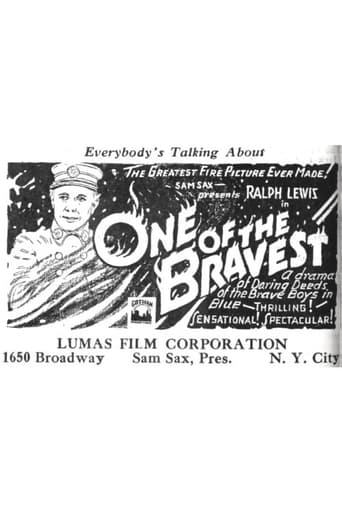
A romantic drama about love and jealousy. Two firefighters want the same girl. She almost gets married to Harry, but John sneakily keeps her from doing so, and then marries her himself. After a year, he has started drinking and has lost his job, and his wife has to go to work at the factory. When a fire breaks out there, he rescues her, but loses his own life in the process.
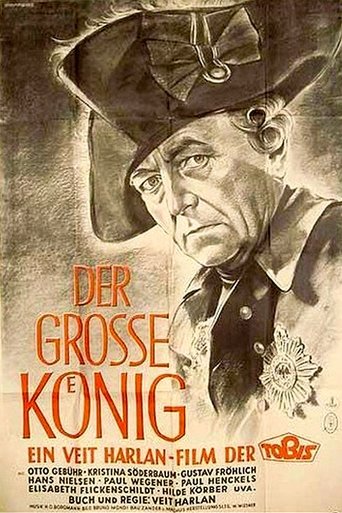
King Frederick II (aka "Frederick the Great") of Prussia is engaged in a major battle against the Austrian army at Kunersdorf, and things aren't going well. The Austrians are inflicting major casualties, and his army is beginning to crumble. Defeat seems inevitable when a combination of events gives him hope that he may pull victory from the jaws of defeat after all.
In February 1945, Jules Ternes returns to Luxembourg. To escape conscription, he fled the country and joined the resistance movement in France. Back in his hometown, Jules hopes to find peace of mind and put the war behind him. But he returns to a country devastated by the Battle of the Bulge and deeply divided from four years of occupation. His sister Mathilde is now engaged to Armand, the leader of the local resistance and his girlfriend Leonie has another man in her life. Jules nevertheless resumes a relationship with her and accepts a post as an auxiliary policeman. When Leonie is assassinated along with the German farmers she works for, the life Jules was struggling to rebuild collapses. The ensuing investigation will reveal grey areas of the Occupation along with the efforts made in high places to cover them up.
If politics were to come back, it could only be from its savage and disreputable fringe. Then, a muffled rumor shall arise whence that roar is heard: "We are scum! We are barbarian!" (Alain Brossat)
A combat unit under Capt. Tombol's command undertakes a perilous final patrol amidst heightened tensions, despite an imminent Korean War treaty. Tragically, Tombol steps on a "Bouncing Betty" landmine.
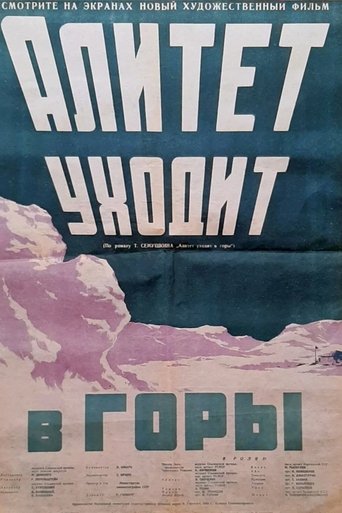
The inhabitants of Chukotka are shown to be cruelly exploited before the revolution. Once Chukotka is visited by the representative of the Kamchatka Revolutionary Committee, Los, and the ethnographer Zhukov. The news of the arrival of the Russians immediately disperses along the coast. Contrary to the pressure of the American Thomson and the local "oligarch" Alitet in Chukotka, fair trade laws are established, as a result of which the Americans and Alitet leave Chukotka.
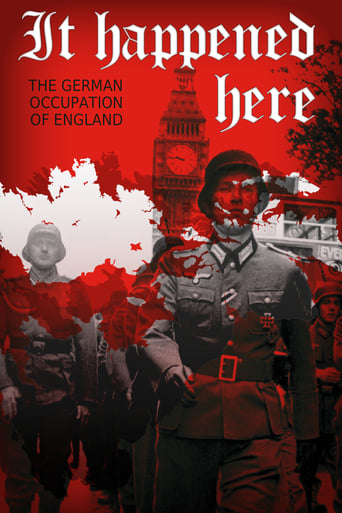
World War II, 1940. When the Nazi hordes invade and occupy Great Britain, the English citizens are soon divided between those who choose to submissively collaborate and those who are willing to fight.
A criminal mastermind uses a "death ray" machine to bring down government airplanes. Police dog, Silverstreak, aids in capturing the insane inventor of the machine. Masked aviator Pilot X is part of the "Air Hawks" gang who threaten the Baker Aircraft Company. Pilot X's actions are focused on stealing Baker's Aerometer, a revolutionary navigational instrument. World-famous aviatrix, Fawn Nesbitt, aids in combatting the attacks on Baker's aircraft.
This foreign, English-subtitled film dramatizes the effect of the Vietnam War on a single South Vietnamese family, the inner conflict of decisions by each member of the family whether to remain in Vietnam or leave with the imminent advance and fall of Hue and eventual fall of Vietnam. Dat Kho, who's cast includes the beloved Vietnamese inconic anti-war songwriter/poet/artist Trinh Cong Son (1939-2001) who posthumously won the World Peace Music Award in 2004, is a story of the love of family, love of homeland, love of the culture and language of Vietnam and the ethereal love of the ingenue daughter for her fiance, foiled by the antagonistic forces of the ever-present war. A thought-provoking film.
Drama about military doctors and nurses during wartime.
1966 Tamil remake of "Ballad of a Soldier".
During World War 1, an Austrian Battalion holds a mountain stronghold against the attack of the Italian army.
In the Caucasus foothills, battles rage against the German fascist invaders who have broken through. Reinforcements, including Russians, Ukrainians, and Kazakhs, are moving to defend the region. Along the way, the soldiers stop at a half-ruined ancient castle. There, a grey-haired old man recounts the legend of Dzhurga, a valiant warrior who once lived there. The legend comes to life on the screen, depicting a wedding feast in the castle where Dzhurgai celebrates his union with a shepherdess. However, the festivities are interrupted by a foreign enemy attacking Georgia. Led by Dzhurgai, Georgian warriors fight bravely and emerge victorious against the Mongol hordes.
Sergeant Tex Gordon is surprised to learn that his new gunnery instructor is a woman.
The plot of the film revolves around revolutionary soldiers who come from different classes, but all share the same patriotism. They had to overcome many life-and-death challenges and enormous adversities in order to mobilise the masses to prepare for an uprising and seize power from the Japanese fascists, in a situation where the country fell into the tragedy of famine.
This is a documentary about unsung heroes of World War II. In 1943, a 24-year-old maths student and a GPO engineer combined to hack into Hitler's personal super-code machine - not Enigma but an even tougher system, which he called his 'secrets writer'. Their break turned the Battle of Kursk, powered the D-day landings and orchestrated the end of the conflict in Europe. But it was also to be used during the Cold War - which meant both men's achievements were hushed up and never officially recognized.
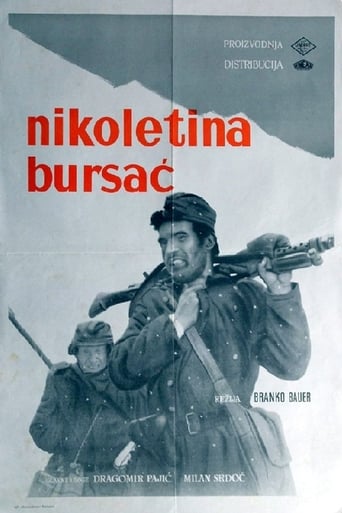
The mother of a national hero Nikoletina Bursac leads an imaginary conversation with the statue of her deceased son. We follow events from Nikoletina's life and war: his joining of the partisans together with his neighbor Jovica Jez, meeting with the small Jewish girl Erna who survived the slaughter of her village, constant quarrels and friendship with commander Pirgo and commissar Zlatko, meeting with Curetak and their unsuccessful love relationship.
Julien Temple's wartime documentary parody "Punk Can Take It" (1979) - a theatrically released promo for the UK Subs, complete with narration by BBC voice-over veteran John Snagge - paints a glorious picture of England in a punk rock "identity crisis". Punk morale was higher than ever before. Punks were fused together not by fear, but by a surging spirit of revenge, immortality, and the courage never to submit or yield. This proved that punk won't go away and that punks themselves are becoming younger and nastier everyday. They have no time for the precarious thrills of nostalgia nor for its trivial rules.
Activate your FREE Account!
You must create an account to continue watching