A German Jewish industrialist is forced to hand over his business to the Nazis in order to ensure his family's safe passage out of Germany.
A lonely German clerk captures two American flyers and keeps them as prisoners in his basement long after WWII has ended.
In 1944 a Soviet marine air force unit stationed near Murmansk is fighting off the German bombers attacking the British navy convoys supplying the Soviet Union with war materials under the lend-lease agreement.
This film attempts to reconstruct the tension of the Battle of Shanghai through an episode in an understated way, introducting its story in a documentary mode. In the film story, Japan's marine regiment protects Japanese residents and Chinese refugees-women and young children-from rampant street fighting, Shanhai Rikusentai unsparingly uses its first eight minutes for an official-mannered self-justification of the war. From the viewpoint of explaining Japan's military operation,the narration refers to the city s spatial division in sync with maps on screen.
Proud Irishwoman Bridie Quilty journeys to Dublin while World War II rages across Europe. During her travels, she encounters J. Miller, who recruits her as a Nazi spy. She acquires the necessary information that leads to the breakout of a German spy who holds key information about the Allies' newest offensive plans. However, the arrival of British officer David Baynes and his romancing of Bridie lead to unexpected consequences.
The ruthless extremist Bazgaev responsible for terrorist attacks which lead to deaths of hundreds of civilians, among them school children, is planning new actions. A group of security officers is to track and destroy him. Based on a true story.
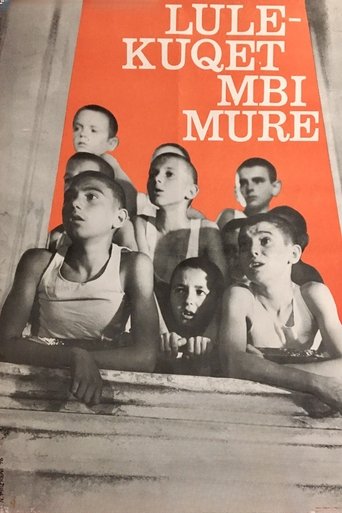
In an orphanage in Tirana at the beginning of the Second World War during the occupation by the Italian fascists, a group of boys make plans to rebel against the despotic director and the oppression by the management.
The film is a continuation of the 1984 film I died to live. Leopold Wójcik, faking his own death, returns to the underground. Unlike the previous part, the fate of the heroes is a fiction - a variant of events that could have taken place. The film had a sequel: Born for the Third Time (1989).
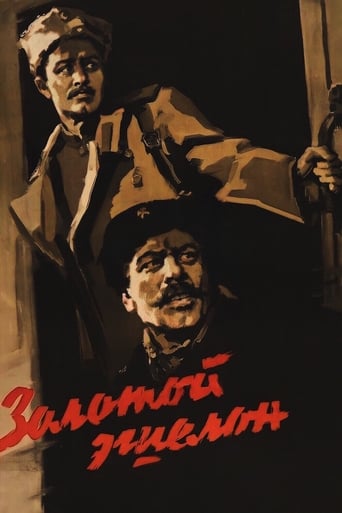
1919 year. There is a civil war in Siberia. Taking advantage of the complete confusion, Admiral Kolchak wants to export part of the country's gold reserves abroad. At the very last moment the Bolsheviks find out about it. They decide to intercept the train, but do not have time to properly prepare the operation... The girl Nadya, in whom the head of the train is passionately in love, can save the situation. Several kilometers of railway tracks to the border become a battlefield between white and red.
The troubled story of the Churruca family, a noble lineage of brave seamen, descendants of Cosme Damián Churruca, the Spanish hero of the Battle of Trafalgar; from the Spanish-American War (1898) to the end of the Spanish Civil War (1936-39). (In 1950, a new cut of the film was released with less ideological depth and ten minutes shorter.)
When the German Afrika Korps smashes through the allied lines in North Africa during WWII, a group of British soldiers are determined to get back to their own lines. Picking up more Allied survivors along the way, their journey is fraught with danger and Germans at every turn.
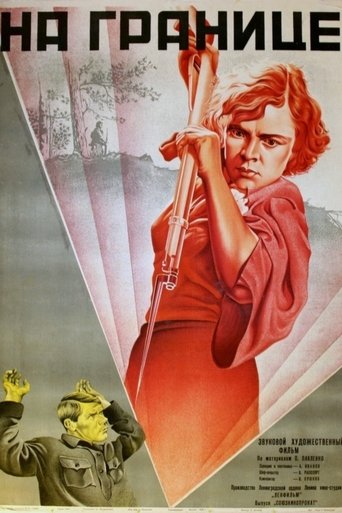
The Soviet Far East and Manchukuo are separated by a border river, on one side of which Russian White Guards have settled in a small Manchurian village, while on the opposite bank lives the Vlasov family. Wanting to destroy the Vlasovs, the White Guards break into their house. A detachment of soldiers led by border guard commander Captain Tarasov comes to their aid. A long and exhausting battle ensues.
Danny La Rue stars in this 1970s drag comedy as Fred Wimbush, a Shakespearean actor who is drafted into WWII and is appearing in a camp show in France when the Nazis advance. Unless he continues in his female costume, Fred is certain to be shot as a spy. The risque gags and double entendres fly as he attempts to make his escape in the company of a troupe of Girl Guides.
Archive footage from Potemkin (1925), with English dialogue dubbed in by American actors, is combined with new footage to tie together the brave stand of Odessa Russian guerrilla bands of the 1940's against German forces with the similar situation of 1905 when Odessa citizens aided in the revolt against the Czar as depicted in Eisenstein's classic Potemkin (1925).
A young man is searching for the war to free his country and establish freedom. Instead of war he finds the love of his life.
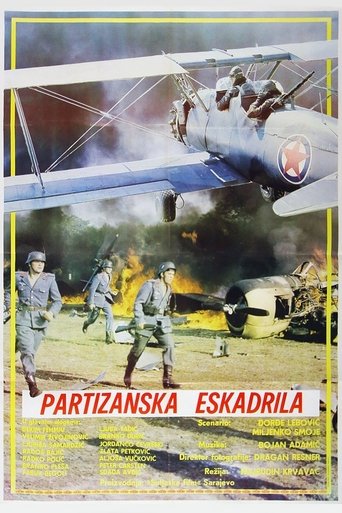
The first Yugoslav Partisan air force unit. Loosely based on historical facts.
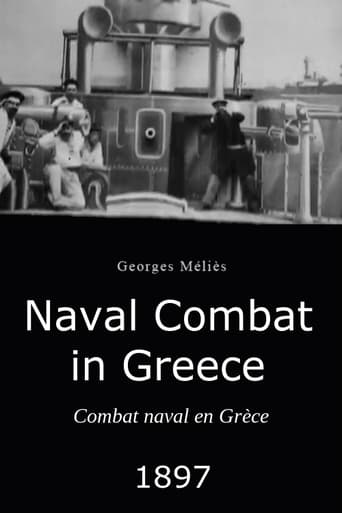
An officer calls his sailors to the deck. They assemble around the canon while the officer scans the horizon. They all turn in the direction of the camera to look in the distance. At the same time the ship is hit! This scene is a filmed reconstruction of the 1897 Greek-Turkish war.
During the Second World War, following an ambush carried out in a fort by German troops, Eugène, an allied soldier, finds himself trapped underground. Now fighting for his survival, his destiny will play out alongside that of another survivor and both must find a way extricate themselves from certain death, unaware of the terrible battle that awaits them on the outside.
Activate your FREE Account!
You must create an account to continue watching